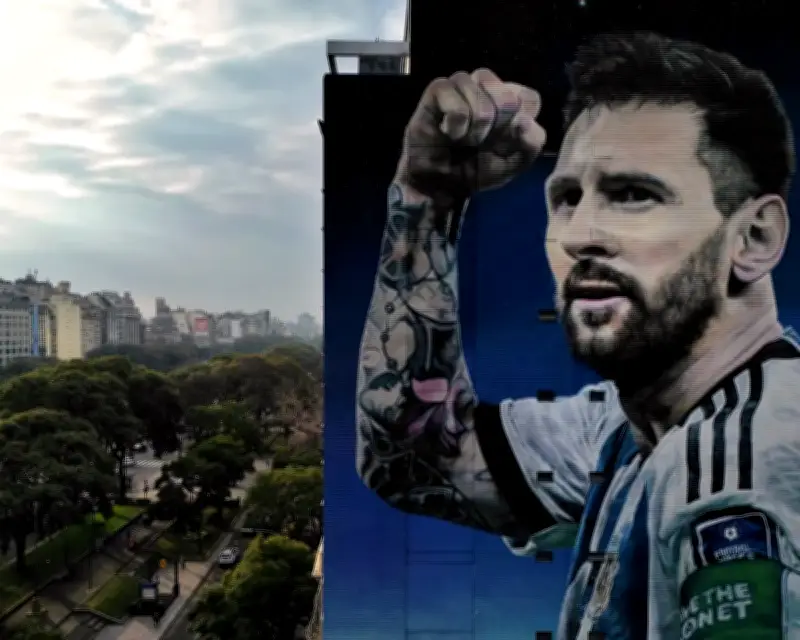
Lionel Messi is returning to the Argentina national team for one last appearance, this time in a celebratory friendly against Benin in Buenos Aires. The match follows his decision to retire from international football after the World Cup final, bringing an end to a career that includes 208 caps and a World Cup title.
This is not the first time Messi has stepped away from the national team. In 2016, after a third consecutive major international final defeat, he announced his retirement. “This is tough and a difficult time,” he said after the Copa América Centenario final loss to Chile. “The end has come for me and our team. It has been four finals – it just wasn’t for me unfortunately. I looked for it and wanted it so badly, but it didn’t happen. This is best for everyone – for me and for a lot of people that wish this. The team has ended for me, a decision made. I tried many times and I leave without being able to obtain it.”
A Decade of Redemption
About six weeks later, following a national campaign urging him to reconsider, Messi confirmed he was not quitting. Another 10 years with the national team followed, during which he won the World Cup, earned more caps (208 after Tuesday's game) and scored more goals (125) for Argentina than anyone else.
The 16 barren years of Messi's international career now seem like an alternate reality, given Argentina's achievements in the last five years. They lost Copa América finals in 2007, 2015, and 2016, as well as the World Cup final to Germany in 2014.
Argentina's participation at the 2018 World Cup was a debacle. They were poor in qualifying, with reports of a player mutiny after a 3-0 defeat to Croatia in the group stage, and were then eliminated by France in the last 16.
The Scaloni Era
Messi took time away again after Russia 2018. Argentina parted ways with Jorge Sampaoli as coach and appointed his assistant, a decision Diego Maradona criticized. “He's a great guy, but he can't even direct traffic,” said Maradona. “How can we give the Argentina team to him? Are we all crazy?”
He was talking about Lionel Scaloni, who has since become the only Argentina coach to have won the World Cup and multiple Copa América titles. Messi has played 79 caps under Scaloni, more than under any other coach, and has been essential to those successes.
A Legacy Secured
After consecutive Copa América wins either side of glory at Qatar 2022, and a run to the final at this summer's World Cup, Argentina have enjoyed a period of success not seen for a generation. Messi has played in more men's World Cup matches than anyone (34) and shares the record for most editions played in (six).
His 33 World Cup goal involvements are a tournament record, with 22 coming in the 2022 and 2026 campaigns. He briefly broke the record for most World Cup goals in tournament history when he reached 18 with a double against Austria this year, though his final total of 21 was one short of Kylian Mbappé's 22. Messi also scored in nine successive World Cup matches and became the first player to start three men's World Cup finals (2014, 2022, and 2026).
Tuesday's game will serve as a reminder that Argentina are entering a new era, one clouded by uncertainty about what they can achieve without Messi. For now, it's time for Argentina to celebrate what they have achieved with Messi, as there is no guarantee it will ever be as good as this again.