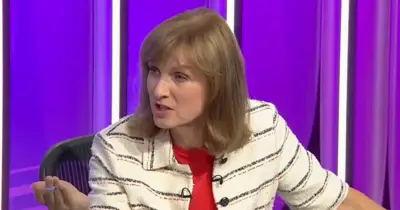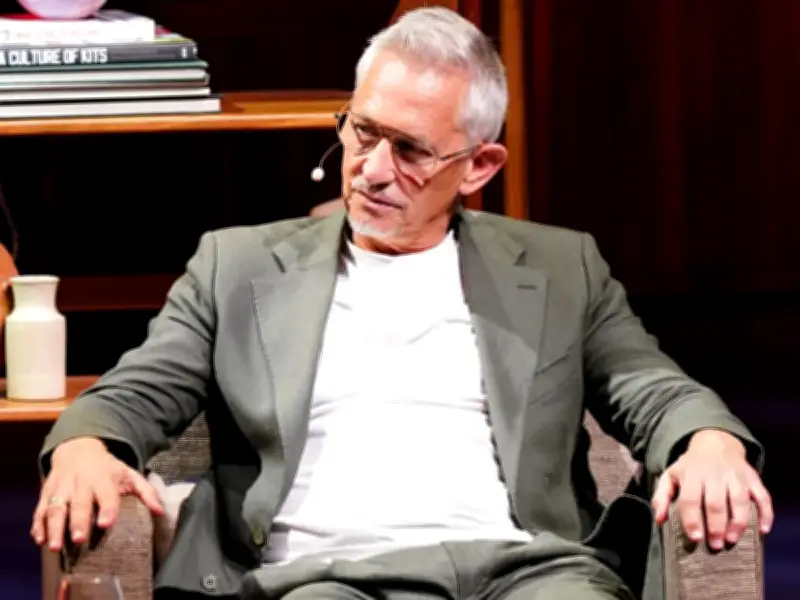
Gary Lineker has accused Suella Braverman of sowing division and discord across the nation after the Reform MP declared she does not regard herself as 'an English person' due to her parents being born abroad. Braverman, who was born in Harrow in 1980, made the remarks during an appearance on BBC's Question Time.
As the daughter of parents who emigrated to Britain from Mauritius and Kenya in the 1960s, she said: "I've always considered myself British, of Asian ethnicity, and that's never been something that I would question. Of course I'm not English. I'm not an English person - I am of Asian origin."
"It doesn't sound very controversial to me, but suddenly it has become debatable. My parents came as immigrants themselves to this country with nothing, very grateful to Britain for the hand of friendship that Britain extended to them."
Lineker cites Klopp's words on 'idiocy'
Former Match of the Day host Lineker hit back at Braverman's remarks, arguing they were emblematic of a 'divide and rule' strategy designed to sow discord and tension across the nation. Appearing on the latest episode of his The Rest is Football podcast, Lineker said: "I raise it because obviously we've had the thing with one of the Reforms, Suella Braverman, saying the same sort of stuff that, if you've got a different skin colour, you're not English. And I just wanted to read [Jurgen] Klopp's words out, really."
He [Klopp] said: 'There is absolutely no reason to pay attention to these people. You won't get my thoughts on this. I have little time in everyday life for idiocy and even less on social media.'
'The great crux of our lives is that everyone is allowed to express their opinion. It's insane when something like that exists. The world would learn a thing or two from a sports changing room. There, everyone is respected based on the facts and not discredited based on false opinions.'
Football's harmony contrasts with political rhetoric
Lineker's remarks followed former Liverpool manager Jurgen Klopp being questioned last week about whether Germany's football team were 'not German enough' or 'not white enough'. While Lineker acknowledged it can be a 'scary time' and that he is 'always a bit nervous talking about politics', he explained he felt duty-bound to speak out when political matters started impacting football.
"We focus sometimes on a racist chant or something at a football game or the occasional problems we have," he continued. "But in the actual dressing rooms themselves, the harmony, whether, you know, you can be a Christian, a Catholic, a Muslim, any kind of ethnicity, you can be black, you can be brown, you can be white."
"But it just all comes together and it's so harmonious. And, yet, politicians and people speaking out in that way, it just depresses me a little bit. I saw someone put a graphic up of all the players of various colours that have played and represented England over the years. I mean, come on. I know it's done to divide and rule. That's the whole plan. But it's worth calling out occasionally. I really do think that."
Previous clash over pro-Palestine march
This was not the first time Lineker and Braverman had locked horns, with the former England striker previously challenging her remarks over a planned pro-Palestine march in 2023. Braverman, who held the position of Home Secretary at the time, turned to X, formerly Twitter, to denounce the demonstration calling for a ceasefire in the Israel-Hamas conflict, which was scheduled to take place in central London on November 11, Remembrance Day.
She branded the planned protest as a "hate march", triggering a response from Lineker. She said: "It is entirely unacceptable to desecrate Armistice Day with a hate march through London. If it goes ahead there is an obvious risk of serious public disorder, violence and damage as well as giving offence to millions of decent British people."
"I have full confidence in the Metropolitan Police to ensure public safety and take all factors into account as they have done in similar situations in the past."
Lineker objected to Braverman's characterisation of the protest as a 'hate march.' "Marching and calling for a ceasefire and peace so that more innocent children don't get killed is not really the definition of a hate march," he responded.