Jahmal Harvey: The Unbeaten Prospect Redefining Boxing's Path to Greatness
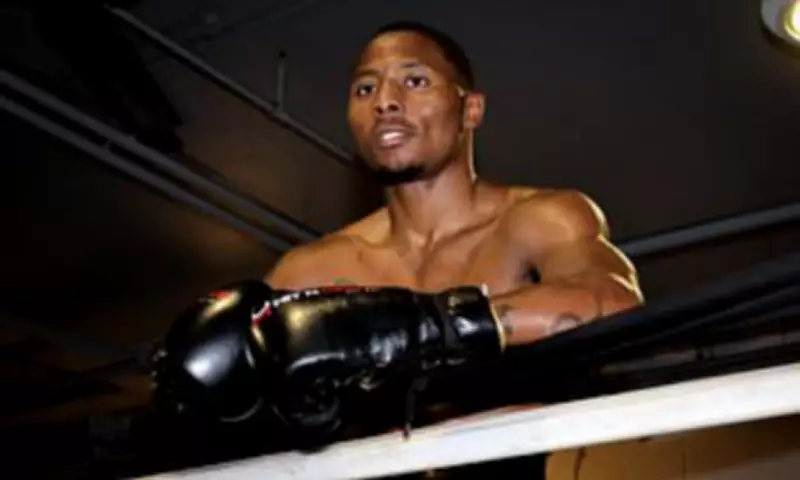
Jahmal Harvey doesn't appear to be someone still introducing himself to professional boxing, yet in many significant ways, that's precisely where he stands. At only 23 years old, the Maryland-born switch-hitter has already experienced a career that most fighters spend an entire lifetime pursuing: world amateur champion, Pan American Games gold medallist, Olympian, and now an undefeated professional prospect signed to Most Valuable Promotions.
A Meteoric Rise Through the Ranks
As he prepares for this evening's bout at Madison Square Garden against Daniel Lugo, there remains a distinct sense that Harvey is merely beginning to reveal the complete version of his capabilities. Part of this perception stems from the astonishing speed at which his journey has unfolded. He transitioned from a football-loving child in Oxon Hill, Maryland, to taking up boxing during middle school, eventually competing on the international stage before most of his contemporaries had even established themselves in senior amateur divisions.
By age 18, Harvey had already secured world champion status at the 2021 IBA World Championships in Belgrade, becoming the first American male elite gold medallist since 2007. Just two years later, he added Pan American Games gold in the 57kg division, and by 2024 he was a seeded fighter at the Paris Olympics, exiting only after a narrow split decision quarter-final that could easily have swung in his favor.

Resisting a Fixed Identity
Despite such an impressive pedigree, Harvey actively resists the notion that his identity is already solidified. He communicates more like an individual still experimenting with who he is—both inside and outside the ring—than someone striving to uphold a fully formed reputation.
'I'm just a regular person. I engage in numerous different activities during my spare time. I enjoy embarking on random side quests. I go bowling, as I mentioned, I'm an activity-oriented individual—anything active, whether it involves playing video games or bowling. I visit the studio, I create music, I participate in volunteer work and give back to the community. I'm perpetually in motion, or simply spending time with family or friends, showing them affection, and relaxing. I'm straightforward,' Harvey explains.
This duality fundamentally defines him: elite-level fighter on one side, constantly moving and inquisitive young man on the other. Consequently, even as he enters the professional ranks with genuine momentum behind him, he continues to speak like someone constructing his narrative in real time rather than safeguarding a legacy already inscribed.
Strategic Navigation of Boxing's Business Side
This mindset extends to how he has maneuvered through boxing's commercial aspects. His transition to Most Valuable Promotions in 2025 was not portrayed as a leap of faith, but rather as recognition of environment, structure, and his desired developmental path.
'Their vision is extraordinary, in a positive manner. The initiatives they undertake and the manner in which they organize their events truly distinguish them. I had recently attended one of their gatherings, and observing the crowd and operational dynamics demonstrated precisely how they function. Even though I was not under contract at that moment, they arranged my travel, provided drivers, and ensured I had all necessities,' Harvey recounts.
'I simply appreciated how seamlessly everything was already operating. Additionally, there's the comfort aspect. Mike Leonardi, progressing through the USA Boxing system and now collaborating with Jake, made me feel at ease immediately. It seemed as though I had known him for years. Ultimately, it revolves entirely around comfort. I was confident they would guide me appropriately, so I was pleased to place my trust in them.'
For Harvey, this comfort holds equal importance to any contractual agreement or promotional platform. Having witnessed enough of elite sport, he comprehends how rapidly careers can become transactional if an unsuitable environment is selected prematurely.

Perspective on Jake Paul and Boxing Philosophy
This understanding also clarifies his viewpoint on Jake Paul, one of the most divisive figures in contemporary boxing and the prominent face of the promotion he now represents.
'Jake is more of a promoter archetype. He's a business-oriented individual, extremely cool and grounded. He enjoys offering advice, instructing about social media and its effective utilization. He's simply a relaxed person. He cracks jokes, exhibits humor, might spontaneously sing or utter something unexpected. He's just an ordinary individual, experiencing life and enjoying himself,' Harvey states.
Harvey makes no effort to exaggerate the relationship or construct mythology around it. Instead, it integrates into his broader approach to the sport: observe, assimilate what proves useful, continue progressing.
The same emotional detachment applies to how he regards boxing itself. Despite all his accomplishments, he explicitly refuses to allow the sport to constitute his entire identity.
'Boxing doesn't comprise even 50 percent of my being. I assert this because when it consumes all your thoughts, you become stressed and it begins to devour you internally. If you invest everything into one pursuit, it can overwhelm you. Nine times out of ten in this world, you won't receive equivalent returns on your investment, particularly in sports,' Harvey reflects.
'Consider Floyd Mayweather, Terence Crawford—they've accomplished remarkable feats yet don't receive due recognition. Or even LeBron James, he's achieved so much, and people still remark, "Oh, you're inadequate." There's no purpose. I've witnessed it excessively. I won't dedicate my entirety to it in that manner, because a sport will never reciprocate your affection equally.'
Transition from Amateur to Professional Ranks
Harvey has already endured the demands of elite amateur boxing—the travel, expectations, and physical toll of continuous preparation. The Olympic cycle alone, he concedes, sufficiently altered his perspective on long-term commitment to the amateur system.
'I intended to pursue another Olympic cycle, but life takes unexpected turns. Various circumstances I encountered, events occurring in my life at that period, simply made professional transition seem preferable. I needed to continue advancing in life. I didn't desire to regress and expend another four years. The Olympics represents an immensely challenging objective. It's a four-year cycle. Boxing is a 24-hour, year-round sport. Your body endures strain, weight reductions, all training sessions, two or three times daily. The Olympics genuinely depleted me significantly, I would assert,' Harvey admits.
'So once I was prepared to recuperate, and considering everything transpiring, I decided to commence earning income presently. I simply had to accept it. I participated in the Olympics, fulfilled my responsibilities, acquired several gold medals along the journey—just appreciate it. That's my current life position.'
Thus, he progressed into professional ranks, not as a gamble but as a recalibration. A determination to start earning, start building, and start shaping his own trajectory without another multi-year waiting period.
Life Beyond the Ring
Outside the ring, this philosophy manifests in his lifestyle. Harvey characterizes himself as someone perpetually engaged in activity—never stationary, never confined to a singular identity.
Even competition beyond boxing infiltrates his world. A bowling match against Paul during a media event evolved into a genuine contest.
'I competed against Jake in a bowling competition during the Mike Tyson versus Jake Paul event, and I defeated him. However, Jake nearly surpassed me. He certainly made me anxious. Before recording commenced, we played a brief warm-up game. I performed well, and Jake performed poorly, so I thought, "Oh yes, Jake cannot bowl." Then as soon as cameras activated—strike. I reacted, "Wait, wait." It transformed into an authentically competitive game. I needed to delve deeply into my abilities to secure victory,' Harvey recounts humorously.
This anecdote, delivered with levity, reflects something consistent within him: whenever competition arises, he engages completely, irrespective of context.
Technical Approach and Upcoming Challenge
Within the ropes, that competitiveness assumes a more technical form. Harvey is a 5ft 6in switch-hitter who established his amateur reputation on timing, sharp counters, and the capacity to alter rhythm without warning. He is not a fighter bound to one ring identity; he is constructed around transitions.
'I believe I always desire to exhibit everything. When I fight, I become bored employing just one style, which is why I switch. It maintains my activity and engagement in the bout. Switching positions me where I'm consistently active, never becoming lax, because I'm perpetually adjusting,' Harvey elaborates.
'I'm constantly thinking, "If I execute this, I might receive that," so I never grow excessively comfortable. I don't wish to remain in one stance and repeat identical actions until someone deciphers me. By switching and fighting diversely, I maintain unpredictability. I might advance in orthodox, then switch to southpaw and fight off the back foot.'
'Then I might revert to orthodox and fight in the pocket, or adopt southpaw and replicate. I could switch again and become more counterpunch-oriented. I'm always modifying styles. I want to demonstrate all my capabilities. That's why I require an opponent capable of adapting and executing everything as well—someone who can elicit my best, enabling me to prove I can defeat anyone employing any boxing style.'
Lugo presents the next examination of this philosophy. A taller, rangier opponent who operates behind a steady jab and maintains consistent tempo, Lugo embodies precisely the type of structural challenge Harvey has been analyzing.
'From my observations, he's somewhat taller and rangy. He functions behind his jab, so I'll need to neutralize that—establish my range, decipher his timing, and eliminate that advantage. I believe once I remove that, everything else will align, because he genuinely constructs everything from his jab. He's not excessively fast or flashy, it's predominantly identical tempo and pace usually. I appreciate that he operates both up and down, so I'll need to remain sharp defensively, keep my hands elevated, and whenever I lower them to intercept a shot, immediately raise them again, because he assaults both levels,' Harvey analyzes.
'That's why I favor this matchup—it's quality competition. He possesses a reasonably solid record, so I recognize he won't be incompetent or effortless. It will be competitive, and I anticipate he brings out my best so everyone witnesses an excellent fight and I can display my talent.'
Foundational Family Influence
Harvey's mindset was molded long before boxing, during a childhood characterized by siblings, competition, and a family culture that treated toughness as expectation rather than exception.
'I have numerous siblings and cousins. We were always deeply involved in wrestling and boxing, so we frequently fought each other and consistently supported one another. One principle my family—my aunts and uncles—continually emphasized was, "You all must protect each other. All you possess is family." So I prioritize family greatly, that's all I heard while growing up,' Harvey shares.
'In school, if incidents occurred, I was never fearful, and I always treated matters lightly. If you were bothering my elder brother or cousins, and I observed them upset or crying, like, "Oh yes, he disturbed me," I would respond, "Who did it?" I'm prepared to fight. So I will acknowledge, I engaged in many school altercations.'
'If you weren't my family, I didn't genuinely form friendships like that. So I attended school solely to complete my work. Consequently, once you began joking with me, assuming it's acceptable to play childish games—striking people on the head, etc.—now you must confront me. Now I will physically dominate you. So I entered many fights simply because children provoked me, and me responding, "Man, I'm not playing with you—I intend to fight you."'
Even size and age never served as deterrents, only variables to overcome.
'During that period, I fought children older than me, and it never concerned them. I fought because my uncles always stated, "Yes, you fight someone older than you—that's teamwork. You have family for that. But don't fear anyone. If you lose, you better accept defeat with dignity. Don't allow size to influence you." They always asserted none of that matters. I was small regardless, so I needed to learn from early age that size signifies nothing. So I was never frightened,' Harvey recalls.
Parental Support and Future Focus
Behind everything resides a family structure that shaped both his ferocity and restraint, especially his parents who remain closely involved every fight night.
'No, they both enjoy it. I acquired fighting skills from my mother—she's the one who provided that fire, my motivation. My mother is actually the fighter, not my father. My mother is the fighter. Even though she experiences nervousness, she still attends, she still possesses that maternal instinct, but she simply understands. She remarks, "Yes, you better defeat him,"' Harvey reveals.
'She continues that motivation, like, "You possess this, be formidable, accomplish this." But simultaneously she states, "Man, I don't want you to get struck," so she's intermediate. But my father is more extreme than her—I feel he desires to be in my corner. He would want to be present. But you observe him before my fight, he says, "You know I need to take my brief smoke break." He also requires bathroom breaks. I respond, "Pops, behave, Pops."'
Now, as he approaches tonight's bout, Harvey remains concentrated on the immediate task. With his unique blend of elite achievement and grounded perspective, he continues to redefine what it means to be a rising star in professional boxing, demonstrating that greatness can be pursued without sacrificing personal identity or life balance.