Cycling's Dominant Force Faces Emerging Challenge at Strade Bianche
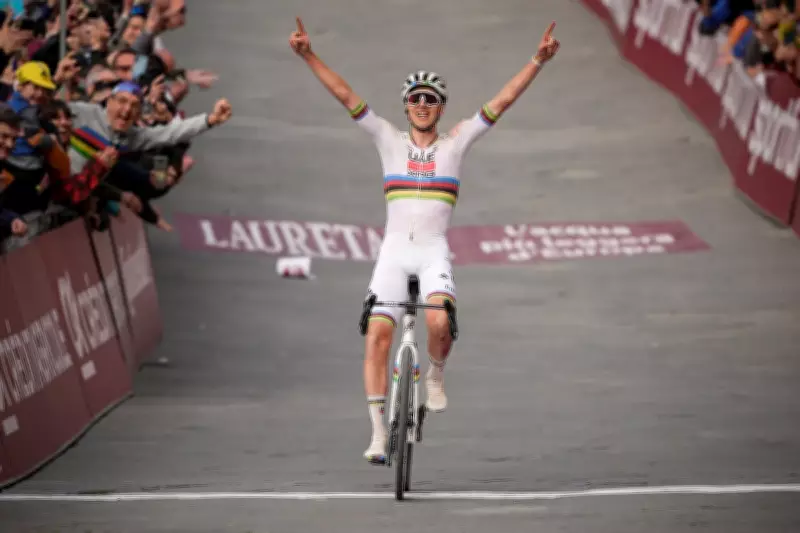
As the 2026 cycling season commences, Tadej Pogacar enters Strade Bianche as the overwhelming favourite, continuing his reign as the sport's undisputed king. The Slovenian superstar, now 27 years old and at the peak of his powers, has dominated professional cycling for seven years since his first professional victory on the Alto da Foia climb in Portugal. His career includes four Tour de France titles and widespread recognition as potentially the greatest cyclist of all time.
The Rise of a New Generation
However, all sporting eras eventually transition, and cycling now witnesses the emergence of formidable young talents poised to challenge the established hierarchy. The most prominent among them is 19-year-old French phenom Paul Seixas, whose early career trajectory bears unnerving similarities to Pogacar's own rise to prominence.
Seixas recently claimed his maiden professional victory on the exact same Alto da Foia climb where Pogacar began his journey, before delivering a dominant solo performance at Faun Ardeche that echoed the Slovenian's signature racing style. The Lyon native represents one of the most exciting prospects in a sport historically unforgiving to young talents who fail to meet lofty expectations.

Strade Bianche: A Crucible for Change
This weekend's Strade Bianche in Tuscany presents the perfect stage for this potential changing of the guard. The race across the iconic white gravel roads has become one of cycling's most romantic and dramatic events, with Pogacar having won three of the last four editions through spectacular solo breakaways.
Race organizers have deliberately modified this year's parcours to encourage more competitive racing, reducing the total distance to 203 kilometers and cutting 18 kilometers of gravel sections compared to 2025. These changes aim to prevent another Pogacar procession and create opportunities for challengers to emerge.
Established Challengers Remain Dangerous
While Seixas represents the future, established stars still pose significant threats to Pogacar's dominance. Britain's Tom Pidcock, the 2023 champion, remains particularly dangerous on this terrain despite a disappointing 48th-place finish at Omloop Nieuwsblad last week.
Pidcock's coach Kurt Bogaerts emphasized the race's importance, telling media outlets that Strade Bianche represents "one of the races that [Pidcock] gets out of bed for." The British rider leads the ambitious Pinarello Q36.5 team, which seeks to disrupt the financial hegemony of super-teams like Pogacar's UAE Team Emirates-XRG.
Pogacar's Vulnerability and Competition
Even the seemingly invincible Pogacar has shown occasional vulnerability. Last year at Strade Bianche, he crashed on the gravel while under pressure from Pidcock on a descent. Though he recovered to win convincingly, the incident demonstrated that he remains human and beatable.
Other contenders include swashbuckling Frenchman Julian Alaphilippe, Irish puncheur Ben Healy coming off a stellar 2024 season, American Quinn Simmons who matched Pogacar at Il Lombardia last October, and Pogacar's own teammate Isaac del Toro - a young talent capable of surprising even established stars.
Financial Shifts and Future Implications
The landscape of professional cycling continues evolving financially as well. Seixas rides for Decathlon CMA CGM, a squad that recently replaced long-time sponsor AG2R La Mondiale and aims to become a top-three team within three seasons. This financial backing could provide the young Frenchman with resources comparable to cycling's super-teams in coming years.
For French cycling specifically, Seixas represents hope for ending a decades-long Tour de France drought, following disappointing careers of previous hopefuls like Thibaut Pinot and David Gaudu.
The Beginning of a New Era?
While Pogacar remains the overwhelming favourite for Strade Bianche and likely for much of the 2026 season, the emergence of Seixas and other young talents signals potential change on the horizon. The race organizers' course modifications, combined with the natural progression of athletic careers, suggest cycling may be approaching a transitional period.

Whether this shift occurs immediately or develops over several seasons, the 2026 Strade Bianche could mark the beginning of a new chapter in professional cycling history. The presence of both established stars and emerging talents creates a compelling narrative as the season opens with one of the sport's most visually spectacular and strategically demanding races.