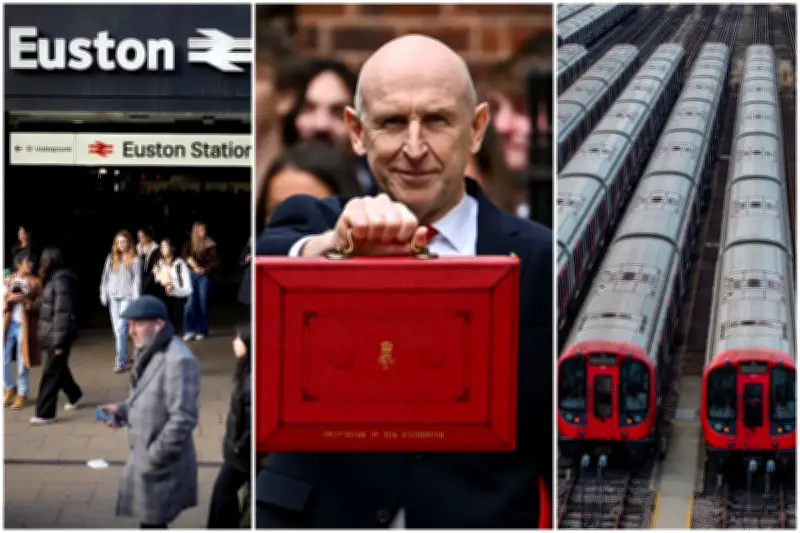
The Chancellor has handed Lord Sadiq Khan landmark new tax powers to raise billions for major new transport projects in London.
In what would be a huge boost for the capital, John Healey announced that City Hall will be allowed to spend a proportion of income tax and retain some business rates. The sweeping move is the biggest funding change since the creation of the London mayoralty in 2000.
Radical decentralisation announced in Commons
Hailing the most “radical act of decentralisation in a generation,” Mr Healey unveiled his roadmap for fiscal devolution in the Commons. In his first Budget speech, he told MPs: “For the first time I’m making the commitment that 100% of business rates will be retained locally by the end of the decade, so if local leaders help businesses start and grow, more of the rates they pay stay in that area.
“From next year, 20% of business rates revenue will go to Mayors, And from 2028, a share of income tax receipts will go to Mayors as well.”
He also highlighted the new “tourist tax” - or overnight visitor levy - being introduced in London and other cities. “Taken together, these are long-term funding streams they can use to back investment into big local infrastructure,” he added. “So that more of the money that is raised locally, can be spent locally, on projects like the Trent Sports District, led by the Mayor of the East Midlands, and the Bakerloo line extension led by the Mayor of London.”
Billions for transport schemes and stations
The reforms will allow Lord Khan to give the green light to deliver key transport schemes such as the West London Orbital and Bakerloo Line extension. The new tax powers are expected to give City Hall an increase in borrowing capability of around £10 billion.
More immediately, the Chancellor backed Lord Khan’s plan for international trains to stop at Stratford in east London. He agreed to a Business Rate Retention Zone to fund the upgrade of the station which is expected to cost some £20 million. Mr Healey also gave his support for a tax increment financing scheme to help to fund a new Euston Station.
Welcoming the new powers, Lord Khan said: “Today’s Budget is a really positive and significant day for London. “At its heart is a new devolution revolution.
“After lobbying on the issue for many years, I’m delighted that the Government will help us to bring cross-channel rail services to Stratford International – making this station truly international for the first time.”
On the broader fiscal changes, he added: “The Government have also taken significant steps to devolve transformational new powers and funding to the capital, alongside other communities around the country. “By giving London the ability to keep more of the money we raise, we can invest billions of pounds more in our future, helping to finally unlock transformational infrastructure projects such as the West London Orbital, the Bakerloo Line Extension and the Euston knowledge quarter project, supporting tens of thousands of new homes, jobs and economic growth.”
Other Budget measures and growth forecast
Mr Healey’s fiscal devolution roadmap was expected to make Lord Khan one of the most powerful mayors in Europe in terms of fund raising and spending powers. The huge devolution move, by far the largest in the mayoralty’s 26-year history, could sway his decision whether to seek a fourth term in office in 2028 given that he will now be able to achieve far more.
In a series of other announcements in the Budget, standing charges on gas bills will be scrapped from next year. Twenty million households in council tax bands A-D will get a £100 ‘Household Energy Payment’ paid directly into their bank accounts to help deal with rising energy bills, a scheme that will cost £2.6bn. The threshold for Small Business Rate Relief for retail hospitality and leisure businesses was increased from £12,000 to £18,000.
The Chancellor also hit the City with an extra 3% on the Bank Surcharge to fund help on energy bills for less well off households. The 5p cut to Fuel Duty and reduction in red diesel to its lowest rate in over 20 years are extended until July.
Summing up his fiscal plan, Mr Healey said: “This Budget is designed to give households breathing space from some of the everyday costs, provide targeted support for businesses and self-employed people, and to start the long-term action needed to get energy costs down for good.”
The Office for Budget Responsibility upgraded its economic growth forecast to 1.2% this year. But in a sign of the dire state of the public finances and fiscal headwinds, Mr Healey said it would be followed by 1% next year, 1.6% in 2028, 1.8% in 2029, 1.7% in 2030 and 1.6% in 2031.