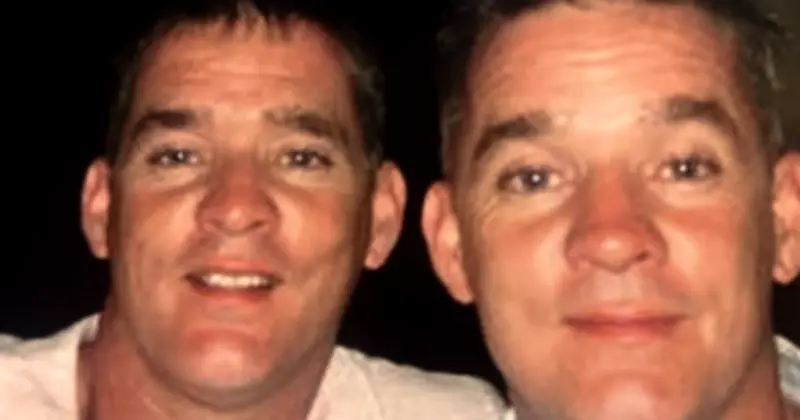
The twin brother of police officer David Rathband has said it is “deeply upsetting” that his sibling has never been given Britain’s highest posthumously awarded policing honour. PC Rathband was blinded after being shot in the face on duty by gunman Raoul Moat in Newcastle in July 2010.
Despite his life-changing injuries, the father of two showed courage by throwing himself into charity work to help fellow police officers injured on the front line, and he received a Pride of Britain award the same year he was shot. Within two years, however, he took his own life at the age of 44, while still employed by the police.
Elizabeth Emblem and Past Recipients
In 2024, the Elizabeth Emblem was established to recognise public servants, such as police officers, who have died in the line of duty. Recipients include Thames Valley Police PC Andrew Harper, 28, killed by quadbike thieves in 2019, and Greater Manchester Police PCs Fiona Bone, 32, and Nicola Hughes, 23, murdered by a gunman in 2012.
Darren Rathband, 59, said his brother’s death was a direct result of the horror injuries he suffered in the line of duty, and he too should be recognised.
“I find it deeply upsetting,” Darren said. “David wasn’t simply somebody who happened to suffer a tragedy. He was a serving police officer who was shot at close range while sitting in his patrol car during the search for an armed gunman. He lost his sight in both eyes and suffered devastating injuries. The subsequent consequences of those injuries were profound. What hurts most is the feeling that the state can be very quick to ask police officers to put themselves in danger, but much slower when it comes to recognising what happens to them and their families afterwards.”
Family Application Process Under Scrutiny
Despite the pain of losing a loved one, families must still apply for the Elizabeth Emblem, and when it is awarded only one person is given the physical brooch, while others regarded as next-of-kin may be given a “Memorial Scroll”. Darren said the system needs looking at again to put less pressure on families to apply and more onus on the state to award. As the brother of David, he is also not considered the immediate next of kin, which he said affects his own ability to apply.
“If you go through this trauma, why on earth are loved ones having to apply to be recognised? People who die in service, their families should not have to apply for recognition,” he added. “Also, you can wear a medal in memorial of one posthumously awarded, so you can have a replica made, with the emblem you can’t do this because it is not a medal. As far as a Memorial Scroll goes, it might as well be a Blue Peter badge for all the good it does, families should be able to make replicas so everybody in that person’s family can wear one with pride.”
“They need to make it easier for wider family to apply for the emblem and not rely on the way it is done now, it should be more in line with how awards such as MBE’s are given out to some extent, so it is more open to who can apply. It’s never been about what I want, this is for David and his children and his memory, I don’t think it is right he has not been recognised and I think if he is, the emblem should be wearable in tribute by the family unit as a whole.”
Calls for Reform and Government Response
For military medals, family members wanting to pay tribute to the service of a loved one often wear replicas at commemorations, typically displaying the awards on the right breast rather than the left to signify they are worn honouring another. As the nation approaches Remembrance commemorations, Darren, who served himself as a police officer in the UK and South Australia, said: “As we come up to a time of national remembrance I think it is even more of an argument that collectively as a family we should be able to honour David. It gives recognition of his sacrifice, in the First and Second World War millions died, and they rightly get recognition and memorials, police officers often get nothing.”
Tom Curry, founder of the 999 Injured and Forgotten Campaign, said it had always “disturbed” him that David Rathband had not received any medal for his service. “David deserves much better than this and this shame must somehow be corrected. It has always disturbed me that PC David Rathband never received any medal recognition whatsoever for his horrific injury on duty and the suffering that followed. Because he had under 20 years' police service, he also did not receive his Police Long Service and Good Conduct Medal. As a result, his next of kin and family have no medal of any kind to show he was connected to the police service, let alone what he went through.”
Former police officer Paul Cooper, founder of It Stops Now, a national movement campaigning for improved mental health and welfare protections and the prevention of police suicide, said: “We fully support Darren Rathband’s calls for his brother David’s sacrifice to be properly recognised through the Elizabeth Emblem and for the process to be reviewed to ensure bereaved families are not left fighting for the recognition their loved ones deserve. David Rathband was a police officer who went to work to protect the public and suffered catastrophic, life-changing injuries as a result. Although he survived the initial attack, the physical and psychological consequences of what happened to him continued long after. His story raises important questions about how we recognise officers whose lives are profoundly affected by injuries sustained in the line of duty.”
“We also have to acknowledge that our understanding of psychological trauma has evolved considerably since David was attacked in 2010. At that time, awareness and understanding of PTSD, psychological injury and the long-term consequences of traumatic incidents within policing were far less developed than they are today. While suicide is complex and we cannot automatically attribute every death to police service, we must be prepared to properly investigate the circumstances where there is credible evidence that injuries or psychological trauma sustained during an officer’s career may have contributed to their death.”
A Government spokeswoman said: “Our deepest sympathies go to David's family and loved ones. The Elizabeth Emblem honours public servants who have died as a result of their duties, and every application will be considered in line with the eligibility criteria.”