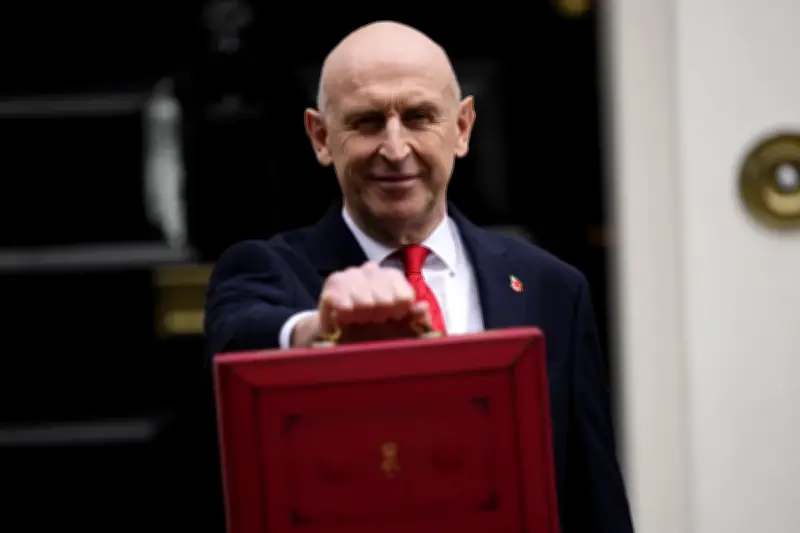
Chancellor John Healey has ordered an inquiry to seek to identify who “leaked” details of a new bank tax in the Budget.
The Chancellor was urged by the Commons Treasury Committee to find out who, if anyone, passed on details of the higher levy on the City before it was officially announced in the Budget on October 28.
Treasury investigation launched
James Bowler, Permanent Secretary at the Treasury, confirmed to the committee that the Government Security Group is leading an investigation into the potential leak of measures in the Budget which may have moved financial markets.
Early access to such financially sensitive information can allow investors to make significant gains.
In a letter to the committee, Mr Bowler said he had been assured that no banks, representatives or trade bodies were briefed on the details of the changes to the Bank Corporation Tax Surcharge before the policy was announced by the Chancellor.
Committee chair expresses scepticism
But Dame Meg Hillier, committee chair, was sceptical about the Treasury finding any “leaker” given the poor record of such Government probes.
The MP for Hackney South and Shoreditch said: “I suspect that yet another inquiry into the leak of Budget measures will turn up no evidence of a breach but plenty of reassurance that next time it will be even more secure. And so the cycle continues. We cannot continue to accept this doom-loop of dead-end investigations in which everybody in the Treasury throws their hands up in despair, but nobody is ever found to have done anything wrong.”
She added: “The Treasury still has questions to answer on how market sensitive information which was likely to affect the share price of banks was circulating around newsrooms before it was given to Parliament. I will be pushing for those answers when the Chancellor appears in front of the Committee tomorrow (Wednesday) afternoon.”
Focus on Bloomberg report
The inquiry was expected to focus on a Bloomberg report published at 10.45am on the day of the Budget, which said Mr Healey's increase in bank taxes would be less severe than lenders had feared and would be temporary.
When the Chancellor delivered his Budget later that day, he confirmed that the bank corporation tax surcharge would be temporarily increased from three per cent to six per cent for 15 months from January 2027 to help fund measures aimed at easing cost-of-living pressures.
It was far lower than the tax hit of up to £60 billion over four years being demanded by unions.
Concerns over market sensitivity
In earlier correspondence with the Treasury, calling for an inquiry, Dame Meg noted that Bloomberg's report cited “people familiar with the matter” and appeared to contain information that was “more than idle speculation”.
She also raised concerns that bank share prices seemed to react to the report before the Budget was formally presented to Parliament, highlighting the potential market sensitivity of the information.
The committee has also urged the City watchdog, the Financial Conduct Authority, to probe the apparent early release of details of the bank tax.