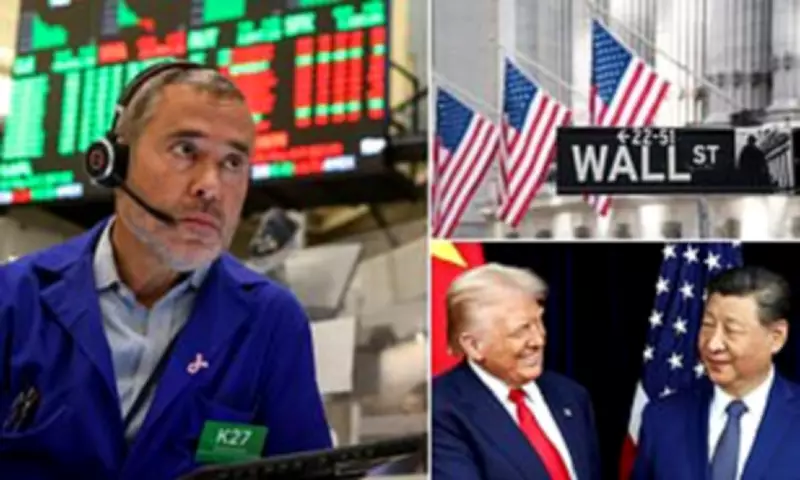
Stock markets opened at another record high on Monday, but Wall Street is bracing for a week that could decide whether the rally survives or cracks. Four major events are now bearing down on investors, homeowners, and anyone with a 401(k).
Kevin Warsh Confirmation Vote
At the top of the list, the full US Senate will vote to confirm Kevin Warsh as the new Federal Reserve chair. Warsh faces two key votes that will make or break his candidacy. The first vote, scheduled for Monday evening, will confirm Warsh's membership on the Fed's governing board. The second, more important vote will arrive later in the week but has not yet been scheduled, and will confirm him as chair of the Federal Open Market Committee (FOMC), the powerful group that sets interest rates.
Current Fed chair Jerome Powell's term expires on Friday, May 15. Warsh served on the Fed's board from 2006 to 2011, earning a reputation for favoring higher interest rates to protect the economy from inflation. However, since President Donald Trump returned to the White House, Warsh has aligned with the president's stance that rates are too high. The path to approval cleared a final hurdle when Republican Senator Thom Tillis dropped his blockade after the Justice Department ended its investigation of Powell.

Political analysts expect Warsh to clear both votes without problems by midweek. However, concerns remain about his independence. Jay Woods, chief market strategist at Freedom Capital Markets, told the Daily Mail: 'Kevin Warsh is walking into the Fed Chair role with his credibility under fire based on his views on independence. Will he run the Fed or will the White House?'
April CPI Inflation Report
On Tuesday morning, the government will release its latest Consumer Price Index (CPI) inflation report for April. Economists believe it could be as bad as or worse than the shocking March data. The March report showed prices jumped by almost 1 percent, pushing the annual CPI inflation rate to 3.3 percent, its highest level in two years. Gasoline prices soared 21.2 percent in March, accounting for nearly three-quarters of the overall increase.
For April, economists expect prices to rise 0.6 percent month over month and 3.7 percent year over year. Energy prices remain the main culprit. Josh Hirt, US senior economist at Vanguard, told the Daily Mail: 'Higher energy prices are beginning to generate broader supply chain pressures.' If the CPI report meets or exceeds expectations, Wall Street and homebuyers can forget about rate cuts. Woods said: 'The conversation will immediately shift to higher-for-longer, and the rate-cut crowd may have to fold their cards completely.' If inflation undershoots, Wall Street may start talking about a potential December rate cut again, giving Warsh breathing room.
Hawkish Fed Speeches
On Wednesday, three Fed officials skeptical of rate cuts will give speeches, previewing the skepticism Warsh faces. All three are considered hawks who prefer to keep rates on hold or raise them. Boston Fed President Susan Collins believes the central bank should stop talking about rate cuts, warning of a longer pause and possible hikes. Minneapolis Fed President Neel Kashkari has warned that the Fed may need to raise rates several times if oil prices stay high. Dallas Fed President Lorie Logan worries that the Iran war and higher oil prices could make controlling inflation more difficult, despite a strong jobs market.
Trump-Xi Summit
On Friday, President Trump goes to Beijing for his delayed summit with Chinese President Xi Jinping. The visit was originally scheduled for early April but was delayed due to the war with Iran. China buys most of Iran's oil exports and has ordered its companies to disregard US sanctions targeting Tehran. Trump wants China to help wind down the Iran war and cooperate on reopening the Strait of Hormuz. Wall Street is looking for a deal on oil and Iran, but also on rare earths and computer chips. A 'rare earth for machines' deal could lower chip prices and impact tech and AI stocks.
'Investors hoping for rate cuts may need to stay patient,' said Bret Kenwell, eToro investment analyst. 'Rising energy prices are adding to inflation concerns, and if the labor market and broader economy continue to hold up, the Fed's motivation to lower rates keeps dwindling, even with a new chair coming in.'