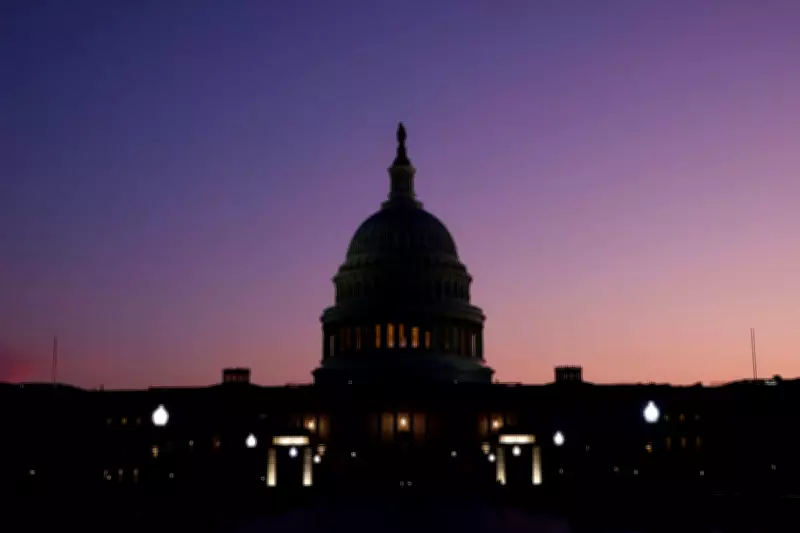
The United States Congress has approved a 45-day extension of the Foreign Intelligence Surveillance Act (FISA), specifically Section 702, which permits intelligence agencies to conduct warrantless surveillance. This short-term renewal comes after intense internal disputes, particularly within the Republican party, over the program's scope and potential abuses.
Bitter Infighting Delays Long-Term Renewal
Republican House Speaker Mike Johnson faced significant opposition from both hardline conservatives and progressive Democrats who demanded reforms to Section 702. Critics argue that the provision is frequently exploited to spy on American citizens without proper judicial oversight. During a House floor debate, lawmakers voiced their concerns, with Representative Jamie Raskin (D-MD) calling for meaningful negotiations to address the program's flaws.
Representative Thomas Massie (R-KY) attempted to block the extension, stating that even a short-term infringement of constitutional rights is unacceptable. Despite his efforts, the measure passed, marking the second short-term extension this month due to congressional deadlock.

Section 702: A Controversial Surveillance Tool
Enacted in 2008, Section 702 allows national security agencies to collect and review communications of non-Americans abroad without a warrant. However, when Americans communicate with these foreign targets, their messages may also be intercepted. Privacy advocates contend that the government exploits this loophole to conduct warrantless surveillance on U.S. citizens, violating the Fourth Amendment. Intelligence agencies maintain that these powers are essential for preventing terrorist attacks.
The most pressing demand from reformers is the introduction of a warrant requirement for querying Americans' communications. Republican leadership, including Speaker Johnson, has so far dismissed these calls. Notably, former President Donald Trump, who previously urged lawmakers to "KILL FISA," has now reversed his stance, advocating for a clean renewal of Section 702.
Legislative Maneuvering and Future Outlook
The 45-day extension was necessary to avoid a midnight expiration deadline. Critics argue that the proposed reforms merely restate existing law and fail to address core concerns. Senator Ron Wyden (D-OR) claimed a victory by securing a commitment that a long-term extension would not proceed without releasing a secret court opinion revealing abuses under Section 702.
Privacy advocates blame Speaker Johnson for blocking a vote on a warrant requirement, accusing him of circumventing democratic processes. They note that the legislative process was more balanced during the 2022 FISA reauthorization. In 2024, a warrant requirement amendment failed in a dramatic 212-212 tie.
Notably, even if Congress fails to reauthorize Section 702 by March 2027, surveillance can continue under existing certifications approved by the Foreign Intelligence Surveillance Court. This makes the current pressure to pass an extension somewhat of a "scare tactic," according to Hannah James of the Brennan Center. However, lawmakers remain uneasy about letting the underlying statute lapse.
President Trump has repeatedly urged Republican holdouts to support the extension, emphasizing its importance for national security. In a Truth Social post, he acknowledged the trade-off between personal rights and military protection, stating he was willing to risk his own privileges for the country.