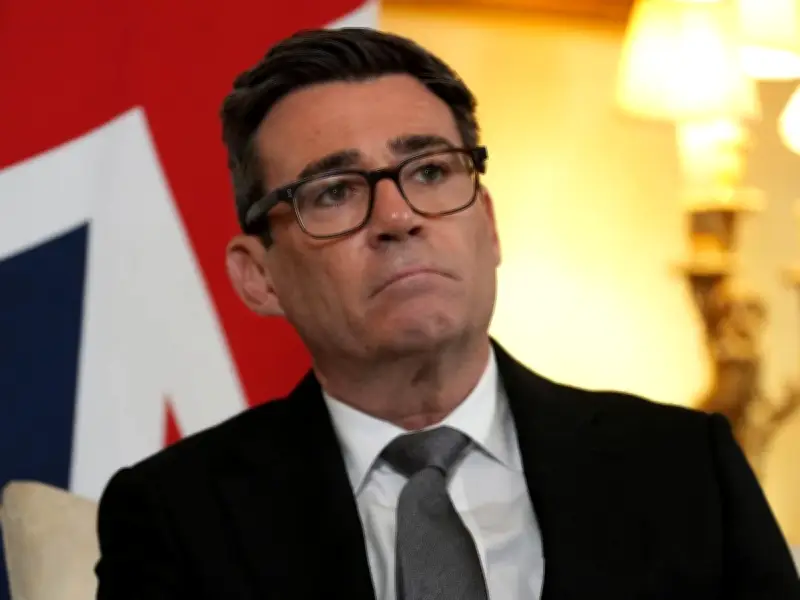
Prime Minister Andy Burnham says the UK is on the brink of a deal with the EU that will drive down the cost of the weekly shop. Writing for The Mirror, he said an agreement to tackle broken Brexit promises at a crucial summit on Friday will help ease the cost-of-living crisis.
Mr Burnham will meet European leaders hoping to hammer out new deals and get the UK back on a "positive path". In a defiant message to his critics, he wrote: "Any deal I seek to agree in Brussels must first pass what I call the Makerfield test: will it make life better for people in the parts of Britain that have felt forgotten? On Friday, there is a chance of reaching a deal that helps ease the cost-of-living crisis."
Burnham's 'Makerfield test' and Tory criticism
He continued: "I am putting Britain back on a positive path and working to get our economy growing. This Friday I can take the biggest step yet down that path - and I am determined to take it."
Two thirds of voters in the PM's Makerfield constituency in Greater Manchester voted to leave in 2016, but he said they had been let down by Boris Johnson's botched deal. He lashed out at the Tories for vowing to oppose any deals reached on Friday, fuming: "How can they turn their backs on lower food prices when families are struggling so much?"
Agreement to ease food prices and protect jobs
The UK and EU are set to unveil a groundbreaking agreement lifting post-Brexit checks from food and agriculture exports. This will drive down the price of food, the PM said. Agreements will also protect jobs in the car, steel and aluminum industries, Mr Burnham vowed.
He pointed to comments by M&S Food boss Alex Freudmann, who stated last month: "A deal means fresher food and fuller shelves for our customers, lifting the pressure on the price of the weekly shop. And it means British farmers are able to sell meat, fruit and veg into Europe without the red tape. The sooner this agreement is signed, the better. 20 November is the moment finally to get the deal done."
Migration co-operation and EU relations
The PM will also push European leaders on migration co-operation and call for access to databases lost when the UK left. This includes Eurodac, which contains biometric data revealing whether a person has claimed asylum in any other country - a ground to refuse their application.
The Prime Minister has previously said he is open to going "all the way" and rejoining the EU in future if the British public back the move. He will explore options for the UK's future relationship with the 27-member bloc during Friday's talks. But Mr Burnham reiterated that there will be no return to the Customs Union, Single Market or freedom of movement in this Parliament.
On Sunday Ireland's Europe minister, Thomas Byrne, told Sky News: "We'd be very strong supporters of closer integration between the European Union and the UK, but also very, very conscious that this is an internal matter for the UK to do themselves, because we know that Brexit certainly had a harmful effect in GB in the UK, but also caused us very significant problems and significant adjustments had to be made. And so anything that brings us closer together, I think, from our point of view is better."
Work and Pensions Secretary Pat McFadden said on Sunday: "No one thinks that the status quo is serving us particularly well, and so we think we can do better there. This is a really important summit at the end of next week, it's being taken very seriously by the Prime Minister and for a whole number of reasons - security reasons, cost, the business reasons, cost, the consumer reasons, lack of cooperation on immigration, which is a big concern to people. We think we can get a better arrangement with Europe than we have right now."
He continued: "I think we do need a closer relationship. I don't think the end state of this is defined yet. But if you look at the way the world is changing, for example, in defense and security in different ways, both the United States and Russia, their actions have pointed to us needing to do more on European defense cooperation. If you take costs for business and you have any business on this program, most of them will tell you that costs have significantly increased since we left the EU. So let's talk these things through with Europe. We want to be a good partner, a good neighbor, with Europe, and I think we can get to a better relationship, which is in the British national interest than the one that we have now."