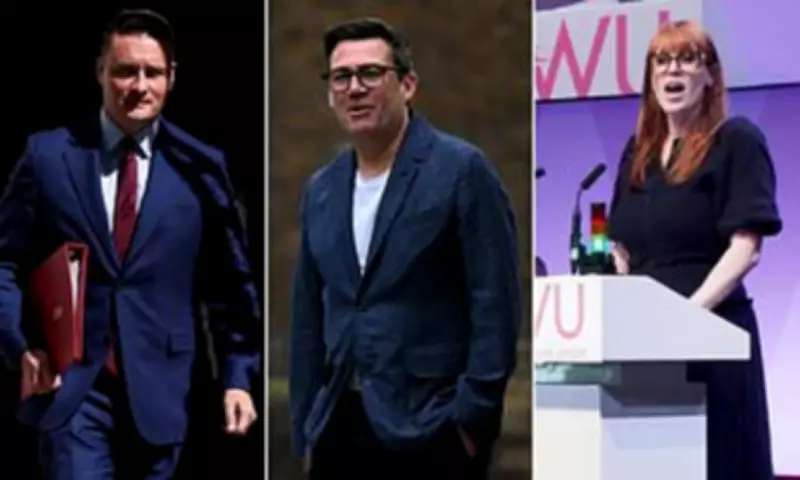
Britain faces being dragged to the Left with a rise in spending, taxation, the minimum wage and renationalisation if Keir Starmer is removed from power. Higher public spending, higher taxes, a more generous minimum wage and yet more new rights for workers at the expense of employers are among ideas floated by some of the challengers and their allies.
Even before the Prime Minister quits or is forced from No10, the markets have reacted with fear over who might replace him and Chancellor Rachel Reeves. UK long-term borrowing costs have surged to a fresh 28-year high and the pound weakened as Prime Minister Sir Keir Starmer's leadership comes under increasing pressure. The yield on 30-year UK government bonds – also known as gilts – jumped as much as 13 basis points to 5.807 per cent in Tuesday morning trading, reaching the highest level since 1998 as Sir Keir faced increasing calls from within his own party to quit.
A protracted leadership election period taking months would give them time to twitch and soar further as the candidates come forward with concrete plans to govern if they win a vote of Labour members. With the floundering US war with Iran expected to sucker-punch an economy already on its knees, it could signal an incredibly difficult period ahead for Britain.

Andy Burnham
The Greater Manchester mayor has already had to try to reassure the markets that he is not a liability in waiting. Last autumn, as he made a halfhearted attempt to trigger a leadership battle, the Greater Manchester mayor said the UK should not be 'in hock' to bond markets and pledged to borrow money to build council houses alongside a mass nationalisation programme. He was attacked for showing 'financial naivety' as stocks in London fell and the pound dipped. He later rowed back on the remarks, but it has raised questions about what he would do in power. Mr Burnham has proposed the idea of 'Manchesterism', which he described as a business-friendly 'aspirational socialism'. Last year he told the New Statesman that 'when you've lost control of housing, energy, water, rail, buses, you've lost control of the basics of life, but you've also then lost control of costs and public spending'.
Today one of his most senior allies, the former minister Louise Haigh, signalled that they would seek to increase spending. Writing in a pamphlet published by the Tribune group of soft Left Labour MPs, she said 'a Labour government with a mandate to pursue a decade of national renewal must reshape the state to deliver on its electoral promises'. 'This is not to say we should disregard the bond markets or pursue reckless borrowing – far from it,' she added. 'I am very conscious, having sat in Cabinet after the election, of the dire state of the public finances that we inherited. But the continuation of the current system will only lead to further stagnation.' However, she went on to say: 'The task is not to abandon fiscal discipline, but to redefine it, so that it supports, rather than constrains, the long-term renewal the UK economy urgently needs.' She also called for reducing council tax and replacing stamp duty with a new property tax.
Angela Rayner
Ms Rayner, the former deputy PM, is seen as the likeliest challenger to Sir Keir from the left within the Parliamentary Labour Party. She is expected to line up behind Mr Burnham, but he has to find a Westminster seat to run for leader – which could take months. It means she could run if a short campaign is agreed. She used an intervention on Sunday, in the wake of Labour's terrible showing in last week's local and devolved elections, to set out the leftwing revamp she wants to see. Unsurprisingly, it has echoes of Mr Burnham's pitch, but also builds on her priorities from her time in government, before she was forced to resign over her tax affairs.

She stopped short of calling for Sir Keir to quit but set out a series of steps he needed to take to win back working-class voters. In a 1,000-word essay she said: 'For too long, successive governments have allowed wealth and power to concentrate at the top without a plan to ensure the benefits of economic growth are shared fairly. The result is an economy that does not work for the majority, with wealth concentrated in too few hands. This level of inequality, alongside squeezed living standards, is the outcome of a model built on deregulation, privatisation, and trickle-down economics. But we have the chance to fix this.'
Among the ideas she put forward were 'a rising minimum wage ... alongside our programme to get young people into work' – despite critics saying the NMW's strength is hampering hiring. She also demanded more reform of planning to build 'the schools, hospitals, roads and infrastructure the country needs to grow'. And she signalled support for renationalisation, saying: 'We should be unafraid to promote new forms of public, community and cooperative ownership across the board. Buses and trains being brought back into public hands can now operate for the public good, at prices passengers can afford. Thames Water is an iconic failure of privatisation, which resonates for the same reasons. People are rightly sick of bonuses for bosses who deliver nothing but higher bills. We must face down demands that the public pay the price of private failure.'
She also said the government should 'double down on renters' reform' and increase devolution of powers to elected mayors like Mr Burnham. 'Giving mayors powers to transform planning and licensing can boost local business and good growth, in the interests of local people. They must go alongside economic powers and public services,' she said.
Wes Streeting
Wes Streeting is seen as the moderate Blairite candidate in a future leadership election. The Health Secretary has spoken out against large tax hikes and major welfare splurges but also backed some increased spending, not least the relaxing of the two-child benefit cap. Last November he was among those who welcomed Chancellor Rachel Reeves abandoning plans to hike income tax at the Budget. She had been expected to hike income tax in the face of a yawning gap in her spending plans, but changed her mind at the last minute to avoid a backlash. Mr Streeting said at the time it was 'really important that we keep the promises that we made to the public at the last general election'. 'Our economy was broken by the Conservatives, so were our public services, but so was trust in politics itself,' he said. 'Our job is to rebuild the economy, rebuild our public services, and rebuild trust in politics.'
He has also ruled out the idea of charging VAT on private healthcare. Speaking to the Observer in December, he said he was 'really uncomfortable with the level of taxation in this country'. 'We're asking a lot of individual taxpayers, we're asking a lot of businesses. We've got a level of indebtedness that we need to take very seriously,' he said. 'The best way for us to get more growth into our economy is a deeper trading relationship with the EU.' But last year he branded the two-child limit a 'terrible' policy, on the eve of the Budget in which it was scrapped. The two-child limit – first announced in 2015 by the Conservatives and which came into effect in 2017 – restricted child tax credit and universal credit to the first two children in most households. It was repealed after becoming a cause celebre for Labour backbenchers opposed to welfare cuts. 'I would just say this, especially in a room full of people who I think would agree with me, that the two-child limit has been a terrible policy, has trapped children in poverty – this is a contested view in our country,' Mr Streeting said in a speech at the time. 'And we cannot let this conviction among some of our fellow citizens, that we should just walk by on the other side when there are children suffering, when there are families struggling, even in those cases where someone can legitimately hold up the exception, the situation that fits the stereotype, we all pay a much higher price in the longer term.' Estimates for the cost of scrapping the policy vary, between £2.6 billion and £3.5 billion by the end of this Parliament (2029/30).