
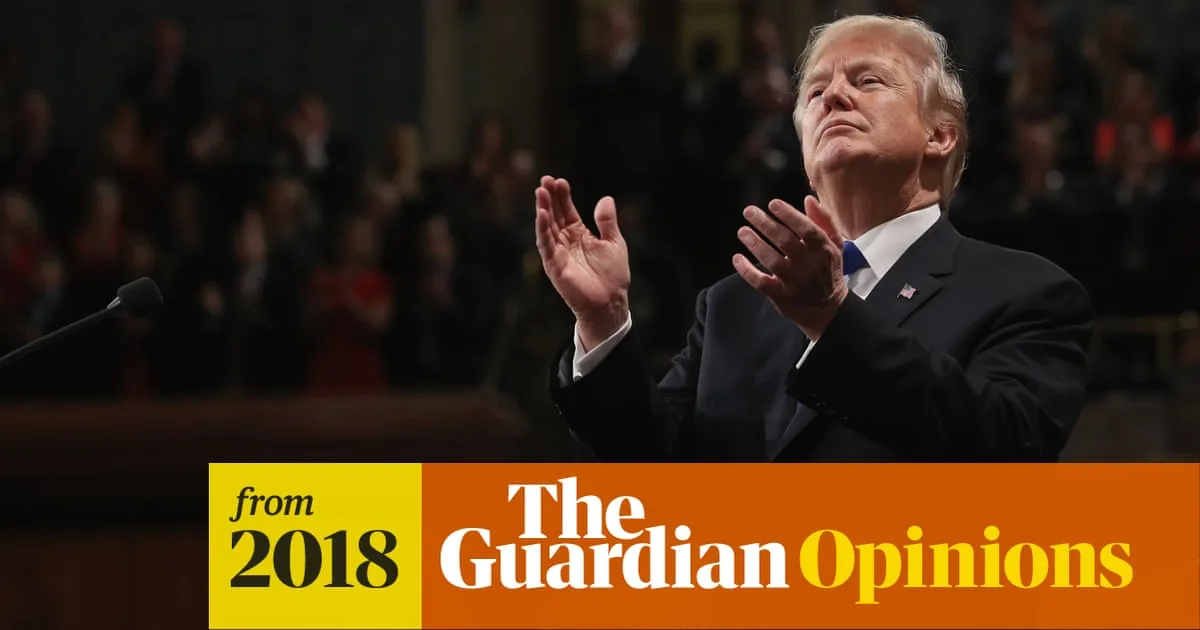
President Donald Trump delivered a self-confident and united Republican front during his State of the Union address on Tuesday evening, while Democrats appeared defeated and powerless, according to observers. The speech, described as long, was followed by criticism from liberal pundits and Democratic operatives who focused on lack of concrete policies, nativist immigration sections, and a perceived lack of energy.
Polls and interviews over the past year have shown that most Republicans support Trump's policies but dislike his tone, wanting combative yet non-personal leadership. Trump’s address was seen as fulfilling this desire, with Republican spin doctor Frank Luntz tweeting an apology: 'Tonight, I owe Donald Trump an apology. Tonight, I was moved and inspired. Tonight, I have hope and faith in America again.'
The speech included an economic agenda criticised as potentially bankrupting the country, connections between legal immigrants and MS-13 gangsters, and a call to empower cabinet secretaries to reward good workers and remove those undermining public trust. House Speaker Paul Ryan enthusiastically applauded Trump’s $1.5 trillion infrastructure plan.
The atmosphere in Congress included a minute-long 'USA! USA!' chant from Republicans. Trump presented his administration as ready to do business with Democrats, camouflaging nativist policies with non-white enforcers and victims and contrasting them with Democratic priorities like citizenship for illegal immigrants.
The Democratic party showed it had not learned from the 2016 defeat, with members sitting grimly and often not applauding policies that aligned with their own platform. The party chose Joe Kennedy III, a Massachusetts representative and member of the political dynasty, to deliver the Democratic response. Kennedy’s speech, hailed by Democratic pundits as inspiring, was low on substance, particularly regarding socioeconomic issues, and relied on identity politics with outreach to Hispanics and women.
Kennedy’s speech included obligatory Spanish sentences but lacked explicit mention of key issues for the non-white and white underclass, such as prison reform, voter suppression, or the opioid crisis. The response highlighted the Democratic party’s continued struggle to counter Trump and the Republican hegemony.




