
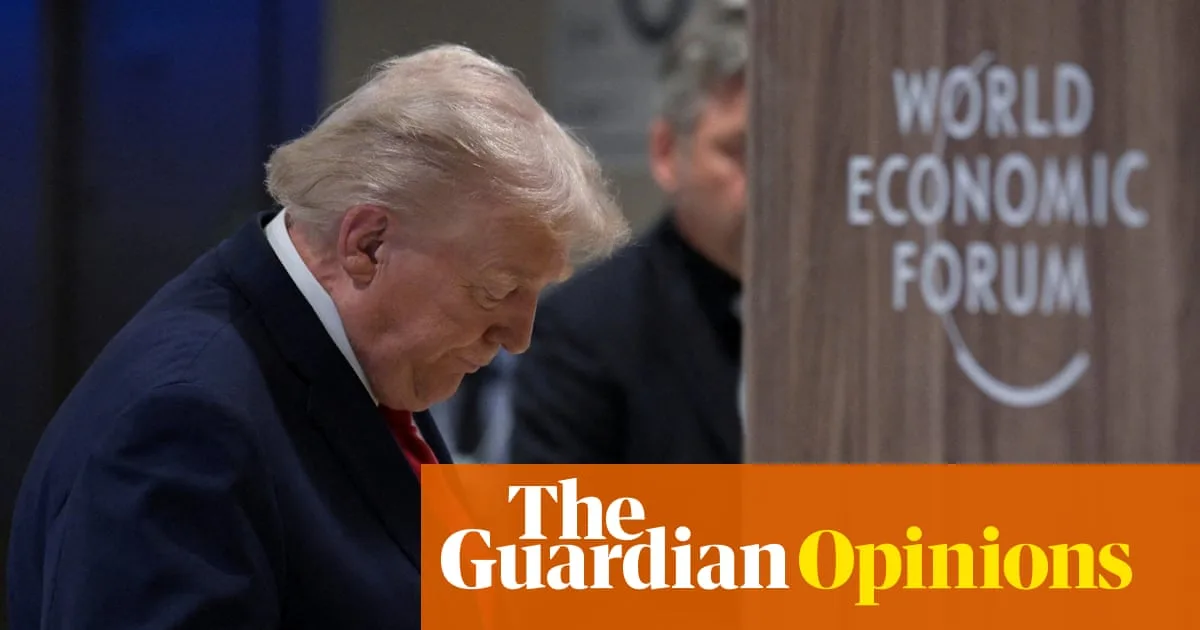
Donald Trump’s address to the World Economic Forum in Davos this week laid bare the growing irrelevance of the liberal international order, a system increasingly seen as outdated and self-serving. The president’s protectionist stance and disdain for multilateralism represent everything the Davos elite oppose, yet the WEF was forced to sideline its usual agenda on climate and social issues to secure his appearance.
Critics argue the so-called rules-based order has long been a vehicle for US hegemony, with Europe as a junior partner. Macron’s warning of a shift to a ‘world without rules’ highlights the erosion of a system that once guaranteed European security and global trade liberalisation, but now faces challenges from rising powers and internal inequality.
The institutional framework underpinning this order is no longer fit for purpose. The IMF and World Bank, created in 1944, grant the US an effective veto and Europe the right to appoint the IMF managing director. Emerging economies like China, India and Brazil see little reason to accept governance reflecting a bygone era. Meanwhile, the last global trade agreement was struck over 30 years ago, with earlier deals widely seen as a stitch-up between Washington and its allies.
External threats have grown as China’s rise challenges US economic dominance. Europe’s slower growth and reliance on American security leave it vulnerable—if Trump were to follow through on his threat to annex Greenland, Europe would be powerless to stop him. Internally, the order is undermined by rising inequality: in the US, labour’s share of national income has fallen to its lowest on record, eroding the middle-class support that once sustained liberal democracy.
A new international order must be built on faster, more inclusive growth, massive investment in public infrastructure, and financial support from wealthy nations to help poorer countries transition to green energy. Without such reforms, the law of the jungle may prevail.




