
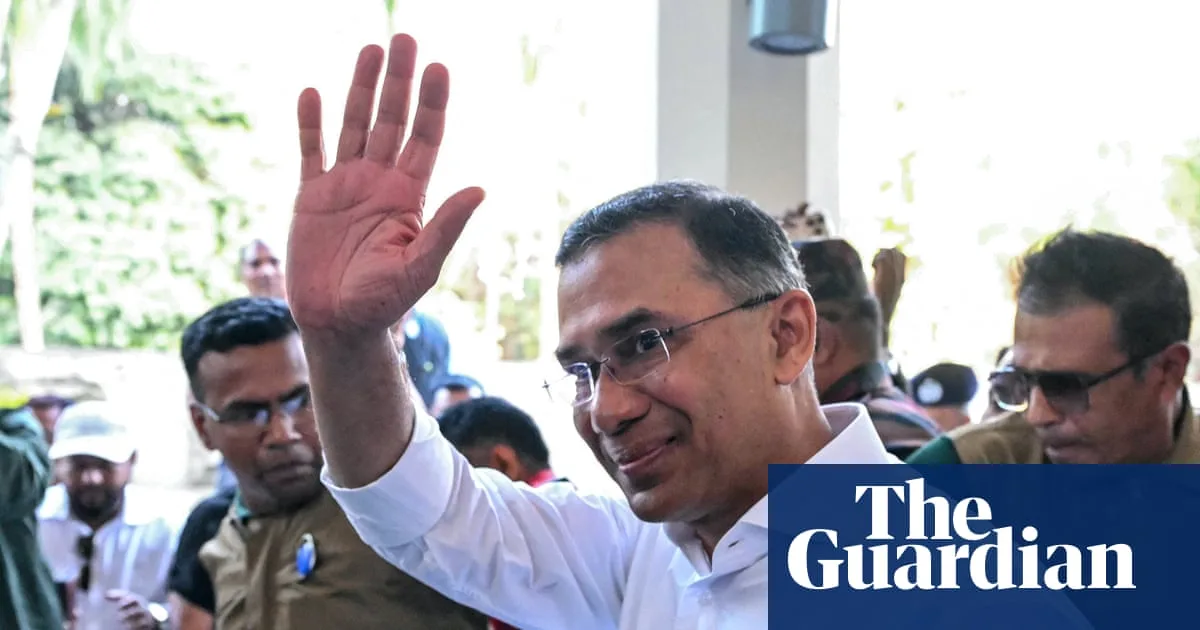
Tarique Rahman, the newly elected prime minister of Bangladesh, was sworn into parliament on Tuesday alongside other lawmakers, marking the first time elected representatives have taken office since the 2024 uprising that ousted former leader Sheikh Hasina. Rahman, 60, leader of the Bangladesh Nationalist Party (BNP), won a landslide victory in the 12 February elections and is set to take over from an interim government that has led the country for 18 months.
In his victory speech on Saturday, Rahman said: “This victory belongs to Bangladesh, belongs to democracy. This victory belongs to people who aspire to and have sacrificed for democracy.” He acknowledged the challenges ahead, describing “a fragile economy left behind by the authoritarian regime, weakened constitutional and statutory institutions, and a deteriorating law and order situation.” Rahman has pledged to restore stability and revive growth in the world’s second-largest garment exporter.
The BNP coalition secured 212 seats in parliament, while the Jamaat-e-Islami-led alliance won 77. Jamaat, which more than quadrupled its previous seat count, has challenged results in 32 constituencies but its leader Shafiqur Rahman has said the party would serve as a “vigilant, principled, and peaceful opposition.” Hasina’s Awami League was barred from participating, and Hasina, now in hiding in India, criticised the election as “illegal.” India praised the BNP’s “decisive win,” signaling a shift in relations.
Only seven women were directly elected, though 50 reserved seats will be allocated to parties proportionally. Four minority community members won seats, including two Hindus, who make up about 7% of Bangladesh’s population. Rahman returned to Bangladesh in December after 17 years in exile in Britain.




