
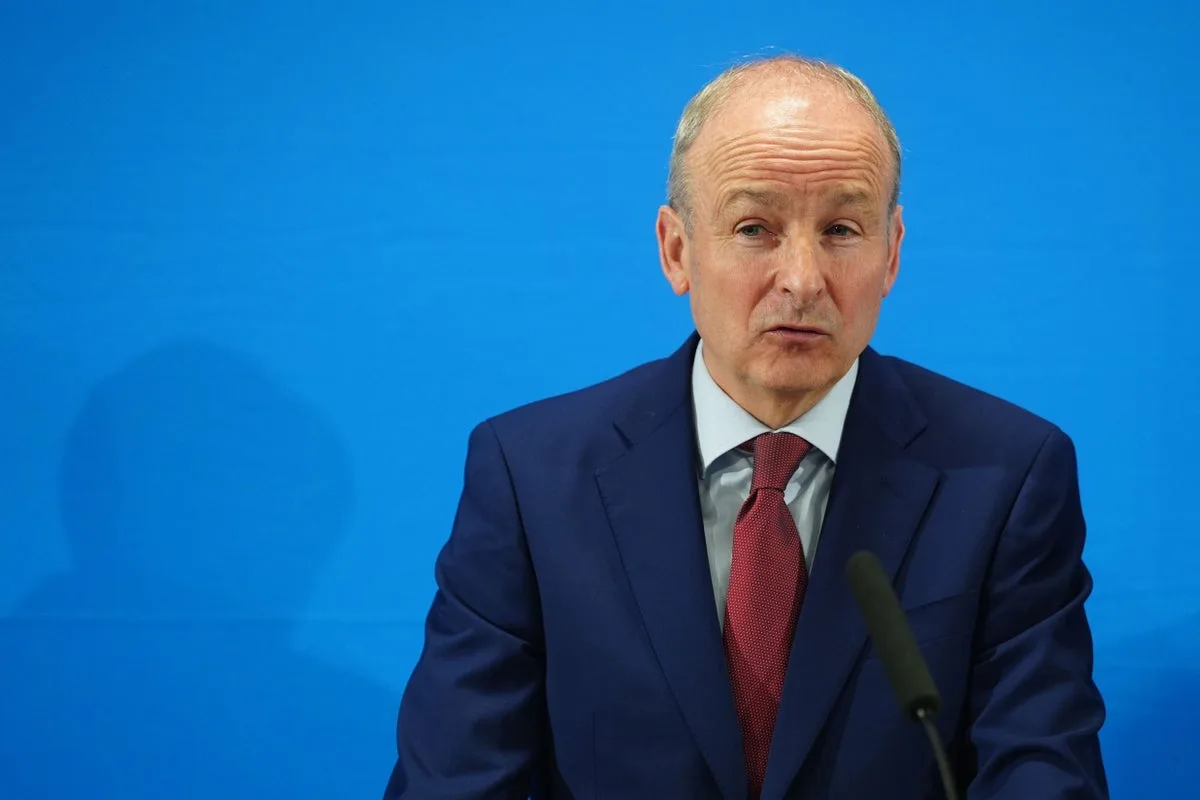
The Taoiseach has said the United Kingdom must contend with a fresh set of “imperatives” in its relationship with the European Union following Brexit, “irrespective of who’s in government”. Micheal Martin was responding to questions about whether a future Reform UK government could affect UK-EU relations, as counting continued in local elections in England where the pro-Brexit party made significant gains.
Speaking after a meeting of the North-South Ministerial Council (NSMC) in Co Armagh, Mr Martin said he had “no doubt” that the “very good relationship” Ireland enjoys with the UK Government would continue. He described the relationship as “sensible, pragmatic” and said Ireland supports the desire for a similar approach between the UK and the EU, adding: “We think everybody can benefit from that.”
Ireland is set to hold the presidency of the Council of the EU from July until the end of the year, a role that involves planning and chairing council meetings and negotiations. Mr Martin noted that Ireland’s presidency would engage with the current UK Government, and cautioned that local and general elections are “two different beasts completely”. He stressed that a good relationship between the EU and UK is important, and that there are now “imperatives out there” that did not exist before Brexit.
Mr Martin pointed to a series of recent shocks, including Brexit, the Covid-19 pandemic, the Russian invasion of Ukraine, tariffs and the Middle East war, which he said had created anxiety and fear for the future. He said the growing rapprochement between the EU and UK has a “broader compass” covering security, defence and European self-defence. “These are realities any government will have to deal with,” he said, adding: “Politicians generally can campaign in poetry – but have to govern in prose.”
The Tanaiste, Simon Harris, said Ireland had worked “long and hard enough to disentangle ourselves from British elections” and would not comment on another country’s election. He described the Ireland-UK relationship as the best it has been since Brexit, and said he expected that to continue. Meanwhile, Foreign Affairs Minister Helen McEntee said the presidency would be an opportunity to show that the EU-UK relationship remains a priority for Ireland, with a UK-EU summit offering a chance to make progress on areas such as phytosanitary rules and emissions trading systems.
Northern Ireland’s deputy First Minister, Emma Little-Pengelly, said she hoped the presidency would provide opportunities for “pragmatic engagement”, noting that the challenges facing the EU and UK are similar, including global instability affecting energy security and costs. She highlighted “long delays” in North-South interconnectors as an issue that could be examined, along with other connections to the European mainland. Mr Harris said all leaders were “committed to further developing that conversation” around energy security and resilience, including through interconnectors, renewables and learning from each other on retrofitting.




