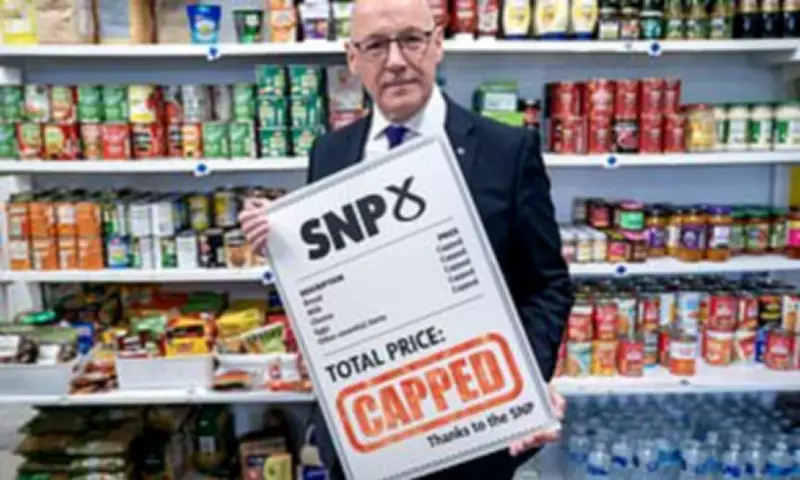
SNP leader John Swinney has vowed to push through price controls on core food staples in Scottish supermarkets as he prepares to be re-appointed as First Minister. Mr Swinney stated that he has a 'public health responsibility' to ensure people can afford to buy healthy food.
Proposed Price Caps
The SNP manifesto ahead of the Holyrood election earlier this month outlined proposals to cap the cost of 20-50 'essential food items', with the First Minister citing bread, milk, cheese, chicken, and eggs—but notably not vegetables. The plan has been criticised by retailers as a 'gimmick' that may hinder smaller shops' ability to compete on price with supermarkets that already hold significant market power.
Swinney's Justification
Speaking on BBC Radio 4 Today on Tuesday, Mr Swinney said: 'Throughout the election campaign, I heard loud and clear from members of the public just the difficulty they're having in affording the most basic shopping items. That obviously has an impact on people's nutrition, and that's where the responsibilities of the Scottish Government kick in.' When asked why politicians are better placed than markets to determine food prices, Mr Swinney replied: 'Because people are struggling in our households.'

Re-election Plans
Mr Swinney is confident he will win the vote to be re-installed as First Minister in the Scottish Parliament today, with the help of the Scottish Greens. All five other parties at Holyrood have said they will also put their leaders forward for the top job. The SNP won 58 seats at the Scottish Parliament elections, making it by far the largest party but short of the 65 seats needed for a majority. Mr Swinney will need at least one other party's support, which in previous years has come from the Greens.
Independence Referendum Demand
Ahead of Tuesday's vote, the Greens have called on Mr Swinney to honour his promise to introduce a vote on a second independence referendum on the first sitting of his new government. Mr Swinney promised during the campaign that a new SNP administration would bring forward a vote to approve the development of a Section 30 order, which would be needed to transfer powers to hold a referendum from Westminster to Holyrood. Since the powers are reserved, the vote would act as a message to express the will of the Scottish Parliament and pressure the UK Government to approve a second vote on the union.
Gillian Mackay, co-leader of the Scottish Greens who will stand for the first minister vote, said Scotland had voted for a pro-independence majority Parliament, 'and that must be respected'.