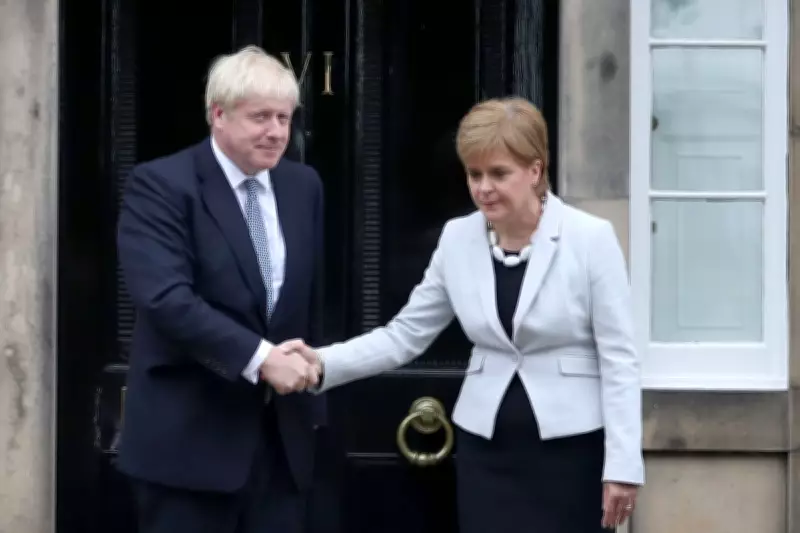
Nicola Sturgeon has revealed that the Conservative prime minister she 'liked best' during her time as Scottish first minister was David Cameron, while she has 'zero respect' for Boris Johnson.
The former Scottish National Party leader said people 'often' asked her to rank the five different Conservative prime ministers she dealt with while in office. Speaking at the Boswell Book Festival in the Scottish Borders, she insisted she would not do that but offered her personal views.
Sturgeon's rankings of prime ministers
'The one I liked best, in the sense that he was just easiest to get on with was David Cameron,' Ms Sturgeon told the audience. 'The one I respected most, because she took the job seriously, always on top of her brief, even though we agreed on very little politically, was Theresa May.'

She added that Rishi Sunak became prime minister shortly before she stood down. Regarding Liz Truss, who was in Downing Street for less than two months, Ms Sturgeon said: 'I blinked and missed her. Literally the only interaction we had was around the death of the late Queen, because she became prime minister and then didn't last very long.'
'And fair to say the one I have zero respect for was Boris Johnson, but there you go,' she concluded.
Reading habits and political insights
At the festival, the former first minister described herself as a 'bit of a weirdo', revealing she had been reading Albert Camus's novel The Plague when Covid struck in 2020. 'It sounds really grim,' she said, 'but the novel really helped me get a sense of perspective. I didn't have a lot of time to read obviously, but I would read a couple of pages before going to bed.'
She explained that the book, which tells the story of a city fighting a plague outbreak, 'helped calm me a little bit because Covid was bad, but the plague in this novel was a lot worse. It gave me a sense of perspective and helped me put what we were going through into a wider context.'
Ms Sturgeon said that if she could pass one 'global law', she would require people in political office to read novels. 'I genuinely believe that that ability to put yourselves in the shoes of other people, at different times in history, from different countries, cultures, is such an important part of understanding what makes people tick. And if you don't have that as a leader I don't know that you should be in the job.'
Her own memoir
Speaking at an event to promote her autobiography Frankly, published last year, she admitted: 'I don't really like reading memoirs. Politicians' memoirs generally – there are some exceptions to this – tend to be very dull and turgid and a bit self-serving, rewriting history to make themselves look much better than they actually were.'
She said she wanted to write something 'open and frank' and found the process 'cathartic', though she accepted the book was 'subjective'. 'Obviously I can't be completely objective about my own life,' she added.