
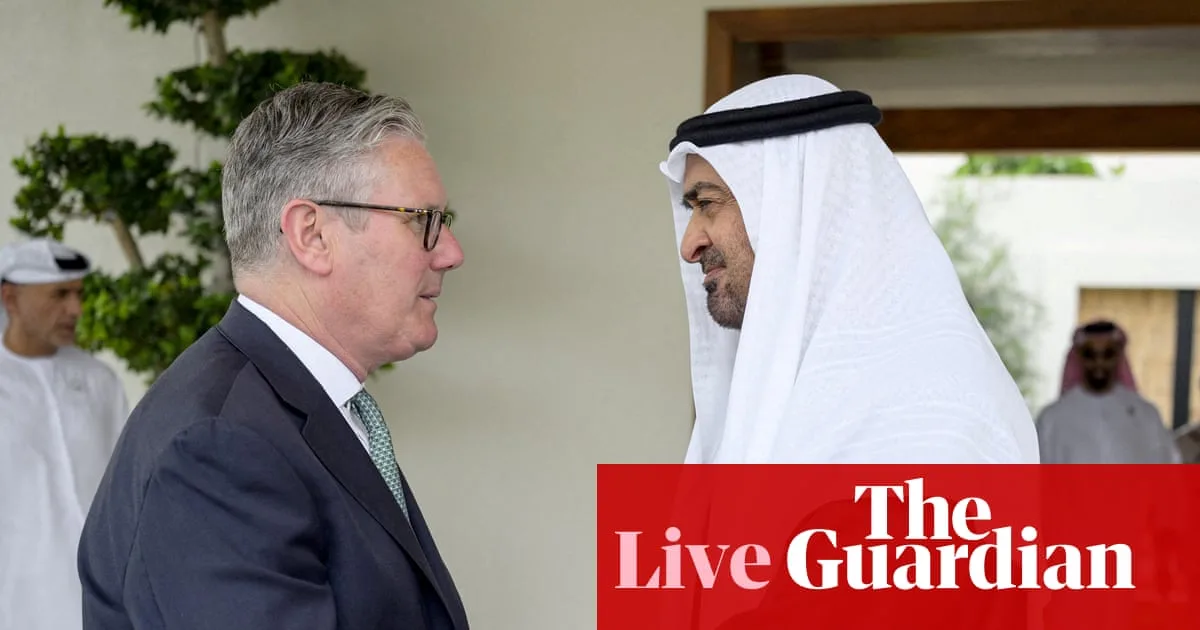
Prime Minister Keir Starmer has said his talks with Gulf leaders have reinforced the view that the US-Iran ceasefire is 'fragile', but his comments have been criticised as lacking clarity. After meetings with Saudi Crown Prince Mohammed Bin Salman and UAE President Sheikh Mohammed bin Zayed Al Nahyan, Starmer told broadcasters that there was 'relief that there’s now a ceasefire' but also 'a general sense that it’s fragile, that there’s work to do'.
Starmer emphasised that securing a permanent ceasefire 'takes more than just words. It takes a lot of action.' However, he did not specify what concrete steps the UK would take to ensure the ceasefire holds or to keep the Strait of Hormuz open. This vagueness has sparked doubts among political observers about his government's strategy in the region.
The Prime Minister's remarks come as a British warship and aircraft tracked and monitored Russian submarines in the North Atlantic, underscoring ongoing security challenges. Defence Secretary John Healey confirmed the operation forced the submarines to leave the area.
Meanwhile, opposition parties have criticised the government's response. Green Party leader Zack Polanski called for the UK-Israel trade agreement to be torn up following Israeli strikes on Lebanon. Plaid Cymru's leader pledged 'no more bending to Westminster's will' ahead of the Senedd elections.
Starmer's lack of a detailed plan for the Iran ceasefire has left many questioning whether the UK can maintain its influence in the Middle East peace process.




