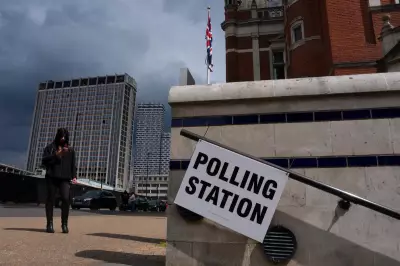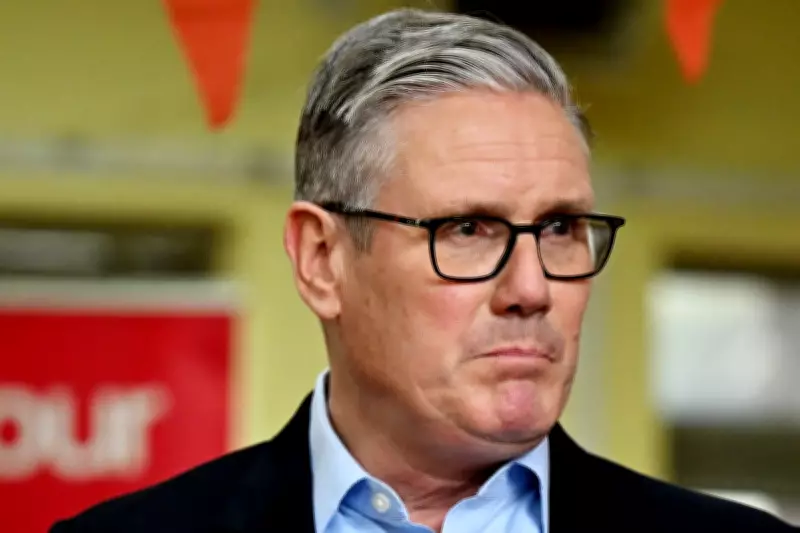
Even his best friends – indeed, sometimes even the man himself – would concede that Sir Keir Starmer has underperformed in office. To an unusual degree, the prime minister came up as a topic of discussion on the doorstep during this campaign, though it was for local elections rather than a national one.
His errors of judgement, sins of both commission and omission, failure to supervise his cabinet members closely enough, rash appointments, U-turns, poor handling of certain scandals, and disastrous choices of personnel are all too well known for it to be worth denying them.
His opponents and, all too predictably, sections of the media have portrayed this week’s elections as a “referendum” on the prime minister’s 22 months in office, and it would be foolish to suppose that he wasn’t a factor in Labour’s dismal showing.

Yet all of that does not mean that the time is right for Britain to get rid of yet another prime minister.
The Perils of Another Leadership Change
The new incumbent would be the seventh in a decade; in contrast, there were three residents of No 10 in the 10 years before the rupture of the 2016 Brexit referendum. Only one of those later switches, from Theresa May to Boris Johnson, yielded any electoral advantage for the governing party, and not for very long; all were damaging to the national interest, even if they were inevitable. To borrow a slogan from a troubled decade, Britain needs strong and stable government.
Can Sir Keir still do it? He certainly wants to, and understands the challenge ahead. For someone who has not always been the most cunning political beast in the jungle, he judged his response to these “midterm” elections superbly well.
As soon as he decently could after the sun rose on a dismal dawn, the prime minister was straight out of the traps, declaring that he was not going to “walk away” from what he needs to do, and accepting the blame for the numerous defeats his party has suffered and will continue to have to bear over the coming days. It was an attempt, for a change, to get ahead of his internal critics, and almost a challenge to his rivals to “put up or shut up”, though he was not foolish enough to put it so bluntly.
Getting his defence in early seems to have worked for Sir Keir, who enjoys a tremendous advantage in that none of his opponents can agree on who should replace him, while each of the possible candidates is subject to some trait, or circumstance, that disqualifies them from taking his job. Hence only the usual suspects on the left calling for him to quit – and even they are not able to name a replacement. Sir Keir may not be in a particularly strong position, but his opponents are in an even weaker one.
Economic Stability at Stake
Change at the top may prove inevitable in due course, but in the short term, it is inconceivable. This is not just because of the delicate international situation (though British prime ministers were replaced in both world wars). It’s also because of the equally dicey mood in the financial markets.
In recent days, they’ve shown signs of nervousness at the prospect of Sir Keir and his chancellor, Rachel Reeves, being replaced by less fiscally responsible alternatives. It is no exaggeration to say that a new government led, hypothetically, by Andy Burnham, Ed Miliband or Angela Rayner might trigger a crisis in the gilts market approaching that provoked by Liz Truss’s mini-Budget. That would destroy Labour’s credibility, in respect of economic management, for a generation.
The best candidates to implement Sir Keir’s policies are Shabana Mahmood and Wes Streeting, who are both better communicators. However, neither has yet fully delivered in their own area of responsibility – respectively, immigration and NHS performance – and their candidacy, if it came to it, would in any case be doomed, because they are far too right-wing for the parliamentary party, let alone the determinedly soft-left wider membership, who would be making the choice.

The same goes for Sir Keir’s protege, Darren Jones. Realistically, the choice would be between the soft-left candidates – Mr Miliband, Ms Rayner, or, if he can be smuggled into the Commons, Mr Burnham. It seems unlikely that any of them could transform Labour’s performance in government, and what’s more, following a bitter leadership battle, they would inherit an exhausted party and a broken administration. Divided parties don’t win elections.
Things, in other words, could quite conceivably get even worse for Labour if it reacted to this electoral expression of public anger by turning away from the voters’ concerns and spending the coming months arguing with itself.
It would be a classic example of displacement activity. Any new premier would face exactly the same challenges as Sir Keir, with the same financial constraints. They too would have to find a way to grow the economy, rebuild Britain’s defences, strengthen relations with Europe, improve public services, reform welfare, and restore the public finances to sustainability.
The prime minister needs loyalty and support; he needs his ministers to implement the policies they were elected on, and prove their worth before they seek higher office. Nothing that has happened in these elections has altered that reality.