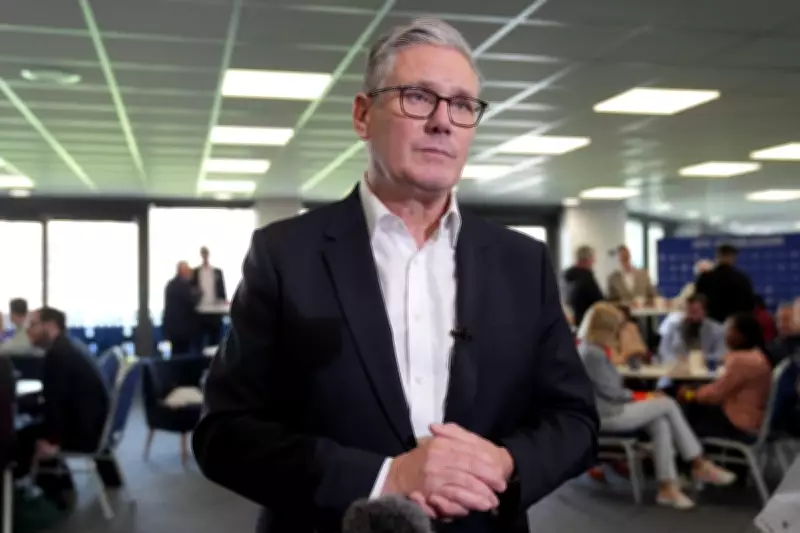
Sir Keir Starmer has defied calls to resign and a leadership ultimatum from within his own party, vowing to lead Labour into the next general election with a revival plan centred on closer ties with Europe. The prime minister's response follows disastrous local election results that saw Labour lose over 1,200 council seats across England.
Leadership Challenge Looms
Labour MP Catherine West has warned she will trigger a leadership contest if no cabinet minister challenges Sir Keir by Monday. West, a former junior minister sacked by Starmer, told The Independent: “We need to tool up for this, because it’s going to be the fight of our life. We need to take on Reform and put forward a centrist vision of the country that people can really get behind.”
Under Labour Party rules, a leadership election requires either the prime minister's resignation or nominations from 20% of Labour MPs—equivalent to 81 signatures. West claims to have only 10 MPs backing her so far but is confident others will come forward if needed.

Starmer's Fightback Plan
Speaking to the Sunday Mirror, Starmer said he would be “full-throated” about the need for closer ties with Brussels and pledged to continue his 10-year “national renewal” project. He ruled out stepping down, insisting he would lead Labour into the next election. The prime minister has also enlisted party veterans Gordon Brown and Baroness Harriet Harman to shore up his position.
Senior ministers are reportedly trying to prevent a leadership election, but fears persist that former deputy prime minister Angela Rayner could launch a coup as early as next week. Support is growing for potential challengers including energy secretary Ed Miliband, health secretary Wes Streeting, and defence minister Al Carns.
Election Results Expose Deep Divisions
The local election results, declared on Saturday, underlined the scale of Labour’s challenge. Reform UK took control of Barnsley and pushed Labour out of office in Bradford, while a Green surge secured Lewisham and forced Labour out in Lambeth for the first time in 20 years. Labour successfully defended 67% of its council seats in London, compared with just 30% outside the capital, according to Press Association analysis.
Reform UK won only 5% of seats it contested in London, versus 43% elsewhere. The Greens performed better in London, winning 19% of seats they stood for, compared with 10% in the rest of England. The Conservatives defended 46% of seats outside London and saw a net 6% increase in councillors in the capital.
Youth Vote Shifts
Commentator Chloe Combi noted that young voters are not just turning to the Greens but also to Reform UK, reflecting a broader disillusionment with the political status quo. “Farage or Polanski – Gen Z thinks anything is better than the status quo,” she wrote.
Nearly four in 10 council seats (39.3%) in London were won by parties other than Labour or the Conservatives, highlighting the fragmentation of the two-party system.
Starmer’s immediate focus will be on fending off the leadership threat while attempting to rebuild Labour’s electoral coalition ahead of the next general election.