

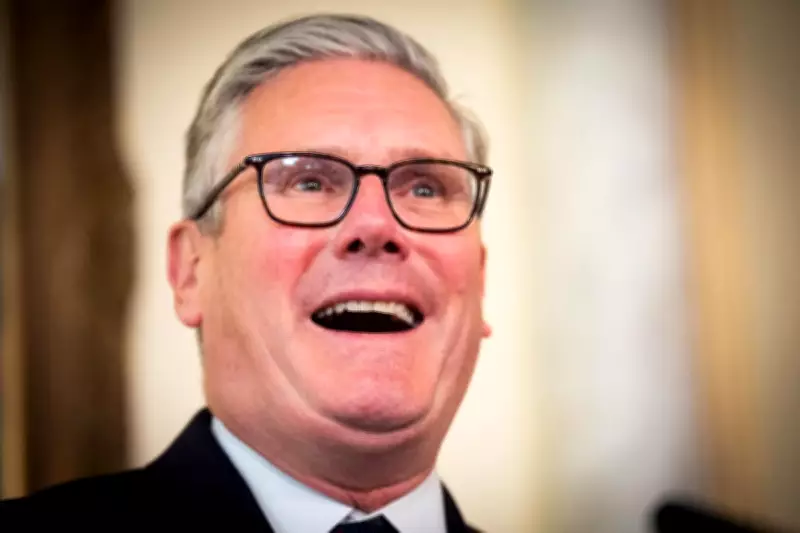
Prime Minister Sir Keir Starmer has apologised to MPs after mistakenly suggesting the Government had struck a trade deal with North Korea. The slip occurred during Prime Minister's Questions on Wednesday, as he defended his record on international trade.
The Mistake in the Commons
Answering a question from Liberal Democrat leader Sir Ed Davey, Sir Keir said: “In the last two years, I’ve been negotiating serious trade deals, which are vital for our most important sectors of the economy. They’re trade deals with the EU, but also with India, North Korea and the United States.”
Shortly after, he stood up again, laughing, and told the Commons: “I’ve just been handed a note saying that I inadvertently said we did a trade deal with North Korea rather than South Korea. That would be breaking news and not very good. So, before I’m referred to the Privileges Committee, can I correct the record in that regard? It was a slip of the tongue but a pretty unfortunate one.”

Context of the Apology
The reference to the Privileges Committee was a nod to recent events. Last month, MPs rejected a Conservative bid to refer Sir Keir to the committee by 335 votes to 223, a majority of 112. That vote followed opposition allegations that the Prime Minister misled Parliament when he said “no pressure existed” in the process of appointing Lord Peter Mandelson as the UK’s ambassador to the US.
The Exchange with Sir Ed Davey
Sir Ed Davey had earlier claimed that former health secretary Wes Streeting and Mayor of Greater Manchester Andy Burnham, whom he named as “Labour leadership candidates”, had both “ruled out any support for Britain joining the customs union with the EU, despite the fact that it would boost growth and help us cut the cost of living”. He asked: “Is the Prime Minister relieved that he has finally something that he can agree with his colleagues on?”
Sir Keir’s response included the erroneous mention of North Korea, which he quickly corrected.
Overseas Aid and Ebola
Sir Ed also pressed the Prime Minister on cuts to UK overseas aid, citing a dangerous outbreak of Ebola in central Africa. He asked Sir Keir to rule out further reductions this year. Sir Keir acknowledged the seriousness of the Ebola situation, saying: “Obviously, we’re working at pace and with others in relation to that issue. We did take a decision in relation to aid in order to fund defence spending because we needed to increase defence spending. But we are committed to our overseas aid and we mitigated that with some of the measures that we put in place.”
The World Health Organisation has assessed the risk of global spread of the Ebola virus in the Democratic Republic of Congo and Uganda as high at national and regional levels, but low at global level.






