Sir Keir Starmer Faces Accusations of Treating Women's Rights as 'Negotiable'
Prime Minister Sir Keir Starmer has been accused of treating women's rights as 'negotiable' due to his government's failure to enforce a landmark Supreme Court ruling for the past year. The accusation comes as campaigners demand explanations for why long-delayed rules on single-sex spaces cannot be published before next month's elections.
Campaigners Deliver Letter to Downing Street
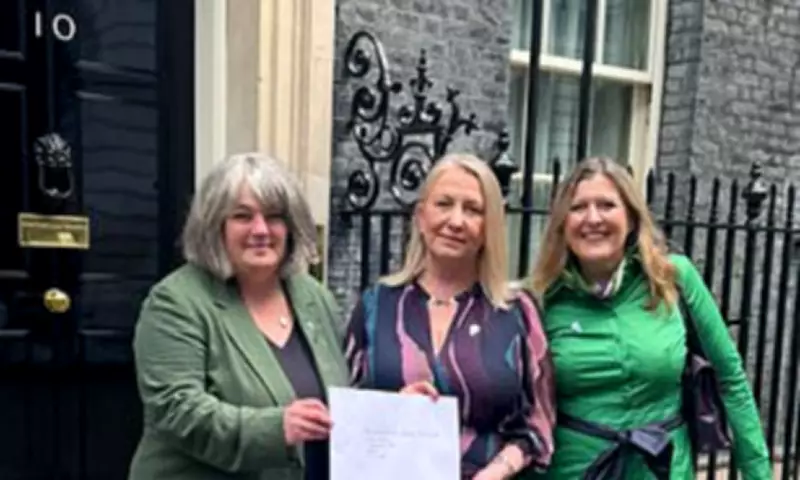
On the first anniversary of the Supreme Court ruling, campaigners from For Women Scotland hand-delivered a letter to Sir Keir at 10 Downing Street. The group, represented by Trina Budge, Marion Calder, and Susan Smith, challenged the Prime Minister's leadership on this critical issue.
The letter stated: 'We understand that Purdah rules do not preclude laying a statutory instrument so we remain unconvinced that there is a need to delay until May. We would like an answer regarding the legal basis for this decision.'

They warned Sir Keir that 'failure to do so gives the impression that the rights of women and girls are of lesser importance and negotiable to you.'
Hundreds of Public Bodies Defying Court Ruling
As revealed by the Daily Mail, hundreds of public bodies continue to defy the Supreme Court judgment by allowing men who identify as transgender women to access female-only spaces including:
- Public toilets
- Changing rooms
- Hospital wards
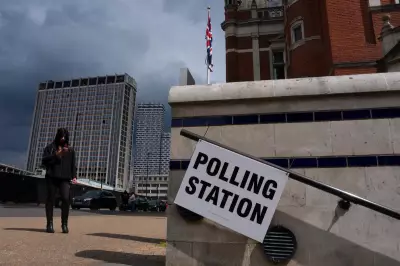
Many NHS trusts, local councils, and police forces claim they are awaiting an updated Code of Practice submitted by the Equality and Human Rights Commission (EHRC) last September. However, ministers have argued this week that publication cannot proceed due to 'purdah' rules restricting government announcements before elections.
Health Secretary's Controversial Position
Health Secretary Wes Streeting has insisted the guidance is 'ready' but cannot be published ahead of elections to the Scottish and Welsh parliaments on May 7th. This contradicts his claim a year ago that it would be issued before summer 2025.
Speaking to LBC radio, Streeting argued that transgender people's rights in places like hospitals must be protected alongside those of women. He posed the question: 'What do we do about that biological female who is a trans man, looks, sounds, presents, lives his life as a man, is biologically female?'
He continued: 'We wouldn't put him on a women's ward that would be degrading for him, and humiliating and cruel, it would also be distressing for the women. So we need to make sure that we've got trans-inclusive spaces too.'
Criticism from Women's Rights Organizations
Maya Forstater, chief executive of charity Sex Matters, strongly criticized the Health Secretary's position: 'When not a single NHS trust in the UK is complying with the Equality Act and providing single-sex wards, the Health Secretary's focus on women who identify as male is pure deflection.'
Forstater added: 'It distracts attention away from the uncomfortable truth that men who identify as women are being greenlighted to enter female-only wards, changing rooms and toilets across the NHS.'
She acknowledged that 'women whose appearance has been altered through hormones and surgery to look like men, many of whom are young and vulnerable, need to be accommodated too,' but emphasized that 'this cannot be an excuse for delaying the exclusion of men from women-only wards.'
Political Opposition Weighs In
Shadow Equalities Minister Claire Coutinho condemned the government's handling of the situation: 'Wes Streeting promised clear NHS guidance months ago, yet hospitals are still waiting. This delay is a failure of leadership, plain and simple.'
The campaigners' letter to Sir Keir concluded with a powerful challenge: 'How can your Government have a commitment to halve violence against women and girls, when it refuses to enforce that law which defines what a woman is?'
The controversy highlights the ongoing tension between protecting women's single-sex spaces and accommodating transgender individuals, with the government facing increasing pressure to provide clear leadership and enforcement of existing laws.