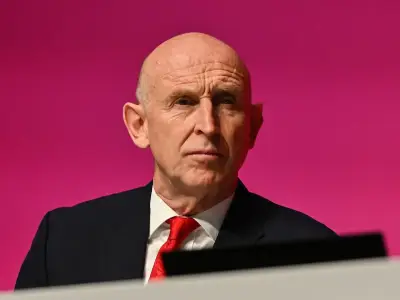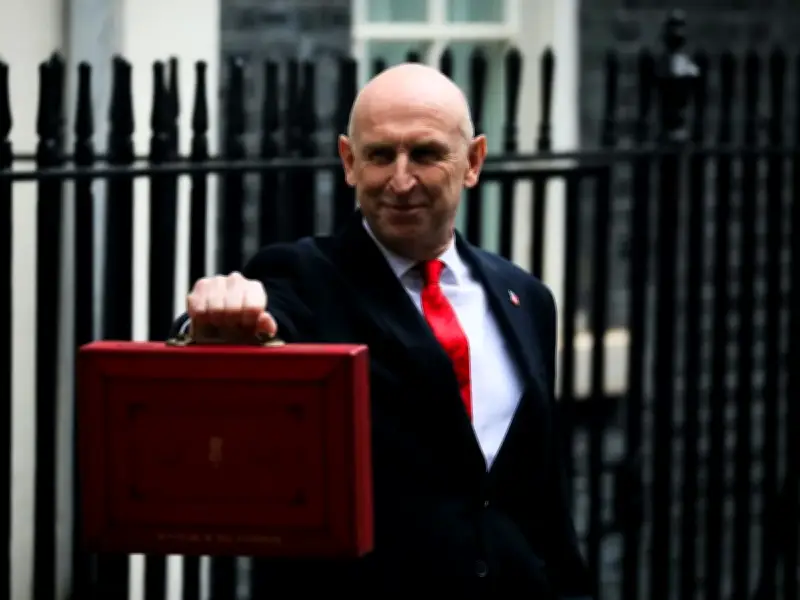
Business leaders across the South West of England have largely welcomed John Healey's Budget, which included relief for high street businesses and further control of local spending for mayors. The Chancellor set out his plans in a 56-minute speech to Parliament on Wednesday.
Among the announcements was news that Bristol would receive £10m for its Temple Quarter regeneration project, while Plymouth would get £3m to help young people into defence. He also confirmed the West of England would have more power to make its own decisions locally.
Regional leaders see 'real opportunity'
Douglas Ure, chief executive of Business West, said the Budget provided “real opportunity” for regional leaders. “This was a Budget delivered against a backdrop of significant fiscal constraints, but it’s good to see support for businesses through measures on energy costs and business rates relief,” he said.
“The continued focus on investment, growth and strategic sectors is also welcome, particularly in areas where our region has real strengths and ambitions to grow, like AI, defence and life sciences.”
Ure welcomed the £10m funding for Bristol Temple Quarter, calling it “one of Britain’s biggest regeneration schemes, with huge potential to drive investment, create jobs and support economic growth, not just in Bristol and the wider region, but nationally too.” He also welcomed the announcements on devolution across the South West and establishing Mayoral Strategic Authorities across the region.
Plymouth gets £3m for defence pipeline
The Budget confirmed £3m of new funding for Team Plymouth, the city’s defence growth partnership, to help young people not in education, employment or training (Neets) into the city’s growing defence industry. Tim Jones, chair of the Great South West Innovation and Investment Hub, called the Neets announcement a “100% surprise” but said: “Plymouth has a strong agenda in defence, so that is extremely good.”
Jones welcomed the defence spending and devolution, saying it would give businesses confidence and that “this is the first time that I can remember that Plymouth has had two mentions in a Budget.” He added: “This shows that Plymouth is a central part of the national agenda for defence industry growth.”
He was equally enthusiastic about the Mayoral Strategic Authority for Devon, Plymouth and Torbay, and the Government's decision to devolve business rates and some Income Tax to allow regions to invest in large infrastructure projects. “This is good because the money is going to be locally spent,” he said. Jones said raising the business rate relief threshold would “make a huge difference in tourism, hospitality and leisure”, adding: “So many of our businesses are small or micro that this is a big positive.”
Devon leaders urge county to seize opportunities
Devon’s business leaders welcomed the stability offered by the Chancellor’s first Budget but warned that rural businesses, construction, farming, care and skills were left short. Helen Wylde-Archibald, chief executive of Devon Chamber of Commerce, said: “Business was in the top line of this Budget, and we heard the Chancellor respond to things we’d specifically asked for, on the cost of energy and on stability.”
She noted gaps for Devon: “Care, construction, further and higher education, and farming all deserved far better billing. Our farms are generational businesses, vital to the local economy and to our food security.” She called for the county to work together: “We don’t want handouts - we need to capitalise on the opportunities in the budget.”
The reaction came during Devon’s Budget Live, a broadcast from Devon Chamber of Commerce streamed from Fresh Air Studios in Plymouth, with business leaders joining from watch parties in Torbay, Exeter, Plymouth and North Devon. Dave Hockton, chief executive of Plymouth Science Park, called the £3m funding “a real positive thing”, alongside the new local apprenticeship service and support for young entrepreneurs. He said the park has grown from around 60% to 90% occupancy in under two years and has just welcomed its 100th business, but added that small business rate relief should go further than retail, hospitality and leisure.
Ed Rimmer, chief executive of Bath-based Time Finance, said the Budget was “a reminder of how exposed UK SMEs remain to external cost pressures”. He said the extension of VAT relief on energy bills and targeted support to bring down electricity costs would offer “some welcome breathing space, particularly for energy-intensive businesses, but the real test will be how quickly these measures translate into lower operating costs.” He added that cash flow management will remain critical, and access to flexible finance will be essential in helping viable businesses absorb unexpected costs and continue to grow.