

For the SNP, the goal going into this election was clear: win an overall majority and begin agitating for another independence referendum. That dream appears to have come to a rude awakening, with John Swinney’s party projected to fall short of 65 seats.
While the Nationalists are taking their victory lap for five Holyrood wins in a row, they might want to pause and acknowledge that though voters have again chosen an SNP government, they have not chosen a majority SNP government.
But if anyone deserves to take a victory lap, it is Unionist voters whose tactical voting will have helped block the SNP’s path to a majority. This was a campaign in which Swinney mused arrogantly about leading his party into the 2031 election, a smug prediction from a politician who believed he had the election in the bag.

However, while he was basking in self-satisfaction, pro-Union voters up and down the country were busy plotting to give him what my granny used to call a shut-eye with a bang. With some noses held and tongues bitten, ordinary voters lent their X to whichever party stood the best chance of denying the SNP a win.
For while Swinney will remain in Bute House – for now – his position will be more precarious than before the election. Although his government has always been a minority, the broader electoral picture has changed, and the pieces on the internal SNP chess board have also moved.
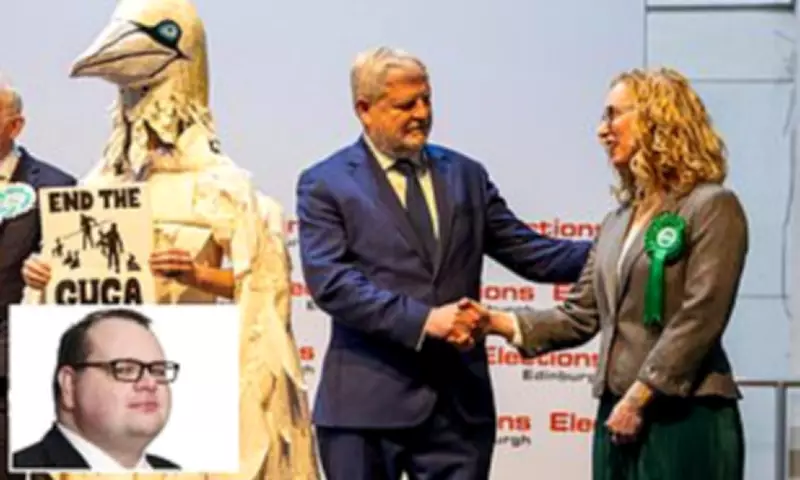
Lorna Slater’s victory in Edinburgh Central means Angus Robertson will not return to Holyrood. In the ultimate indignity, the Cabinet Secretary learned his fate while standing next to a bloke in a costume resembling Sesame Street’s Big Bird, this single-issue candidate having contested the seat to protest against the tradition of hunting guga seabirds on the island of Sula Sgeir. (It takes all sorts.)
While Ross Greer and Gillian Mackay’s party is a natural coalition partner for the SNP, having previously governed together between 2021 and 2024, Swinney cannot take consolation in the increase in their MSP headcount. The Greens come with baggage. For one, their policy priorities, such as slashing the number of criminals sentenced to prison or giving men the right to self-identify their way into women’s services and facilities, are at odds with public opinion. Embracing them would put the SNP on the wrong side of voters, many of them their own supporters.
What’s more, the Greens are hungrier than Swinney for confrontation with No 10 on the independence issue, which puts the SNP leader in a bind. He can’t very well be seen to be less pro-independence than a rival party but nor can he allow the Green tail to wag the Nationalist dog. Any governing pact with Greer and Mackay would also involve giving ministerial offices to a gaggle of their MSPs, reducing the posts at his disposal for buying the loyalty of his own backbenchers.
The Green track record isn’t great either. Lorna Slater was a source of constant political headaches as a minister, yet unlike a Nationalist MSP she was essentially unsackable. If Greer or Mackay are any more capable, they have gone to considerable lengths to conceal it.
If not the Greens, then who? Well, Swinney could choose to spurn coalitions altogether and continue governing as a minority administration, building support for budgets and other legislation on an issue-by-issue basis. This leaves the government open to challenge. For added stability, Swinney could cut a confidence and supply deal with the Lib Dems.
A more formal arrangement with the Lib Dems is not impossible, but it would be difficult for Swinney to sell his backbenchers, to say nothing of his grassroots, on a pact with a Unionist party. The Lib Dems, if they had any sense, would insist that any coalition agreement take independence off the agenda. Of course, this would provoke uproar among the Nationalist faithful.
The one coalition that will be paramount in Swinney’s mind is the one inside the SNP between those in his camp, who want to continue building support for independence before any re-run of the 2014 vote, and those impatient for another plebiscite as soon as possible. The latter are drawn to Stephen Flynn, the party’s Westminster leader, a Young Turk with ambitions and unlikely to allow even a grandee like Swinney to stand in the way.

Fortunately for Flynn, though less so for the First Minister, he has now secured a Holyrood seat and instantly becomes the No.1 political threat to Swinney. There are now two SNPs – Swinney’s and Flynn’s – and they will be able to delay a confrontation for only so long.
So while the First Minister might have secured his party another five years in power, it is by no means guaranteed that it will be him wielding that power. Every blunder and every setback will present an opportunity for the next generation to oust him in favour of fresh blood and bolder tactics against Westminster.
The election is over and the SNP is the winner. Whose SNP is not yet clear.





