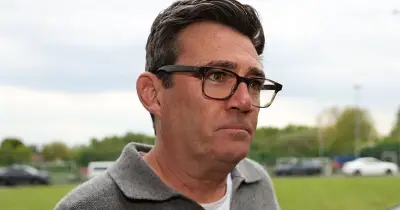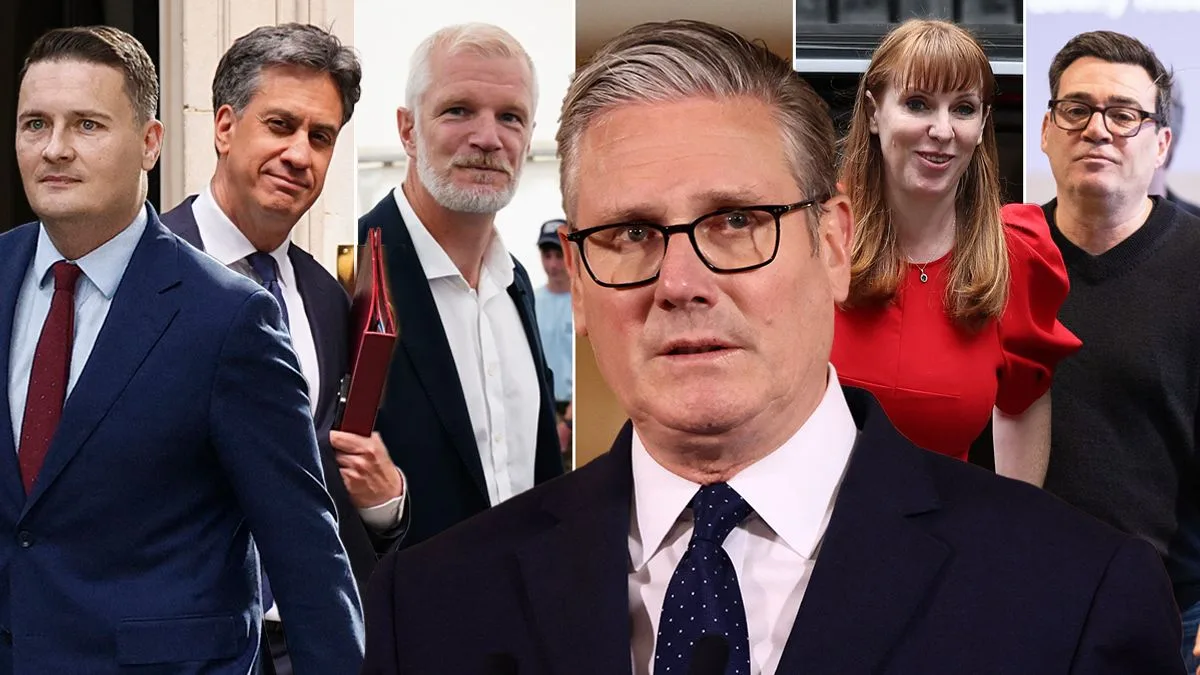
The race to become the UK's next Prime Minister has been thrown wide open following Wes Streeting's resignation from the government and Andy Burnham's announcement of a potential return to Parliament as an MP. With Labour MP Josh Simons stepping down to facilitate Burnham's comeback, Westminster is buzzing with speculation about who might challenge Keir Starmer for the leadership. Here are the names on everyone's lips.
Wes Streeting
Wes Streeting has never hidden his leadership ambitions. The former Health Secretary, who resigned from his government post on Thursday, has long been considered a potential successor to Keir Starmer. During the pandemic, when Starmer faced accusations of breaching COVID-19 rules, Streeting was among the bookmakers' favourites. In a resurfaced 2018 clip, when asked who would be Prime Minister in ten years, he cheekily replied, 'I think probably me.'
Growing up in a council flat in east London, Streeting's journey to success is admired by many. His passion for politics was fuelled by seeing Tories 'denigrating single-parent families like mine, which I took quite personally,' he said in a 2022 interview. He has often spoken about his childhood in poverty, and his book One Boy, Two Bills and a Fry Up details his grandparents' time in prison.
Streeting, who is gay and a Christian, studied at the University of Cambridge and later became president of the National Union of Students. He was elected to Redbridge London Borough Council in 2010 before becoming MP for Ilford North in 2015. He joined Starmer's frontbench in 2020. Known for his effective communication skills, he often breezes through difficult media interviews with jokes and personality. As Health Secretary, he saw NHS waiting times improve, but his tenure was plagued by resident doctor strikes.
However, his close links with Peter Mandelson, Britain's former Ambassador to the US who was sacked over his friendship with Jeffrey Epstein, have been a thorn in his side. Leaked texts between the pair showed Streeting criticising the government for having 'no [economic] growth strategy.' He also pushed for the recognition of Palestine. In texts to Mandelson, he admitted he could be 'toast at the next election' amid the rise of Muslim independents in his area. At the 2024 election, he scraped a win with a majority of just 528 votes.
Angela Rayner
Angela Rayner is known as Labour's authentic working-class warrior. The former Deputy Prime Minister has branded herself as 'proper working-class.' She grew up on a council estate in Stockport, left school without qualifications, and became pregnant at 16. She later became a grandmother at 37 when her 20-year-old son had a baby. 'It does qualify me as proper working-class and Jeremy Kyle,' she said in a 2017 interview, adding that she was going to become a 'glam-ma.'
The outspoken northerner rose through the political ranks after a stint as a trade union representative. Elected as MP for Ashton-under-Lyme in 2015, she joined Labour's opposition frontbench the following year as shadow education secretary under Jeremy Corbyn. She was elected deputy Labour leader in 2020 when Keir Starmer became leader.
In government, Rayner championed social and affordable housing as Housing Secretary, securing a record £39 billion investment in the 2025 Spending Review. As Deputy PM, she pushed through an ambitious package of workers' rights, ending exploitative zero-hours contracts, limiting 'fire and rehire' practices, and introducing day-one rights for sick pay. However, her successes came crashing down in September when she breached the ministerial code by failing to pay enough stamp duty on her seaside flat in Hove. The image of her as a working-class hero appeared to shatter as she faced questions about tax-dodging. HMRC cleared her of deliberate wrongdoing on Thursday, paving the way for a potential leadership bid. On the backbenches, Rayner has made pointed interventions, including calling Shabana Mahmood's reforms to indefinite leave to remain 'un-British.' She has insisted she will not trigger a leadership race but is expected to stand as a soft-left candidate if Streeting is the only other candidate.
Keir Starmer
If a leadership race is triggered, Keir Starmer will automatically be a candidate, and it is up to him whether to fight it. The PM has previously suggested he would battle it out, telling The Sunday Mirror: 'I'm not going to walk away from the job I was elected to do in July 2024.'
Before becoming an MP, Starmer had a high-flying career as a human rights barrister. He co-founded Doughty Street Chambers in 1990 and advised David Morris and Helen Steel during their marathon legal battle with McDonald's, known as the McLibel case. He was head of the Crown Prosecution Service from 2008 to 2015, making him one of the most senior lawyers in the UK. His background as the son of a nurse and a toolmaker, along with the struggles of his late brother Nick and his sister's career as a carer, has driven his politics. He was elected MP for Holborn and St Pancras in 2015 and later appointed to Jeremy Corbyn's shadow cabinet, most notably as Shadow Brexit Secretary. He distanced himself from Corbyn in later years.
Named after Labour's first leader Keir Hardie, Starmer became Labour leader in 2020, running a left-wing campaign with promises to scrap tuition fees, nationalise water companies, and increase taxes on the richest 5%. As Leader of the Opposition, he dropped many of these proposals, moving the party to the centre. He steered the party through an antisemitism crisis that rocked Labour after the Corbyn years. Elected Prime Minister in a historic landslide in 2024, his popularity quickly plummeted due to costly mistakes, including cuts to winter fuel payments and a painful benefits reform U-turn.
Andy Burnham
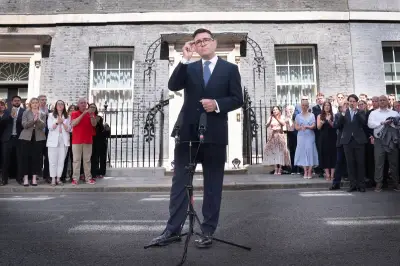
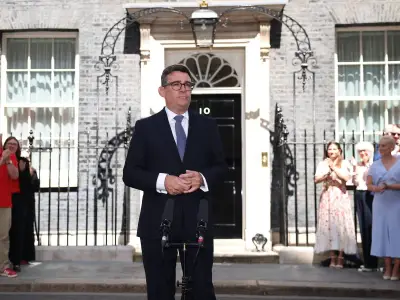
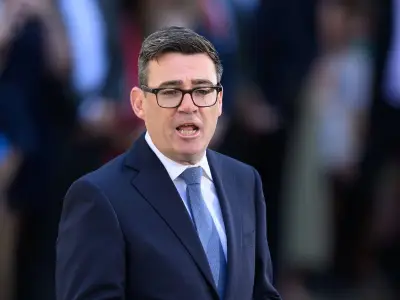
According to polling, Andy Burnham is the public's top choice to take over from Keir Starmer. A recent YouGov poll found that 34% of voters have a favourable opinion of him, giving him higher net favourability than Starmer, Kemi Badenoch, Nigel Farage, and Zack Polanski. However, several hurdles remain before Burnham can enter the race: he must convince Labour's National Executive Committee (NEC) to let him stand, win a by-election, secure the backing of 81 MPs, and then win a leadership contest.
The Mayor of Greater Manchester, nicknamed 'King of the North' during the COVID-19 pandemic for standing up to Boris Johnson, has already tried twice to become Labour leader. He came second to Jeremy Corbyn in 2015 and was eliminated in the first round in 2010 when Ed Miliband prevailed. Burnham was MP for Leigh for nearly 16 years, quitting the Commons and Corbyn's shadow cabinet to stand as mayor. He served as a junior Home Office and Health Minister under Tony Blair, and as Culture Secretary and Health Secretary under Gordon Brown. He has called for a national care service fully integrated with the NHS and pushed back against private sector influence in healthcare. However, his parliamentary career was not without controversy: he voted for the Iraq War and was accused of flip-flopping after saying he would not vote against the Tory welfare bill in 2015, despite describing it as 'unsupportable.' He has advocated for 'aspirational socialism' and nationalising transport, energy, and water, which he calls 'life's essentials.'
Ed Miliband
Ed Miliband has been the subject of much discussion about launching a leadership challenge to unite the 'soft left.' The Energy Secretary is well respected among Labour members, consistently topping popularity tables on LabourList. However, critics point out that Miliband has already had his chance to become PM: he led the Labour Party between 2010 and 2015 but lost the general election, with the party losing 26 seats. There is discomfort about parachuting him into the top job with that on his CV.
Nevertheless, Miliband is viewed as a heavyweight and a firm believer in shifting to green power and reaching Net Zero. As leader of the opposition, he opposed Tory cuts to public services, and his 2015 manifesto included raising the minimum wage, bringing back the 50p top income tax rate for those earning over £150,000, and cutting business rates. He also pledged to boost NHS funding, recruit 20,000 more nurses, and scrap the Bedroom Tax. However, he was haunted by missteps, including the infamous 'Ed Stone' unveiling of Labour pledges, which looked like a headstone, and an awkward photo of him eating a bacon sandwich, along with mockery over having two kitchens in his North London home.
Al Carns
While the other potential candidates are more established, Al Carns, the current Armed Forces Minister, is gaining ground as a leadership hopeful. Allies of the former marine insist the less well-known MP is a serious candidate. This week, Carns wrote an extensive piece in the New Statesman titled 'How Labour Can Win Again,' widely seen as a pitch for the leadership.
Carns's highly acclaimed military background is likely to intrigue MPs, especially during a time of global instability. He joined the Royal Marines at 19, rising through the ranks to become a special forces colonel. He was awarded the Military Cross in 2011 for his service in Afghanistan and resigned after 24 years of service. Many MPs question whether the MP for Birmingham Selly Oak is a serious candidate compared to more established names, with some believing he is too 'untested' as a politician. Those on the soft left are unlikely to entertain his bid, but others see him as a moderate candidate with less baggage than other hopefuls. Carns is clearly ambitious and known for breaking down barriers; he was part of a group of soldiers who set a record by climbing Mount Everest in under five days without acclimatising. A quote that emerged on Thursday appeared to show his seriousness: 'Al Carns has said he is getting on with doing his job, but if someone fires the starting gun, he isn't afraid of gunfire,' a parliamentary source told The Times.