

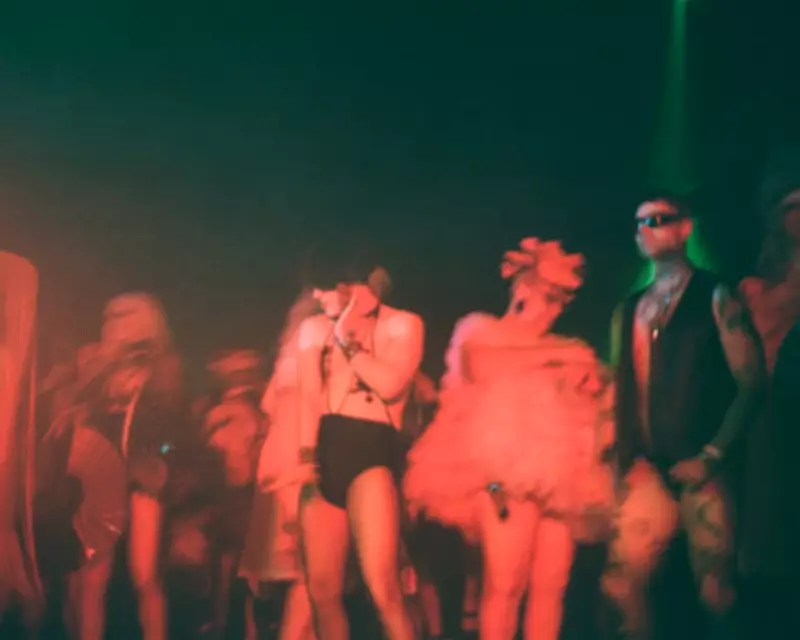
Peterborough-born artist Rene Matić, whose work critically examines modern British identity and has been hailed as the Wolfgang Tillmans of their generation, has been awarded the prestigious Deutsche Börse Photography Foundation prize for 2026. The accolade, one of Europe's most esteemed art awards, comes with a £30,000 prize.
Matić was selected from a shortlist that included Jane Evelyn Atwood, Weronika Gęsicka, and Amak Mahmoodian. The recognition follows their earlier nomination for the Turner Prize in 2025.
The winning exhibition, titled As Opposed to the Truth, was held at CCA in Berlin and documented queer love, nationalism, and various subcultures. Matić described the show as comprising opposing layers, loving layers, and violent layers. The installation featured photographs, flags adorned with sewn slogans, and a collection of black dolls sourced from second-hand stores.

Shoair Mavlian, director of the Photographers' Gallery and chair of the Deutsche Börse jury, praised Matić's fluid and experimental use of photography. She noted that the installation's construction, which created different dialogues through the pairing and reorganising of images, was particularly exciting and interesting.
Matić has previously stated that symbolism does much of the work for them, exploring concepts of blessing and burden, and true or false. They use flags as metaphors for power and hegemony. As Opposed to the Truth was Matić's first institutional solo exhibition in Germany, though they have exhibited widely in the UK and Europe, including a joint show with Oscar Murillo at Kunsthalle Wien in Austria inspired by Josephine Baker.
Matić has a tattoo of the far-right slogan Born British Die British on their back, inspired by the photography of Derek Ridgers, who documented the fascist scene of 1970s Britain. Matić's work often draws from subcultural movements, such as the skinhead movement their father was part of in the 1980s, and Northern Soul.
Matić explained that the tattoo represents the in-between moments of being born British and dying British, which is central to their story. They sought to insert themselves into that narrative, having come across Ridgers' photos of skinheads when younger, searching for themselves or their father in that scene. Ridgers' work was instrumental in helping Matić understand their culture, identity, position, and opposition.
Their Turner Prize-nominated work was described by Adrian Searle as a frozen autobiographical tableau mixing peace and protest, friendship and family, along with contested ideas of nationhood and belonging. Searle also called Matić a quiet observer of things.
The other nominees also presented compelling projects. Jane Evelyn Atwood was nominated for Too Much Time, a decade-long survey capturing the lives of women in prison, from death row in America to female inmates in eastern Europe. Amak Mahmoodian was recognised for One Hundred and Twenty Minutes, which refers to the average time humans spend dreaming each night, focusing on the dreams of immigrants seeking new lives. Weronika Gęsicka was honoured for Encyclopedia, a fact-meets-fiction work that used generative AI to create fake entries inspired by real-life falsehoods in reference books.
Gęsicka's work was the first AI-generated piece ever nominated for the award, reflecting a growing trend as artists encourage the industry to embrace technology. Mavlian acknowledged that artists will use AI in different and creative ways, and it is a huge topic of conversation for photographers currently.
Each of the nominated artists received £5,000.






