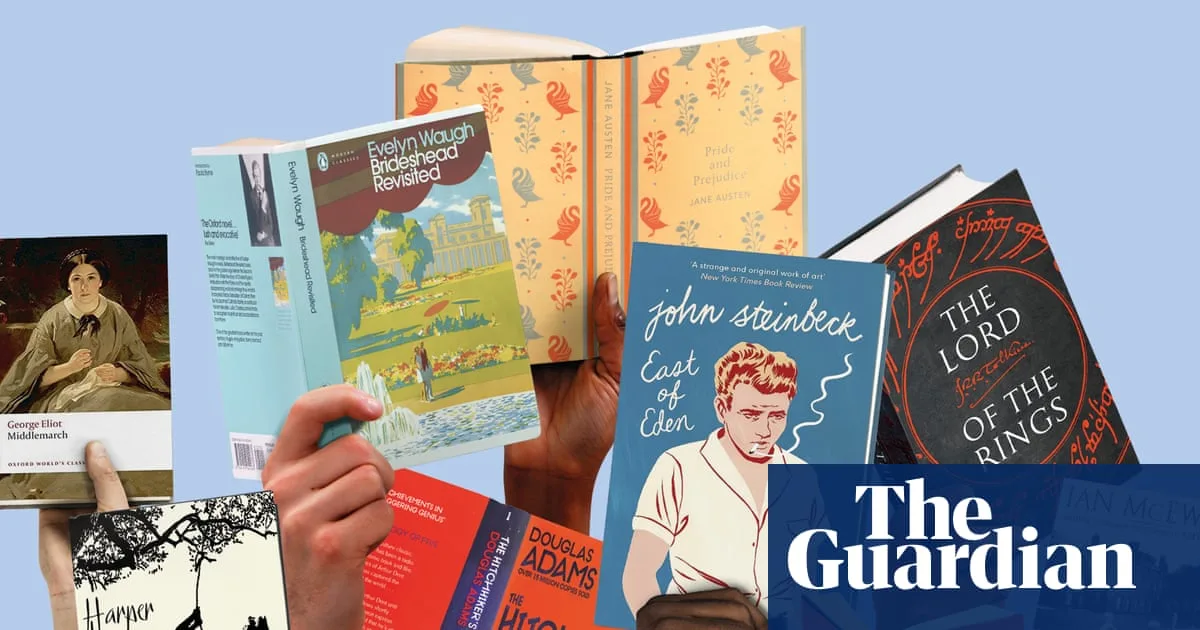
Readers have responded with a mix of praise and criticism to the Guardian's recently published list of the 100 best novels in English, with many questioning the criteria used to select the works. While some appreciated the effort to highlight literary classics, others argued that the list was too elitist, outdated, and failed to encourage new readers to develop a love of reading.
Lack of Modern and Accessible Books
Sarah Steiner from Croydon expressed disappointment, stating that the list seemed to equate 'best' with misery and old-fashioned elitism. She questioned why there were so few modern books and suggested that the list would not help non-readers get into reading. Steiner proposed curating a list of 'gateway' books that are more accessible and enjoyable, such as those by Agatha Christie, JRR Tolkien, Dan Brown, and JK Rowling, to cultivate a reading habit before tackling the more 'worthy' works.
Omissions of Notable Authors
Several readers noted the absence of major authors. Graham Mytton from Coldharbour pointed out that neither John Steinbeck nor John Dos Passos appeared in the list, despite Steinbeck's East of Eden and The Grapes of Wrath being influential American novels. Alex Dickie from Edinburgh echoed this sentiment, exclaiming, 'No Steinbeck. Really?'
Alan Downie, emeritus professor at Goldsmiths, University of London, lamented the omission of Henry Fielding and his novel Tom Jones, which he considers the greatest novel in world literature. He noted that George Eliot and Charles Dickens were influenced by Fielding's narrative style.
The 'Thud Factor' and Readability
Dr James Taylor from London observed a pattern of hefty tomes in the top 10, including In Search of Lost Time (4,200 pages) and War and Peace (1,400 pages), which he said left him feeling more inadequate than inspired. Dave Patten from Taunton found Proust's work unreadable due to small type and dense formatting, and questioned the inclusion of Ulysses while omitting Evelyn Waugh.
Lighthearted Works Overlooked
Alan R Watkins from Haddenham criticized the list for overlooking lighthearted and joyful authors such as Douglas Adams, Spike Milligan, Terry Pratchett, Barbara Pym, and PG Wodehouse. Stephen Joseph from Sheffield noted that Middlemarch is hilariously funny, but this feature seemed unfitting for a masterpiece in the list's context.
Other Notable Omissions
Jim Hatley from Brighton pointed out that Ulysses is almost impossible to finish, and questioned the inclusion of five Virginia Woolf novels while only one Graham Greene and none by John le Carre, John Fowles, or John Wyndham made the cut. Rhoda Koenig from London asked whether popularity disqualified books, citing All Quiet on the Western Front, which sold 50 million copies. Stephen Friar from Painswick wondered what happened to Thomas Hardy's Tess of the d'Urbervilles, calling it the greatest novel ever written.
Overall, the letters reflect a desire for a more inclusive and diverse list that balances literary merit with accessibility and enjoyment, encouraging a broader range of readers to engage with fiction.