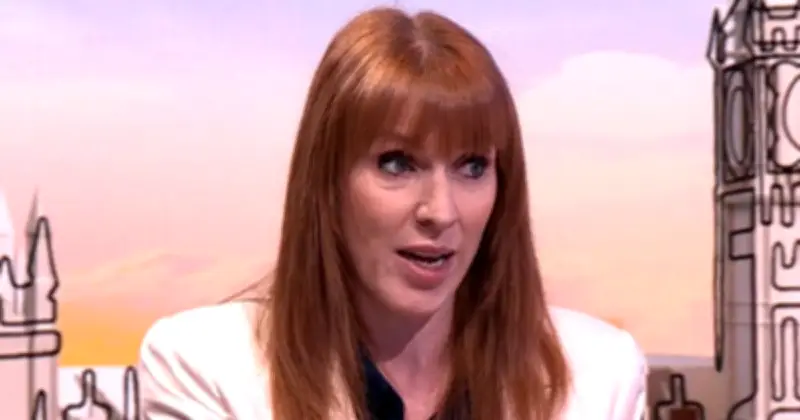
Angela Rayner and Laura Kuenssberg clashed on the BBC's Sunday morning show after Andy Burnham suggested the possibility of a return to free movement with the European Union. Rayner repeatedly declined to give a direct answer on whether the UK could reintroduce free movement, as the pair talked over each other during a tense exchange.
Burnham's call for an honest discussion
Andy Burnham has said he wants an “honest discussion” about the possibility of a return to free movement between the UK and the EU as part of his plans for a new relationship with the bloc. Kuenssberg put this to Rayner, challenging her: "A Labour manifesto in 2024 said, in black and white, there will be no return to freedom of movement. You stood on that manifesto. Andy Burnham promised to stick to that manifesto. He's breaking that promise, isn't he?"
Rayner firmly denied this, stating: "No, he isn't, because he's been really clear that this Parliament, that manifesto, we are clear. We're not reopening that debate. What he's saying is..." She was cut short by Kuenssberg, who interjected: "He's literally just reopened this debate."
Rayner sidesteps repeated questions
Again Rayner did not address the issue, responding: "We're saying as we go forward into the future...we have a 10-year plan that we're writing. It's 10 years on since we left the European Union. We can't go backwards. That's not a possibility for us. We have to go forwards, and therefore you have to look at what that future relationship will look like. We've already saved billions of pounds with the changes we've already made to help and enable the trade to continue with the European Union."
Kuenssberg cut in again: "So let's then get a clear view on what you're saying or suggesting might be a next manifesto. I think we've just heard you say..." Rayner snapped back, cutting off the host: "I'm not going to write a manifesto here today on the show. The Prime Minister is clear. He wants to have the conversation. He's tackling the big issues like the National Care Service wants to introduce. He's talked about the changes to the triple lock."
No straight answer on free movement
Dissatisfied that Rayner changed the subject, Kuenssberg further pressed: "Hang on, we're talking about movement here." Rayner responded: "What I'm saying is, this is part of a wider programme that the Prime Minister is saying, bringing the country together, thinking about where the country goes into the future, not the old arguments of the past."
Kuenssberg once again tried to get a straight answer, stating: "People will want to know what your view is - you were a senior politician throughout this whole period. Should we return to freedom of movement, where an unlimited number of Brits could go and live and work around the EU, and an unlimited number of EU citizens could come and live and work here?"
Rayner continued to sidestep the issue, saying: "So you've identified that I've been a politician since 2015. I remember the Brexit debates, and I remember the promises that were made to the British people: leave the European Union, more money coming into our NHS, better economy. People haven't seen that realised. So, what the Prime Minister is saying now, and what I want, is that we have an honest conversation about the facts of what the trade-offs are to get a best deal for Britain going forward..."
"I'm asking what you want to see in the future. Should we return [to] freedom of movement?" Kuenssberg once again asked. Rayner responded: "I want to see the best deal for the people of my constituency and for Britain. We haven't got the best deal at the moment because we've seen exports reduced by 20%. We've seen the red tape and the friction that has meant that a lot of our businesses are not able to trade in the way that they would like with our biggest trading partners. So I would like us to have an honest conversation about what the trade-offs could be, and then put that to the people at a general election."
"And does that include the possibility of going back to freedom of movement?" Kuenssberg probed once more. "Well, the prime minister said that he's going to have the conversation, but it won't be a conversation about where we were in 2016 because we left the European Union, so we can't go back. But what we can do is say, how do we provide a better solution for things like dealing with international criminals, dealing with the trade, dealing with our farmers here, our sector exports."