

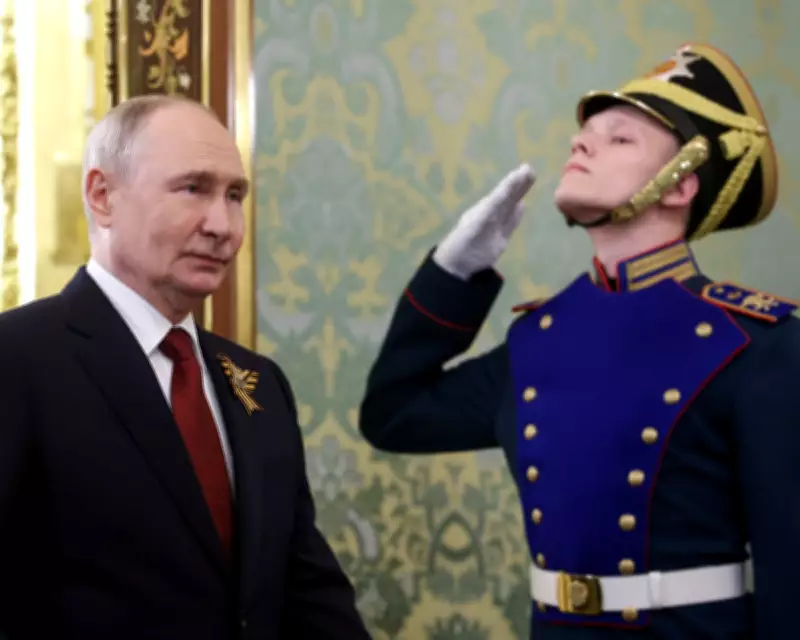
Vladimir Putin has suggested that the war in Ukraine is approaching its conclusion, while simultaneously criticizing Western support for Kyiv and indicating a willingness to negotiate new security arrangements for Europe. The Russian president made these remarks on Saturday, shortly after presiding over a significantly scaled-back Victory Day parade in Moscow.
Putin's Remarks on the War's End
Speaking to reporters, Putin stated, "I think that the matter is coming to an end," referring to the Russia-Ukraine conflict, which has become Europe's deadliest since World War II. He added that the war remains a "serious matter" but expressed a belief that it is winding down. Putin also foreshadowed potential negotiations with European leaders, specifically mentioning former German Chancellor Gerhard Schröder as his preferred interlocutor.
Criticism of Western Support
Putin slammed Western nations for their ongoing support of Ukraine, accusing them of escalating confrontation with Russia. "They started ratcheting up the confrontation with Russia, which continues to this day," he said. "They spent months waiting for Russia to suffer a crushing defeat, for its statehood to collapse. It didn't work out. And then they got stuck in that groove and now they can't get out of it."

Conditions for Meeting Zelenskyy
Putin reiterated his readiness to meet Ukrainian President Volodymyr Zelenskyy, but only in a third country once all conditions for a potential peace agreement are settled. "This should be the final point, not the negotiations themselves," he emphasized. This position aligns with his previous stance on direct talks with his Ukrainian counterpart.
Ceasefire and Prisoner Exchange
Russia, Ukraine, and the United States announced a three-day ceasefire beginning Saturday, though both sides accused each other of violations amid continued drone activity and civilian casualties. The Kremlin stated there were no plans to extend the truce. Putin noted that Russia had not yet received any proposals from Ukraine regarding a prisoner exchange, despite an agreement to swap 1,000 prisoners each during the ceasefire.
Victory Day Parade Scaled Back
The Victory Day parade in Moscow was vastly reduced compared to previous years, with no military hardware on display for the first time in nearly two decades. Only a handful of foreign dignitaries attended, primarily leaders from Russia's close allies, including Belarus, Malaysia, Laos, Uzbekistan, and Kazakhstan. This contrasts sharply with last year's event, which featured high-profile visitors such as China's Xi Jinping.
Security Concerns and Threats
In the week leading up to the parade, Moscow had issued threats to bomb central Kyiv, including foreign embassies, warning overseas missions to evacuate their staff to ensure the event proceeded without disruption. These threats underscored the heightened tensions surrounding the conflict.
Zelenskyy's Europe Day Observance
Ukrainian President Volodymyr Zelenskyy observed Saturday as Europe Day, celebrating Ukraine's ties with the European Union. He stated, "From the first days of the full-scale war until today, Europe has stood with Ukraine. And this is not charity – it is a choice made by Europeans: to stand on the same side as the brave and the strong."
European Perspective on Negotiations
European Council President António Costa recently expressed belief in the potential for the EU to negotiate with Russia and discuss the future of European security architecture. However, many in Ukraine and Europe remain skeptical of involving Schröder, given his close ties to Putin and history with Russian business interests, including the Nord Stream gas pipelines.
Current State of the Conflict
Now in its fifth year, the war has killed hundreds of thousands of people and left large areas of Ukraine devastated. Russian forces control just under one-fifth of Ukrainian territory but have not been able to capture the entire Donbas region, where Ukrainian forces have fortified key cities. Russian advances have slowed this year, and the conflict continues to drain Russia's economy and worsen its relations with Europe.






