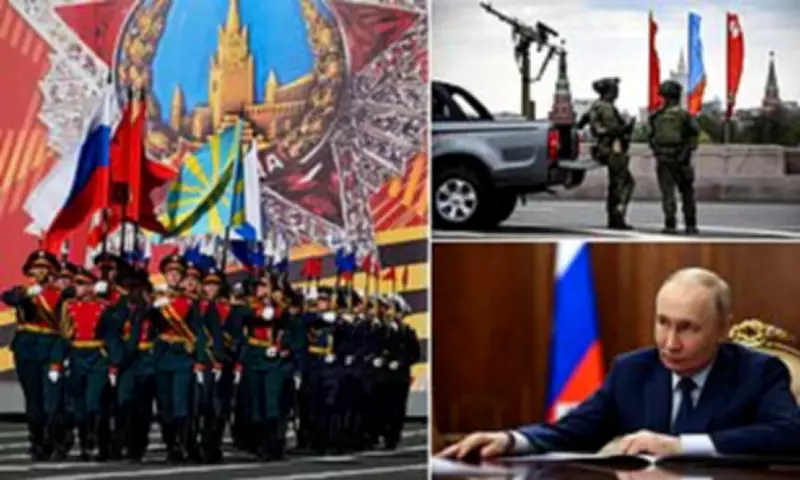
Vladimir Putin has dismissed the head of Russia's Aerospace Forces as his concerns over Ukrainian drone strikes escalate ahead of the Victory Day parade in Moscow. General Viktor Afzalov, who led the branch responsible for Russia's air defences, is being replaced by Colonel General Alexander Chaiko after only three years in the position, according to Russian media reports.
New Commander's Background
Incoming commander Chaiko is a seasoned officer who commanded Russian forces in Syria from 2019 to 2021. In 2020, he received the Hero of Russia medal from Putin. The Kremlin has not commented on the reasons for the change, but it occurs during a period of intensified Ukrainian drone attacks over the past two months, which have inflicted significant damage on Russia's energy infrastructure.
Growing Paranoia and Security Concerns
The reshuffle follows a European intelligence report indicating that Putin is increasingly paranoid about a coup plot within his own circle. The report identifies former Defence Minister Sergei Shoigu as a potential destabilising actor who retains influence within the military high command. In response, the Kremlin has enhanced Putin's personal security, installing surveillance systems in the homes of close staffers after a series of assassinations of top military figures.

The report notes a high alert in the government since March 2026 regarding the risk of a coup attempt. It states, 'Putin fears the use of drones for a possible assassination attempt by members of the Russian political elite.' Security measures now include prohibiting cooks, bodyguards, and photographers from using public transport, requiring double screening for visitors, and restricting those working near Putin to phones without internet access.
Impact of Recent Assassinations
These measures were partly triggered by the December killing of Lieutenant General Fanil Sarvarov, who died when an explosive device detonated under his car. Moscow blamed Ukraine for the assassination, which caused uproar within Russia's security establishment. Putin subsequently extended the Federal Protection Service's reach to provide security for ten additional senior commanders.
Public Dissent and Military Challenges
Beyond assassinations, the Kremlin faces growing public dissent amid economic decline and the Russian army's faltering campaign in Ukraine. In response, security officials have reduced the number of locations Putin regularly visits, and his family has stopped using their usual residences in the Moscow region and at Valdai.
On Tuesday, Putin ordered a cut in mobile internet access in Moscow ahead of the Victory Day parade. Mobile operator MTS informed subscribers of temporary restrictions on mobile internet and text messaging from May 5 to 9. Russia's digital ministry later restored access, stating the targeted outages helped reduce drone accuracy and counter attacks. Such blackouts have become common in border regions, with Russia claiming they thwart Ukrainian drones that rely on local networks.
Context of the Conflict
Ukraine has intensified long-range drone strikes in recent weeks, targeting Russian oil facilities and a luxury high-rise in Moscow, describing them as a fair response to Russia's nightly drone barrages. The Kremlin has scaled down this year's Victory Day parade, excluding cadets and military hardware, after Ukraine disrupted the 2025 event with drone swarms that caused travel chaos. Putin frequently invokes World War II memories to justify his offensive against Ukraine.