

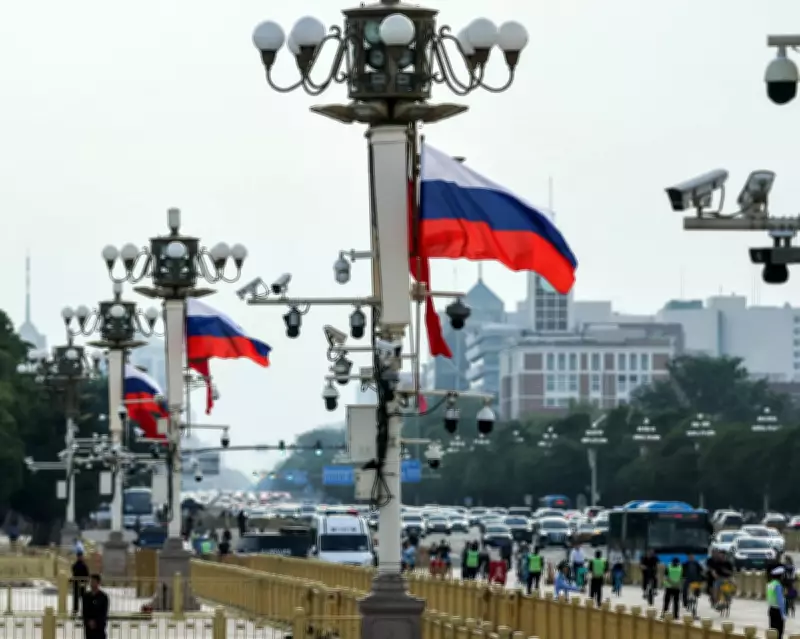
Vladimir Putin is set to arrive in Beijing on Tuesday for a state visit, just four days after Donald Trump concluded his own trip to China. The visit, which Chinese state media reports as Putin's 25th to the country, underscores Beijing's rising confidence on the global stage as a hub of diplomatic activity.
Deepening Ties Between Putin and Xi
The visit highlights the robust relationship between Putin and Chinese President Xi Jinping, who have met over 40 times—far more than Xi's meetings with any Western leader. William Yang, a senior analyst at the International Crisis Group, noted that hosting two of the world's most powerful leaders within days reflects China's growing self-assurance. He suggested Xi likely aims to remind Trump that Beijing maintains strong alternative partnerships, making it difficult for Washington to isolate or harm China.
Putin's Challenges at Home
Putin arrives in Beijing amid what may be the most challenging period of his long rule. His strongman image at home is eroding as Russia makes little progress in Ukraine, and economic troubles increase dependence on China. This shifts the Kremlin's narrative of an equal partnership toward a more lopsided relationship.

In a video address to China ahead of his visit, Putin described China-Russia relations as reaching an unprecedented level, citing soaring bilateral trade, settlements in roubles and yuan rather than US dollars, and mutual visa-free travel policies. Chinese foreign ministry spokesperson Guo Jiakun stated that the friendship between the two nations would deepen under strategic guidance from both leaders.
Energy Cooperation and Sanctions Resilience
This year marks 30 years since the China-Russia strategic partnership and 25 years since their treaty of good-neighbourliness. Putin's emphasis on non-dollar transactions highlights efforts to build resilience against Western sanctions, which rely on US dollar dominance. China has not complied with sanctions on Russia, buying over $367 billion in Russian fossil fuels since the Ukraine invasion, according to the Centre for Research on Energy and Clean Air.
Analysts are watching for potential deals to deepen energy cooperation, notably the Power of Siberia 2 pipeline. This 1,600-mile natural gas pipeline through Mongolia would add 50 billion cubic metres of capacity, helping Russia replace lost European markets. For China, it would reduce reliance on the Strait of Hormuz, disrupted by US-Iran conflict, but risks overdependence on Russia amid efforts for energy self-sufficiency.
Xi's Balancing Act with Trump and Putin
Putin has been a background figure in Xi's delicate relationship with the US. During Trump's rare tour of Xi's private residence in Beijing, Xi noted that Putin was among few foreign leaders invited to the Zhongnanhai compound. Trump replied, 'Good.'
China has also faced Western sanctions over the Ukraine war. This month, the Chinese embassy in the UK lodged representations after London added Chinese entities to its sanctions list. Western countries criticize Beijing's support for Russia through economic ties and dual-use exports.
Ukraine was not detailed in US or Chinese summaries of the Trump-Xi meeting, but the Financial Times reported Xi told Trump that Putin may regret the war. China's foreign ministry rejected this. If accurate, Xi's comments reflect China's awareness of Russia's difficulties. The war has stalemated, with Ukrainian strikes damaging Russian infrastructure. On Tuesday, a Russian deputy from Siberia called for a swift conclusion, warning the economy cannot withstand prolonged conflict.






