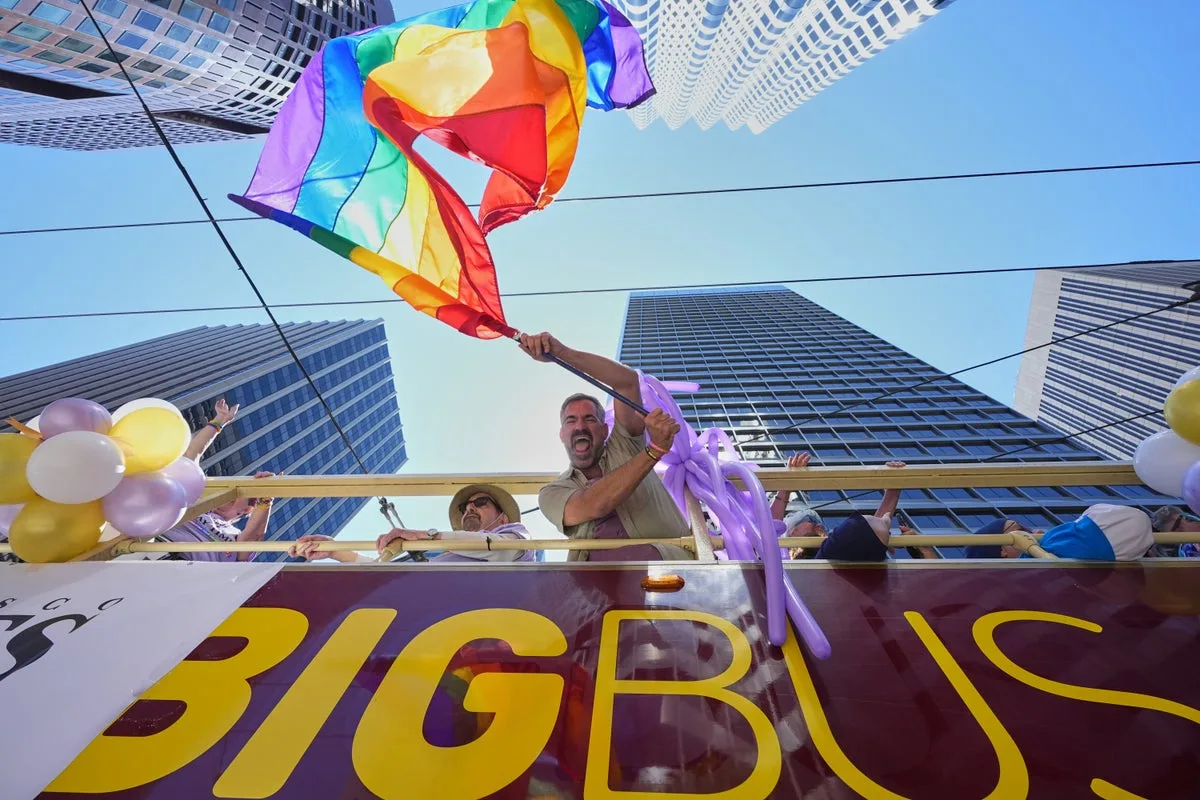
Pride Month 2026 has begun across the United States, with parades and parties in major cities and small towns celebrating LGBTQ+ communities. This year's festivities occur against a backdrop of policy shifts under President Donald Trump's administration, which has pursued measures to roll back transgender rights and curtail diversity, equity, and inclusion initiatives.
Jordan Braxton, co-president of USA Prides, emphasised the protest roots of Pride events. 'A festival is a time to celebrate,' she said. 'Those are acts of resistance, too.' The origins of Pride trace back to the 1969 Stonewall Inn police raid in New York, which sparked protests and catalysed the gay rights movement. The first marches were held in June 1970 in Chicago, Los Angeles, New York, and San Francisco.
This year's main events include Los Angeles on June 14, Chicago on June 20-21, San Francisco on June 27, and New York on June 28. International celebrations are also taking place in Paris, Rome, Sao Paulo, and Tokyo. In Haddon Township, New Jersey, a Philadelphia suburb, the sixth formal Pride celebration features a parade and community night. Isis Petrie Williams, president of Haddon Township Pride, described it as 'a radical expression of joy, acceptance, and love.'
The legal landscape has shifted in recent years. The Supreme Court's 2015 ruling legalised same-sex marriage nationally, but in 2025 the court allowed a Tennessee ban on gender-affirming care for transgender children. Most Republican-controlled states have since passed similar restrictions, and Trump has signed executive orders seeking federal policies. On Monday, a court ruled that the military illegally banned transgender troops, dealing a blow to one such policy.
Corporate support for Pride events has wavered. Braxton noted that some investment firms have pulled back this year, following companies like Anheuser-Busch and Walmart in 2025. 'It's all because of Trump's DEI policies,' she said. However, smaller events have seen increased local business sponsorship. In Haddon Township, the Coast Guard is the only major national sponsor to withdraw, while local hospitals, restaurants, and law firms have stepped in.