
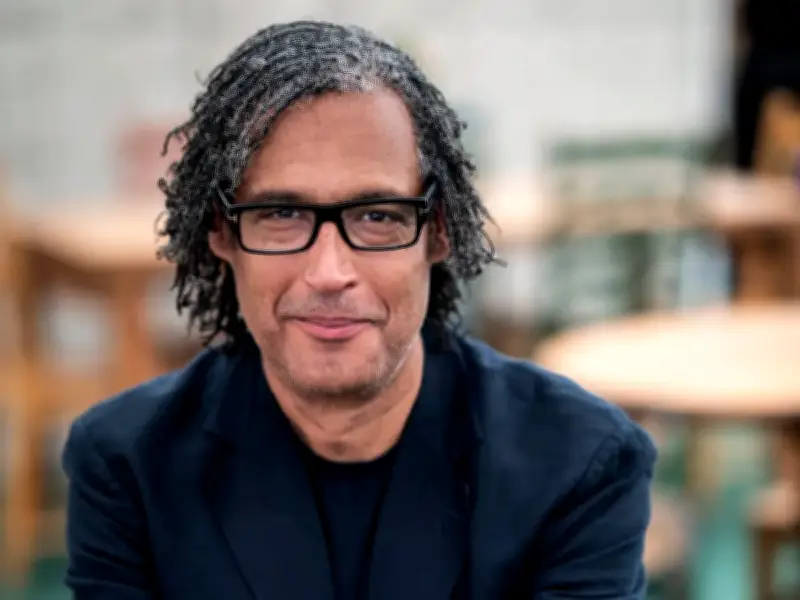
Historian David Olusoga is preparing to reveal the "remarkable" tale of a Peterloo Massacre survivor after two centuries.
On August 16, 1819, British Army soldiers dispersed a gathering of demonstrators calling for parliamentary reforms at St Peter's Field, Manchester. Surging into a crowd of approximately 60,000, 18 lost their lives and an estimated 400 to 700 suffered injuries in what became known as the Peterloo Massacre.
Over 200 years later, historian Olusoga is bringing to light the account of survivor William Cheatham, whose battle for justice reached Parliament following a near-fatal cavalry sabre attack.
Cheatham's story of survival and justice
His account is documented in the new podcast series A Family History Of Peterloo: Britain's Forgotten Massacre, which is presented by Olusoga and Findmypast research specialist Jen Baldwin.
During the massacre, Cheatham sustained a devastating neck injury and later pursued his assailant through the legal system before his case was examined in Parliament. Yet his account has remained largely unknown until now, with the case emerging thanks to fresh research uncovered in historical newspaper archives.
Cheatham, a working-class veteran and weaver from Lancashire, journeyed from Bolton to Manchester on August 16, 1819, to join thousands who were peacefully calling for political representation and voting reform. After escaping the yeomanry charge at St Peter's Field, Cheatham attempted to flee through a narrow passage as mounted troops pursued the crowd.
According to testimonies, over a mile from the field he was attacked by Edward Meagher – a cavalry trumpeter dubbed the "Butcher of Waterloo" – who slashed him across the neck with a sabre, leaving a three-inch gash.
Legal battle and Parliament petition
The podcast also reveals how following the events at Peterloo, Cheatham spent years pursuing justice through the courts and Parliament. His case eventually culminated in a petition being read aloud in the House of Commons, where he appealed for compensation after authorities had failed to prosecute the man accused of attacking him.
Although there had been compelling evidence and even political support, his campaign ultimately failed.
Olusoga has said Cheatham's story offers a powerful lens through which to examine enduring questions about democracy, right to protest and challenging established power.
He said: "Peterloo is a key landmark in British history. The events of that day resonated through the decades that followed. William's story shows us that there is still so more to learn and more to uncover about the tragedy that took place in Manchester in 1819."
"William's story reveals just how difficult it was for ordinary people to challenge power in nineteenth-century Britain and it raises questions that still resonate today about representation, accountability and whose voices get heard."
Forgotten survivors remembered
Although the massacre is now recognised as a defining event in Britain's democratic development, survivors' stories were largely forgotten.
Baldwin, a genealogist, research specialist and host of A Family History Of..., said while Cheatham was not a famous reformer or political leader, he was an ordinary man "whose life intersected with an extraordinary historical event".
She added: "It's a striking reminder that many of today's democratic rights were won through the experiences of ordinary citizens whose names history has all but forgotten."
The new research was undertaken by experts at the UK family history website, Findmypast, in partnership with People's History Museum, Manchester, which holds the country's most significant Peterloo collection.
People's History Museum head of collections and engagement Jenny Mabbott said history was "at its most powerful" when it "brings to light the experiences of ordinary people whose lives and actions shaped the society we live in today".
The four-part special series, A Family History Of Peterloo: Britain's Forgotten Massacre, is now available to stream on all major podcast platforms.




