Orbán's Defeat Threatens Funding for UK Populist Right Figures and Thinktanks
Orbán Defeat Halts Funding for UK Populist Right Figures

Orbán's Electoral Defeat Puts UK Populist Right Funding in Jeopardy

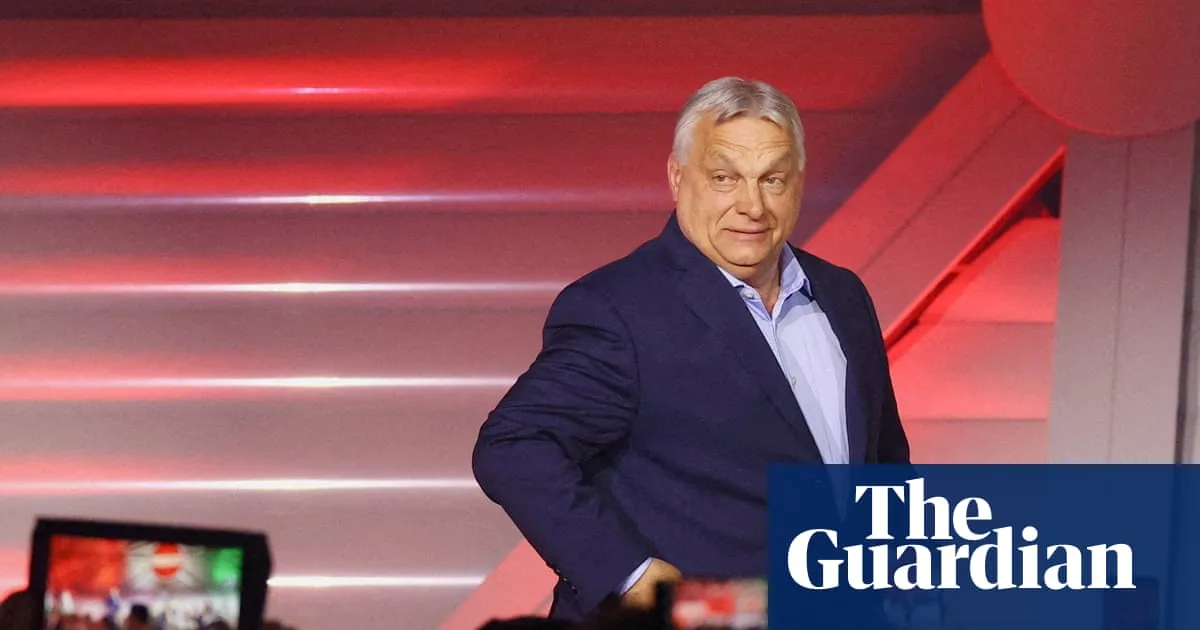
Viktor Orbán's arrival to address supporters in Budapest, following the announcement of partial parliamentary election results, marked a pivotal moment not just for Hungary but for a network of British political figures who have long benefited from his regime's largesse. The Hungarian leader's overwhelming defeat this week now threatens to sever the financial lifelines that have sustained thinktanks and individuals associated with the populist right across Europe, including key players in UK politics.

British Beneficiaries of Orbán's 'Illiberal Democracy'

Over the past 16 years of Orbán's rule, figures such as Tory peer Lord Frost, Reform UK's Matt Goodwin, and Cambridge academic James Orr have all received substantial support from the self-styled "illiberal democracy" established by Orbán's Fidesz party. This funding, channelled through Hungarian institutions, has particularly favoured those on the harder right of British conservatism, with millions allocated annually to amplify anti-immigration and hard-right narratives in the UK.

Frank Furedi, a British-Hungarian sociologist who leads the thinktank MCC Brussels, highlighted the impending changes, stating, "We expect steps to be taken to try to deprive certain institutions of the funding they previously had, and in some cases, there will be attempts to close them down." MCC Brussels, almost entirely funded since 2022 by a grant from the Mathias Corvinus Collegium—a conservative Hungarian educational institution backed by Orbán's government—faces uncertainty as the new Hungarian leadership vows to overhaul state financing.

Wide Pickt banner — collaborative shopping lists app for Telegram, phone mockup with grocery list

Key Institutions and Their Ties to Orbán's Regime

The Roger Scruton Legacy Foundation (RSLF), named after the late rightwing philosopher, has been a significant beneficiary, receiving over half a million pounds since 2023 from MCC, accounting for more than 90% of its total funding. The RSLF's board includes influential figures such as former minister Michael Gove and James Orr, a key adviser to Nigel Farage, underscoring the deep connections between Hungarian funding and British political networks.

Other notable figures include Matt Goodwin, a visiting fellow at MCC, who reportedly received payments between €5,000 and €10,000 per month, according to leaked documents from Hungarian investigative outlet Direkt36. Goodwin spoke at an MCC event just after Orbán's ousting, describing it as a sombre affair attended by 18 people. Additionally, Lord Frost served as a visiting fellow at the Danube Institute, another Budapest thinktank founded by Margaret Thatcher's former speechwriter, which provided tens of thousands of pounds for media appearances in the UK.

Implications of Hungary's Political Shift

Hungary's prime minister-elect, Péter Magyar, has vowed to suspend what he calls the "propaganda machine" of state media and end the mixing of party financing with government spending. In a press conference, he asserted, "I believe the state should never have financed them in the first place," signalling a likely halt to funding for organisations like MCC Brussels and the Danube Institute. This shift could force British beneficiaries to seek alternative sources, such as corporate backing or support from the US, as noted by Marietta van der Tol, an assistant research professor at Cambridge.

Van der Tol observed, "There is the possibility that those thinktanks and others beyond Hungary could look to the US. Its new national security strategy talked about cultivating resistance to Europe's current trajectory within European nations." However, the future remains uncertain, as Magyar's conservative background and promises of institutional transformation leave the fate of Orbán's support network in limbo.

Pickt after-article banner — collaborative shopping lists app with family illustration

Broader European and Domestic Repercussions

The defeat of Orbán not only impacts funding but also threatens media operations like Remix News, which has pumped out English-language coverage skewed towards hard-right narratives in Britain. With Hungarians demanding regime change, the broader network that evolved during Orbán's rule, including figures like James Orr listed as an "International guest" by MCC, faces potential dissolution. Furedi remains defiant, stating that his organisation will adapt by seeking new funding streams and operating more economically, but the loss of Hungarian state support could significantly weaken the populist right's influence in the UK and across Europe.

As the political landscape in Hungary transforms, British figures who relied on Orbán's patronage must now navigate a new reality, where their ideological and financial backing may no longer be assured, marking a potential turning point in the dynamics of European populist movements.




