

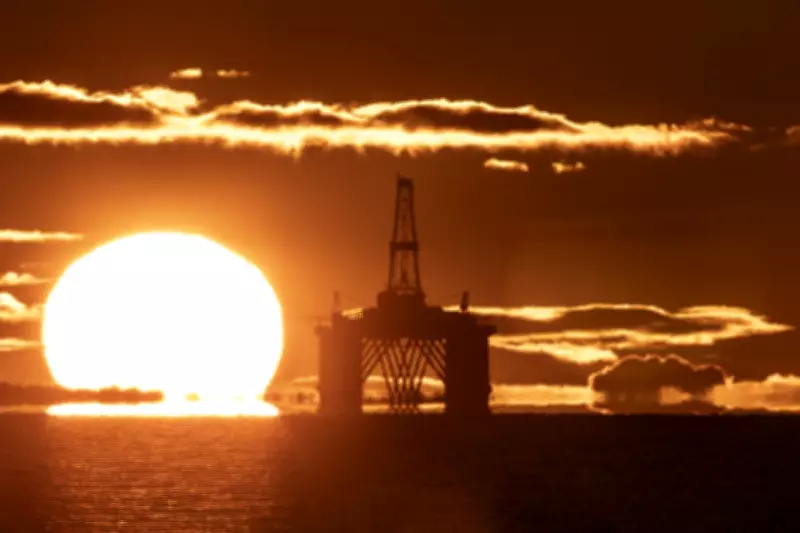
The UK is risking an unnecessary acceleration of the decline of the oil and gas industry, despite overwhelming industry belief that the North Sea basin could still have a long-term future, according to a new report.
Industry Confidence Weak Due to Policy Failures
The report by Aberdeen and Grampian Chamber of Commerce found that 93% of surveyed businesses agreed there is still a future for the North Sea if the right economic conditions are created. The 43rd Energy Transition report highlighted that confidence in the fossil fuel sector is weak due to financial instability, planning delays, transmission charging, and slow project consenting, rather than a lack of opportunity or capability.
Businesses have repeatedly warned that investment is going abroad because of the UK's poor economic and regulatory policies. The report urges the government to create a better economic environment for oil and gas companies.

Key Recommendations
- Consent for the Jackdaw and Rosebank oil fields
- Replacing the Energy Profits Levy with an oil and gas price mechanism
- Faster planning consent
Some 67% of respondents believed planning decisions for important onshore grid infrastructure should be made by the Scottish Government rather than local authorities. Additionally, 89% support new licences and consents where operators can demonstrate lower emissions than imported alternatives and deliver greater UK economic value.
Growing Transition Gap
The report warns of a "growing transition gap," creating infrastructure delays and uncertainty around government policy. Aberdeen and Grampian Chamber of Commerce said the findings show the urgent need for a more competitive and stable policy environment to retain the workforce and industrial capability required for energy security and net zero.
Chief executive Russell Borthwick stated: "For several years now, the dominant political narrative has increasingly suggested that the future of the North Sea is already decided. This report tells a very different story. The overwhelming majority of businesses operating across the energy sector still believe there is a future for the basin if the UK creates the right fiscal and regulatory conditions to support it. What companies are questioning is not the capability of the North Sea, but whether the UK is still competitive enough to attract the investment required to deliver that future."
Borthwick added that the North Sea remains "one of the UK's greatest industrial assets" and that the same workforce that built the sector over the last five decades would also be "critical to delivering offshore wind, carbon capture, electrification and wider transition infrastructure." He emphasised: "But investment follows stability, and right now too many businesses believe the UK is losing ground to international competitors offering clearer policy, faster consenting and more predictable long-term conditions. The message from industry is becoming increasingly clear – you cannot deliver energy security, economic growth and the energy transition while simultaneously hollowing out the industrial base required to achieve all three."
Government Responses
A spokesperson for the Department for Energy Security and Net Zero said: "Oil and gas production will be with us for decades to come, and we will manage existing fields for the entirety of their lifespan – while actively scaling up clean energy industries in the North Sea. Our ambitious plans will make the North Sea a clean energy powerhouse and support up to 40,000 new jobs in Scotland by 2030."
A Scottish Government spokesperson commented: "Decisions on consenting for offshore oil and gas projects, as well as those on licensing and the associated fiscal regime, are matters that are currently reserved to the UK Government. We continue to call on the UK Government to approach decisions for North Sea oil and gas projects on a rigorously evidence-led, case-by-case basis, with climate compatibility and energy security key considerations."






