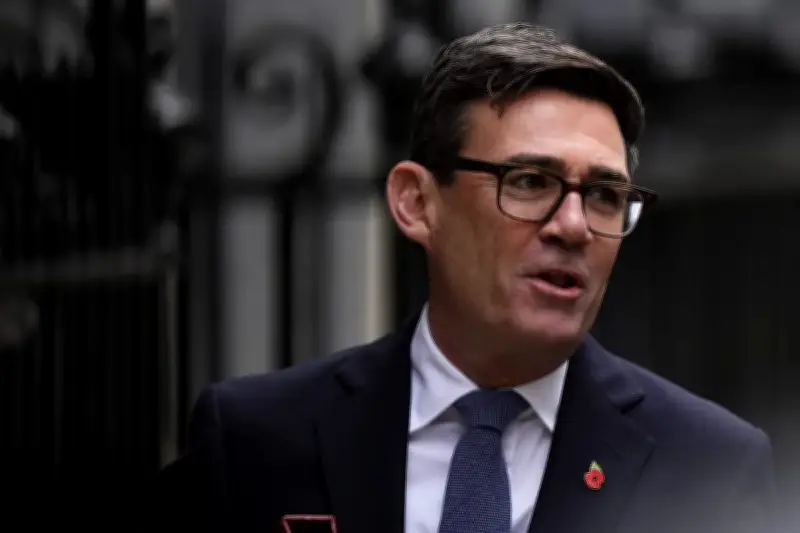
Downing Street has defended flying the Prime Minister’s plane to Manchester to pick up Andy Burnham on the way to the Commonwealth leaders’ summit in the Caribbean.
The flight took off from London Stansted at around 6am for Antigua and Barbuda carrying senior officials but without Mr Burnham on board. He was collected from Manchester along with his wife Marie-France van Heel around half-an-hour later, where the Government plane was grounded for around an hour before setting off again via Canada for a refuelling stop.
No 10 explains travel decision
No 10 said Mr Burnham had been based in the north at the end of last week and said security, operational reasons and value for money for the taxpayer were all considerations when deciding on how the Prime Minister travels. Downing Street would not be drawn on suggestions the route via Manchester could have cost around £20,000 more than flying straight from Stansted.
The Prime Minister’s official spokesman said: “The Prime Minister’s travel arrangements are made on the basis of security, operational requirements, and value for money for the taxpayer.
“The Prime Minister’s travel arrangements reflect where he was carrying out official government business at the end of last week.
“He spent the day in Scotland on Friday, returned to Manchester to work from Number 10 North on Friday evening.”
No 10 would not be drawn on why the Prime Minister could not have travelled back to London over the weekend in order to fly from Stansted. The environmental cost of flying via Manchester does not appear to have been one of the factors considered.
Criticism over cost
The Guido Fawkes website estimated the cost of the Stansted-Manchester flight as £20,000. “I’m not going to comment on speculative figures,” the spokesman said. “Travel costs will be published in the usual way.”
Shadow Cabinet Office minister Mike Wood said: “Labour promised a crackdown on private jet use.
“Yet when it comes to Air Miles Andy, it seems to be one rule for him and another for everyone else.”
Mr Burnham is due to land in St John’s later on Monday before attending the Commonwealth Heads of Government Meeting, after saying he was open to calls for a formal British apology for the UK’s role in the slave trade. He expressed his “sorrow and regret for the pain and suffering of so many millions”, but, in keeping with his predecessors, rejected calls for financial compensation.
He wrote in The Guardian: “We are offering a structured dialogue with those affected by the transatlantic slave trade.
“Listening to calls for a formal apology on behalf of the British state will form an important part of this process and I am open to them.”
Summit context
The King arrived in the Caribbean nation on Friday before his Tuesday summit opening address, which will receive heightened interest after the Prime Minister’s intervention. But Charles, who as head of state is above party politics, is not expected to offer an apology or reference the change in Government policy.
The Prime Minister’s spokesman said Mr Burnham “wants to strengthen the Commonwealth as a family of nations with shared values that can support growth around the world through trade and economic collaboration”.
The Foreign Office will lead work on the “international component of the structured dialogue”, which could include talks on debt relief. The spokesman said: “The Prime Minister, like his predecessors, has expressed his sorrow and regret for the pain and suffering caused by the transatlantic slave trade and recognised the way it still shapes our world today.
“That is distinct from a formal apology.
“We’re opening a structured dialogue with those affected by the transatlantic slave trade and listening to calls for a formal apology on behalf of the British state. That will form an important part of that process.
“We think it’s right that a formal apology is discussed properly with the countries and communities most affected, rather than simply deciding unilaterally what form it should take.
“An apology of this significance should be informed by the people and countries most affected, as they’re asked for.”