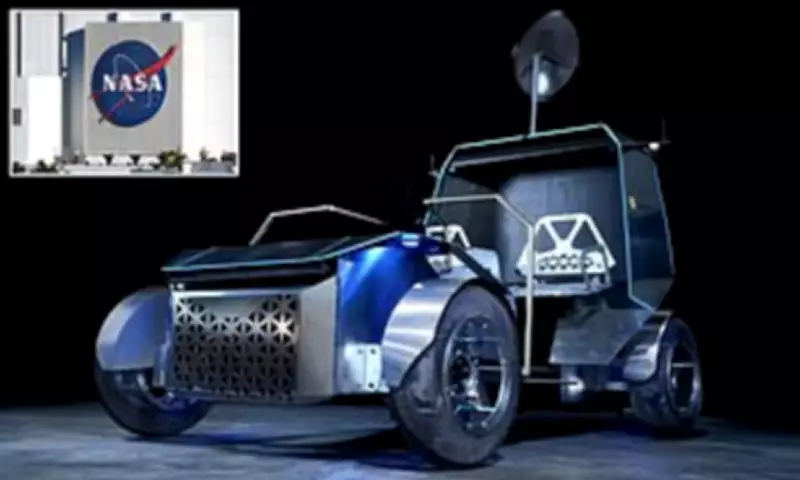
NASA is investing $440 million in two next-generation lunar rovers, but these vehicles will not be seen on highways; instead, they are destined for a 240,000-mile journey to the Moon. This week, the space agency unveiled two futuristic rovers designed to transport astronauts across the lunar surface as part of the Artemis missions and long-term plans for a permanent Moon base.
Contract Awards and Vehicle Details
The agency awarded approximately $220 million each to private space companies Astrolab and Lunar Outpost to develop the rovers, which are expected to arrive on the Moon by 2028. Astrolab's CLV-1 and Lunar Outpost's Pegasus are engineered to endure one of the harshest environments imaginable, with brutal temperature swings, radiation exposure, and abrasive lunar dust. They will carry astronauts across rocky terrain near the Moon's south pole.
Unlike the open-air buggies used during the Apollo missions in the 1970s, these machines are essentially moon-ready off-road electric vehicles equipped with autonomous driving technology. Each rover can carry two astronauts, weighs about a ton, travels at speeds up to 6 mph, and can climb slopes as steep as 20 degrees. They can be remotely operated from Earth or drive themselves autonomously.

Strategic Shift in NASA's Approach
The contracts mark a dramatic shift in NASA's strategy as the agency races to establish a sustained human presence on the Moon before the end of the decade. Originally, NASA planned to build a single advanced rover capable of lasting 10 years on the lunar surface. However, after NASA Administrator Jared Isaacman took over late last year, the agency scaled back its requirements in favor of faster, cheaper, and more flexible designs. As a result, instead of waiting until 2030 for one ultra-complex vehicle, NASA expects to have multiple operational rovers on the Moon by 2028, in time for astronauts arriving on Artemis missions.
"It's a more iterative approach," NASA officials said during a press briefing, emphasizing that deploying several vehicles early will help reduce operational risks and speed up development of future Moon-base infrastructure.
Broader Lunar Ambitions
The lunar rovers are part of a much larger push to establish humanity's first permanent off-world colony. NASA also announced plans for dozens of robotic Moon missions over the next few years, with private companies handling much of the heavy lifting. Jeff Bezos' Blue Origin emerged as one of the biggest winners; its Blue Moon lander will transport equipment, including the rovers, from lunar orbit to the Moon's surface beginning in 2028. NASA has already committed $188 million for the initial missions, with hundreds of millions more potentially on the table later.
The agency is focusing heavily on the Moon's south pole because scientists believe the region may contain frozen water deposits that could eventually be turned into drinking water, breathable oxygen, and even rocket fuel for deeper space missions. NASA's plans go beyond exploration, with open discussions about constructing a permanent Moon Base where astronauts could eventually live and work for extended periods. The new rovers are expected to help scout locations for that future settlement while transporting supplies, scientific equipment, and crews across the lunar surface.
NASA is also developing robotic 'hopper' drones under a project called MoonFall, designed to explore difficult terrain and potentially mark out areas for future lunar development. The growing lunar race also carries geopolitical stakes.
Automaker Involvement and Technology Spinoffs
For automakers involved in the program, the Moon project doubles as a technology testbed. General Motors is helping develop space-rated battery systems for the Pegasus rover, while Goodyear is supplying tires engineered to withstand the Moon's punishing conditions. The work could eventually influence battery performance improvements for electric vehicles back on Earth, especially in extreme cold weather, where EV range often drops significantly. "Helping astronauts once again travel safely across the lunar surface will be a proud moment for our team and our country," GM Defense President Stephen duMont said in a statement.