

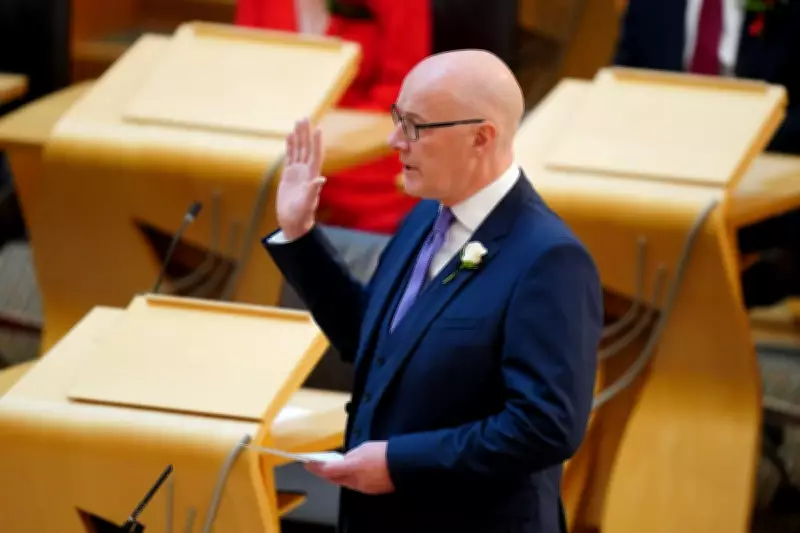
MSPs are set to elect Scotland's newest first minister following the recent Holyrood elections. The incumbent First Minister, John Swinney, has expressed confidence that he will secure the necessary votes to continue in his role. However, all five other political parties represented in the Scottish Parliament have announced they will also put forward their respective leaders for the top position.
SNP Victory Falls Short of Majority
The Scottish National Party emerged as the largest party in the elections, securing 58 seats. This total, while commanding, falls seven seats short of the 65 required for an outright majority in the 129-seat parliament. Ahead of Tuesday's vote, the SNP has called on Mr. Swinney to honour a campaign promise to introduce a vote on a second independence referendum during the first sitting of his new government.
Referendum Debate Looms
During the election campaign, Mr. Swinney pledged that a new SNP administration would bring forward a vote to approve the development of a Section 30 order. Such an order would be necessary to transfer the powers to hold a referendum from Westminster to Holyrood. Since these powers are reserved to the UK Parliament, the vote would serve as a symbolic expression of the Scottish Parliament's will and apply pressure on the UK Government to consent to a second vote on the union.

Gillian Mackay, co-leader of the Scottish Greens, who will stand in the first minister vote, stated that Scotland had voted for a pro-independence majority parliament, "and that must be respected." She added: "If John Swinney is elected first minister on Tuesday, then his new government must bring forward the promised parliamentary debate and vote on Scotland's right to choose at the first available opportunity."
Mandate Debate Continues
Mr. Swinney had told voters during the election campaign that a pro-independence majority of SNP MSPs alone would constitute a mandate. Having failed to achieve that, the first minister now insists that the combined pro-independence majority of the SNP and the Greens still counts as a mandate. Ms. Mackay responded: "It is welcome that, now the election is over, the SNP appears to recognise that Green votes are also independence votes. But recognition is not enough. The First Minister must follow through on his promise and offer the clear roadmap to independence that Scotland deserves and voted for."
Conservative Criticism
The Scottish Conservatives have urged Mr. Swinney to show "common sense" and rule out any new deal with the "anti-oil and gas" Greens. Russell Findlay, the party's leader, claimed that the SNP's "anti-oil and gas agenda" would harden if he "ends up at the mercy of the Greens." Speaking ahead of the Aberdeen South by-election, Mr. Findlay said that while the SNP leader "likes to pretend" he supports Scotland's oil and gas sector, his party maintains a presumption against new drilling in the North Sea. He stated: "There are significant concerns that the SNP's anti-oil-and-gas agenda will harden if Swinney ends up at the mercy of the Greens, who he previously brought into government and who would turn off the taps overnight. It would be basic common sense for Mr. Swinney to explicitly rule out any form of new coalition or pact between the SNP and Greens ahead of parliament voting to confirm who becomes first minister."
Swinney Confident
Speaking to the Press Association on Tuesday, the First Minister expressed confidence that he could lead the SNP into a fifth consecutive term in government. He said: "The people of Scotland were crystal clear in the election – they want the SNP to lead the Government. We were elected with 58 members of the Scottish Parliament, we've got a commanding lead over the other parties, and I look forward to putting forward my candidacy to be first minister tomorrow and to take forward a government that will serve the people of Scotland." He added: "I'm confident that I can win the vote tomorrow and to make sure that I continue to lead a government that will deliver for the people of Scotland."

Timeline for New Government
The election of the first minister is scheduled for Tuesday afternoon. The winning candidate is likely to be sworn in at the Court of Session on Wednesday and will appoint a cabinet that same afternoon. Thursday will be taken up by the vote to confirm the appointment of ministers, with the inaugural First Minister's Questions of the parliamentary term expected to take place next week.





