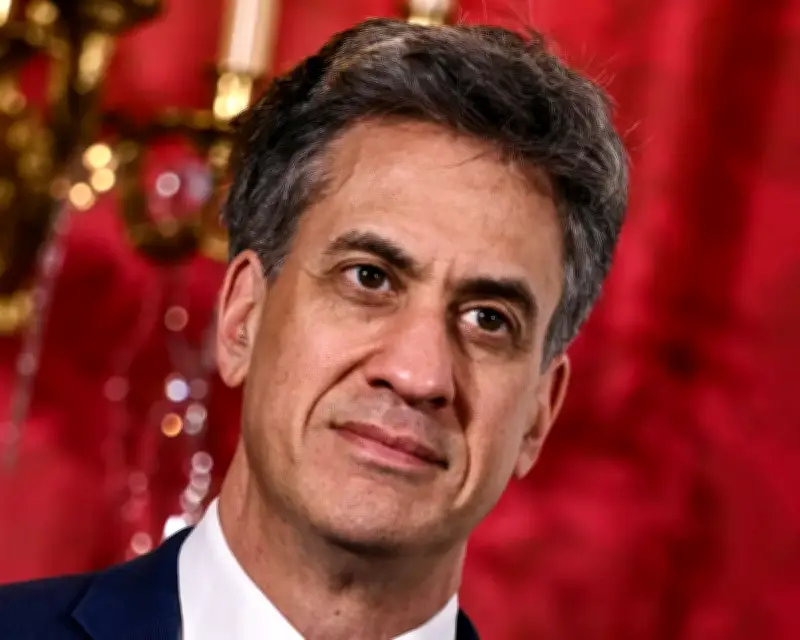
Ed Miliband is facing cross-party pressure to use his powers as foreign secretary to force overseas territories such as the British Virgin Islands to publish public company ownership registers, nearly a decade after parliament voted for transparency.
Ahead of a meeting between Miliband and overseas territories this week, MPs from Labour, the Conservatives, the Liberal Democrats and the Greens wrote to him calling for public registers of beneficial ownership to be mandated. The group, coordinated by the all-party group on anti-corruption (APPG), said improvements in corporate transparency were essential after “years of broken promises and missed deadlines from certain jurisdictions, and despite repeated commitments to ending secrecy”.
Mixed progress across territories
Some territories, including Gibraltar, Montserrat and St Helena, have already opened corporate registers to the public. However, the MPs singled out the British Virgin Islands, saying it “in particular continues to let the British family down”. They also criticised the Cayman Islands for raising its search fees to “prohibitive levels”, and Turks and Caicos for introducing large fines for disclosing register information, which they said was “undermining the entire purpose of open registers”.
The group said persistent engagement in good faith from the UK government had yielded few results in the face of “outright disregard for the will of parliament”.
BVI defends its register
The BVI launched a register this year that allows people to apply for access to ownership information if they have a “legitimate interest”, such as investigating money laundering. A BVI government spokesperson said: “We are proud of the BVI’s Legitimate Interest Access register introduced earlier this year, which allows for prompt, proportionate access, in line with international standards.”
The spokesperson added that the territory continues to work closely with the UK government on a major governance and regulatory reform programme, with progress recently recognised by the Financial Action Task Force.
National security and development concerns
The MPs, including former Conservative Foreign Office minister Andrew Mitchell and Labour anti-corruption expert Phil Brickell, are asking Miliband to lay an order in council mandating fully public registers in jurisdictions that fail to meet their obligations. They argued it was important for UK national security “because continued secrecy undermines our ability to enforce sanctions and leaves us open to hostile state actors and criminal networks”. They also said developing countries continue to be destabilised by kleptocrats using Britain’s offshore financial centres to clean and stash illicit gains.
Parliament voted for open registers in 2018, and the UK government had expected public access registers to be in place in all overseas territories and crown dependencies by 2023. That deadline was not met. An order in council was drafted in 2020, but the government said it would not be used because of “firm commitments” from the territories, and it would keep the decision under review.
Calls for action
Brickell, Labour chair of the APPG, said “it should never have come to this but every year of deliberate delay is another year in which kleptocrats, tax dodgers and money launderers can hide behind a British flag”. He added: “That is a stain on the reputation of our global family. This joint ministerial council must be the moment we finally draw a line under it.”
Mitchell, a Conservative vice-chair of the APPG and former development secretary, said: “When parliament voted for public registers in 2018, it was not making a polite request. It was the clear, cross-party will of the House of Commons, and it should have been respected.” He said money stolen from some of the poorest people on earth is still being hidden behind anonymous companies in British jurisdictions, adding: “The foreign secretary has the power to act, and I urge him to use it.”
A Foreign Office spokesperson said: “Security is the first duty of any government. Hostile states and malign actors can exploit opaque corporate structures like those in the British Virgin Islands to hide their assets and support activity that threatens our national security.” The spokesperson said ministers are actively considering how best to ensure law enforcement agencies have the information they need, and the government will continue engagement with overseas territories on these issues.