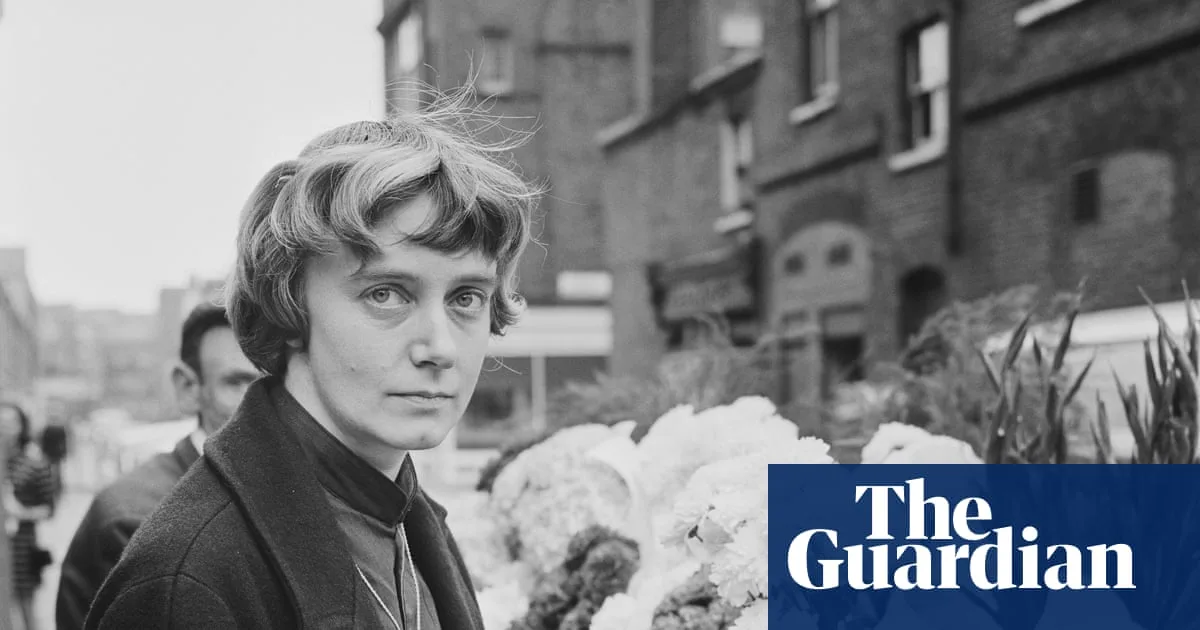
Maureen Duffy, the acclaimed British author and pioneering LGBTQ+ activist, has died at the age of 92. Duffy wrote more than 60 works, including novels, plays, poetry and nonfiction, and was a tireless campaigner for gay rights and authors' rights.
Last year, Duffy was awarded the inaugural £10,000 Royal Society of Literature Pioneer prize, with judge Bernardine Evaristo calling her a 'true trailblazer in every sense of the word'. Barbara Hayes, chief executive of the Authors' Licensing and Collecting Society (ALCS), of which Duffy was a founding member, described her as an 'extraordinary author' and a 'tireless advocate for authors' rights'.
Born in Worthing, Sussex, in 1933, Duffy's father left when she was a baby and her mother died when she was 15. She studied English at King's College London, graduating in 1956. Her first novel, the semi-autobiographical That's How It Was, was published in 1962, and her landmark 1966 novel The Microcosm was inspired by the Gateways lesbian club in London. Her novel Restitution was longlisted for the Booker Prize in 1998.
In the early 1960s, Duffy began campaigning for gay rights, and in the 1970s she wrote for the lesbian feminist journal Sappho. In 1972, she co-founded the Writers' Action Group, which campaigned for a public lending right, leading to the establishment of the ALCS in 1977. Duffy also wrote biographies, including a study of Aphra Behn, considered the first woman to earn a living by writing.
Duffy died on Wednesday. In a 2017 interview, she said: 'I've always been interested in politics and there's a sort of bloody-mindedness in me that wants to take issues on. It's a continuous battle. As well as authors' rights, I've also been a campaigner for gay rights and animal rights. I feel very strongly that you have to stand up and play your part.'