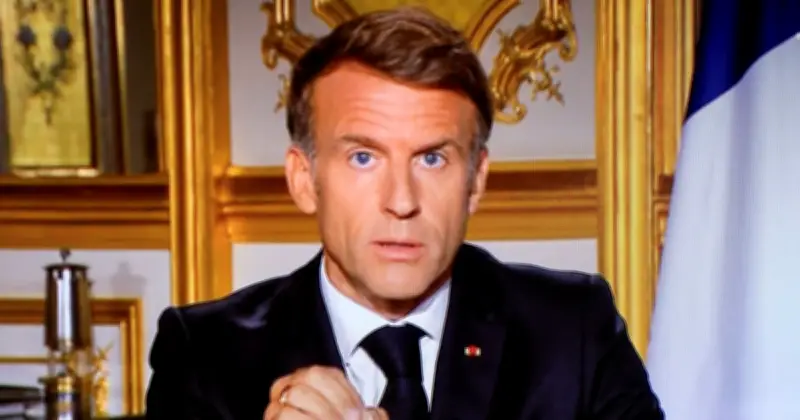
Emmanuel Macron has warned he is ready to restrict civil liberties after a weekend of nationwide rioting, announcing that public gatherings could be banned across France. In an emergency address from the Élysée Palace on Sunday (October 18), the French President said civil liberties could be severely curtailed following the torching of government buildings and the ransacking of luxury shops.
Emergency measures to restore order
Top regional prefects will now work alongside local authorities to impose immediate bans on "certain gatherings when necessary" in a bid to restore order. The announcement came after more than 2,300 rioters were arrested on Saturday (October 17) during demonstrations against skyrocketing living costs and collapsing school conditions.
Almost 1,000 police officers and gendarmes have been injured in the violence, with one protester dying from a cardiac arrest. Masked mobs went on the rampage across several key cities, setting fires, storming public institutions, and looting high-end boutiques.
Destruction in Limoges and political fallout
In the central town of Limoges, a historic 19th-century city hall was virtually destroyed after a massive fire caused its roof to collapse. Mr Macron promised "harsh consequences" for the criminals behind the destruction, insisting they must not be confused with peaceful demonstrators.
He declared: "They will answer for what they have done to the Republic." The violence has laid bare the fury directed at the French leader, who is set to step down next year after a turbulent decade marked by economic decline and soaring national debt.
Opposition and international reactions
Hard-Right National Rally leader Marine Le Pen delivered a blistering broadside just hours before Macron's speech, warning that France's democracy was now at grave risk. In a fiery video message, she blasted: "We are living through a profound crisis of trust and authority that poses a threat to democracy."
"Our country is caught in a vice, taken hostage between violence and powerlessness," she continued. "We have a Macronist power that is out of breath, exhausted, disoriented, which now seems incapable of doing anything other than commenting on its own downfall."
Renowned historian Simon Schama warned that the sheer scale of the anarchy "pretty much clinches" the presidency for Ms Le Pen, with the election set for April 2027.
Cost of living and damage assessment
Addressing the crisis, Mr Macron attempted to shift blame to international conflicts, claiming that the energy spikes and the high cost of living were triggered by the war in the Middle East. He admitted there were "legitimate claims about the cost of living and fuel", adding: "France was not a part of it. But we face the consequences. We share their concern."
Donald Trump waded into the row earlier in the day, placing the blame squarely on Mr Macron's own migration policies. Meanwhile, local leaders have been left to count the catastrophic cost of the violence. The mayors of Paris, Marseille and Lyon have demanded an urgent crisis meeting with the Prime Minister. Paris Mayor Emmanuel Grégoire warned: "The scale of the damage is considerable and unprecedented."
Police estimates suggest roughly 550,000 people took to the streets across France over the weekend, though union organisers claim the true figure is closer to 800,000 as fears grow over a full-scale revival of the 2018 "yellow vest" movement.