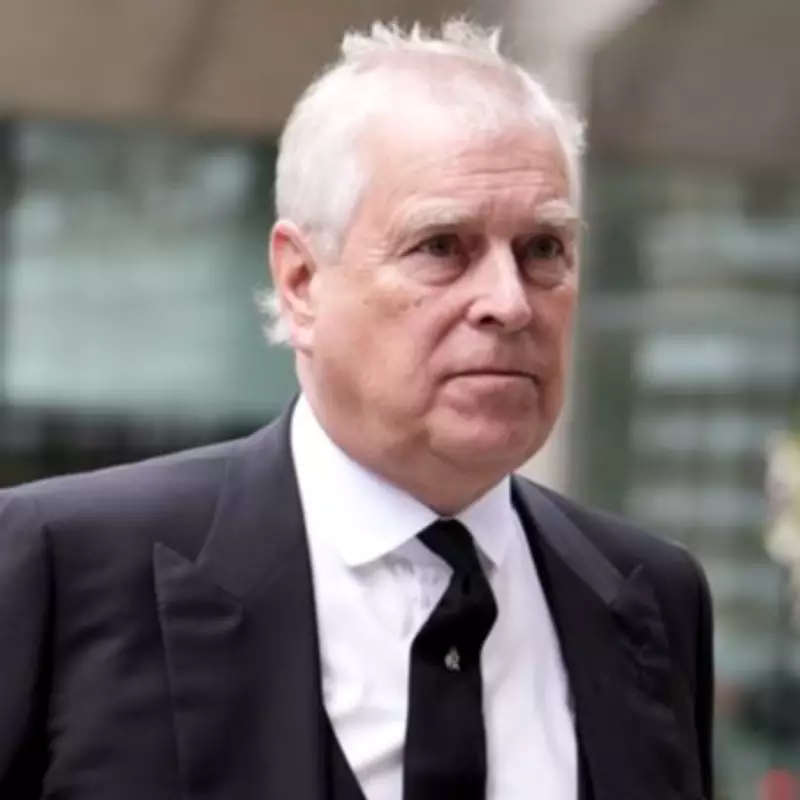
Newly released documents reveal that the late Queen Elizabeth II was "very keen" for Prince Andrew to assume a "prominent role in the promotion of national interests" as a trade envoy, despite a lack of formal vetting before his appointment.
Royal endorsement for trade role
In a memo dated February 25, 2000, addressed to then-Foreign Secretary Robin Cook, Sir David Wright, then chief executive of British Trade International, stated that the Queen's "wish" was for her son to succeed the Duke of Kent as a special trade representative. Sir David noted that he had a "wide-ranging discussion" with the Queen's private secretary before proposing a "suitable role" for Andrew, who was then serving in the Royal Navy.
Sir David suggested the role would involve regional trips, two or three overseas visits annually, and occasional leadership of trade missions. He wrote: "The Queen's wish is that the Duke of Kent should be succeeded in this role by the Duke of York. The Queen is very keen that the Duke of York should take on a prominent role in the promotion of national interests. No other member of The Royal Family would be available to succeed the Duke of Kent. The Duke of York's adoption of his role would seem a natural fit."

The senior official added that he did not foresee Andrew being "burdened with the regularity of meetings of the board of British Trade International or the burden of paper which goes along with the board membership", but ensured he would be kept informed of board developments.
Preference for sophisticated countries
The documents also reveal Andrew's preference for visiting "more sophisticated countries". In a letter from Kathryn Colvin, Head of the Protocol Division, it was noted that Andrew was "particularly good on high-tech matters, trade, youth ... cultural events, with a preference for ballet rather than theatre, the Commonwealth and military and foreign affairs. He tended to prefer the more sophisticated countries, particularly those in the lead on technology."
Additionally, there were specific instructions that Andrew should not play golf during official visits. The letter stated: "Captain Blair particularly asked that the Duke of York should not be offered golfing functions abroad. This was a private activity and if he took his clubs with him he would not play in any public sense."
Lack of vetting raises concerns
Ministers agreed in February to publish the documents, which also raised serious concerns about the absence of a formal vetting process. Trade minister Chris Bryant confirmed: "We have found no evidence that a formal due diligence or vetting process was undertaken. There is also no evidence that this was considered. This is understandable since this new appointment was a continuation of the Royal Family's involvement in trade and investment promotion work following the Duke of Kent's decision to relinquish his duties as Vice-Chairman of the Overseas Trade Board."
Liberal Democrat Chief Whip Wendy Chamberlain MP criticised the lack of scrutiny, stating: "It is shocking and deeply troubling that Andrew was appointed to the trade envoy role with no vetting. Nobody should be above such standards. This raises serious questions about why officials and ministers at the time thought that was acceptable." She called for a full public inquiry into Jeffrey Epstein's links to the British establishment and the abuse perpetrated against women and girls in the UK.
Andrew served as the UK's special representative for trade and investment from 2001 to 2011, a role that provided him access to senior government and business contacts worldwide. He resigned from the position in 2011 after being photographed with his accuser, Virginia Giuffre, who alleged she was trafficked to him by convicted sex trafficker Ghislaine Maxwell. Giuffre claimed she had sex with Andrew three times: at Maxwell's London home, Epstein's New York townhouse, and on Epstein's private island in the Caribbean.
Andrew was arrested in February on suspicion of misconduct in public office and later released under investigation. He has consistently denied any wrongdoing.