Labour's Housing Promise Falls Flat: Only 2,100 Homes Started in Q1 2026
Labour's Housing Promise Falls Flat: 2,100 Homes Started

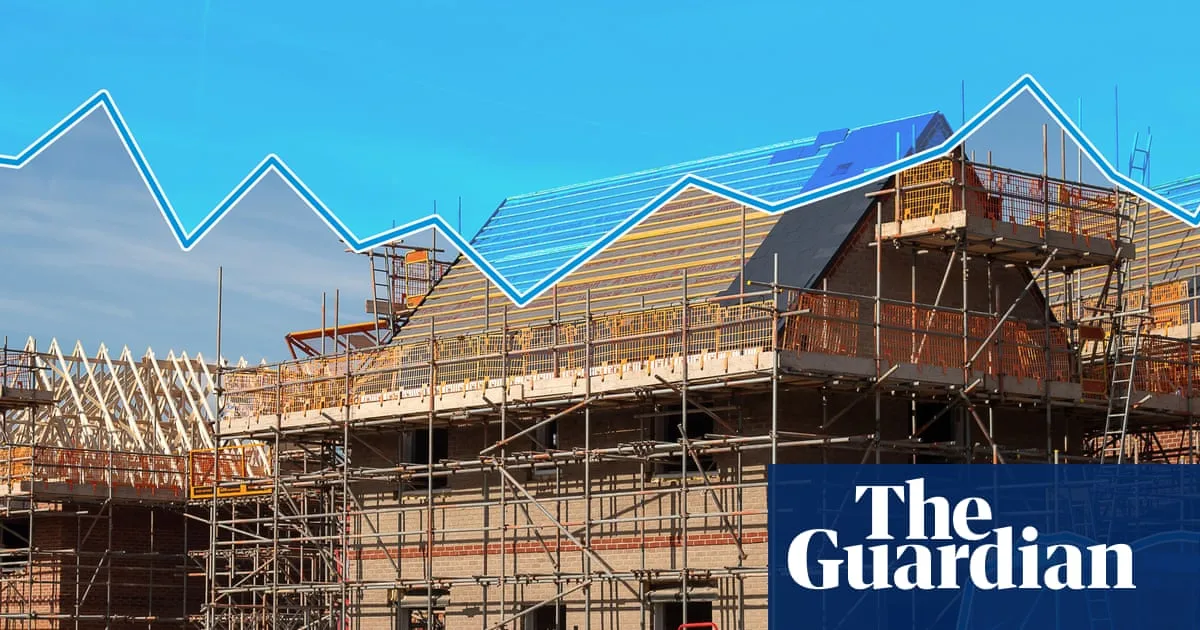
Labour promised to 'get Britain building again' – how did it all fall apart? The government pledged to build 22,000 homes a quarter, but less than a tenth of that were begun in the first three months of this year. Wasn't this meant to be a pro-growth government, asks Chris Blackhurst.

Labour's Pro-Business Pledge Unravels

In the run-up to the last general election, Labour went out of its way to assure business it was on its side. Keir Starmer and Rachel Reeves toured boardrooms, attended numerous lunches and dinners, made speeches galore, all designed to emphasise how they 'got it', how their Britain would pursue 'further and faster economic growth'. Music to the ears of the captains of industry, to the City, to the job creators and wealth generators. This was going to be a different Labour, one that would see the government and commerce working together, arm in arm, to drive prosperity and progress, to transform the nation's finances.

Two years on, and the reality is reversed. Theirs is an administration, an officialdom, that is anti-growth, suffocating business and hampering expansion, and actively targeting those firms it spent so much effort courting for extra cash. How else to explain the company bosses lining up to condemn how the nation is being run, by a party that is out of touch with their needs?

Wide Pickt banner — collaborative shopping lists app for Telegram, phone mockup with grocery list

Business Leaders Speak Out

This week alone, Stuart Machin, chief executive of Marks & Spencer, the high street colossus and for many years the bellwether of the British economy, described a plan to ask supermarkets to cap prices for essential goods as 'completely preposterous'. Somewhat lost in his attack was what Machin went on to say: 'I don't think government should be trying to run business. They should try to understand business better. There is so much in the government's control. My advice is to try to reduce tax and regulatory burden and free us up in a very competitive market.'

Jonathan Warburton, executive chair of Warburton's, our biggest baker, said: 'Have any of these people ever run a business or worked in industry? Of course they've not, otherwise they wouldn't come up with such embarrassing nonsense.'

Joining them was London's biggest housebuilder, which said it 'can no longer invest in the capital' after a proposal to build 900 homes was rejected for the second time. Rob Perrins, executive chair at Berkeley, condemned the decision to bar the Peckham scheme of 790 open-market and 77 affordable homes. The planning inspector acknowledged it would bring 'social and economic benefits' and help ease the 'acute' housing shortage, but it was barred to protect 'heritage assets important to the area'. These include a former bank premises, the upper floors of which are empty, the walls covered in graffiti. Labour promised to 'get Britain building again', but Perrins said developers faced 'extreme uncertainty' over whether their projects in which they've invested time and money will be approved. The government target is 88,000 new homes a year in London, but research by Molior, the residential development consultancy, shows just 5,500 were started in 2025. The aim is 22,000 homes a quarter but only 2,103 were begun in the first three months of this year.

A shopkeeper, a baker and a housebuilder. To them can be added a tailor and a publican. Nick Wheeler, founder of Charles Tyrwhitt, the shirt and suit-maker, said of the government: 'Everything they have done has been anti-business'. '[The government] is saying the UK is open for business and they're trying to get people to invest here. Well, I'm saying, I'm sorry but I'm not going to be investing in the UK.'

Butcombe Group runs over 130 pubs and bars. Its chief executive, Jonathan Lawson, said: 'The government and chancellor promised to reform business rates for our sector and retail. They have still yet to deliver on their promise.'

Pickt after-article banner — collaborative shopping lists app with family illustration

Infrastructure and Wealth Flight

One complaint made repeatedly by business is that nothing is getting done. This is borne out by the Infrastructure and Projects Authority: of the 227 major national infrastructure projects currently underway, 190 are in serious difficulty and many of them may not be completed. Last weekend's Sunday Times Rich List revealed that one in six people on the ranking just two years ago do not appear in 2026. Nearly a third (111) of the UK citizens who appear in the main list of 350 individuals no longer live on the British mainland. At least 15 foreign nationals who appeared in last year's Rich List have been removed because they now live elsewhere. Robert Watts, its compiler, asked: 'Will more of the wealthy now set up or grow their ventures overseas and in doing so create fewer jobs here?'

It's hard to know how much evidence Starmer and Reeves require that they are stifling growth not fostering, let alone kickstarting, it. They will disagree. They and their spin doctors will point to some minor positive initiative. They will wear high-vis jackets and hard hats and appear in workplaces and other places carefully chosen to make them seem earnest and dynamic and tell us a bit of good news dressed up to seem major. Among business folk, those actually on the ground, in the high street, in the factories, in the industrial parks, day in, day out, the reality is very different. Now, business faces two, possibly three months if not longer, of paralysis, as a Labour leadership battle rages and depending how that is resolved, there may well be a reshuffle and yet another reset or a wholesale ministerial change accompanied by new policies and promises. Starmer contemplates price limits on foodstuffs, Andy Burnham swears by nationalisation, Angela Rayner bangs on about workers' rights, Wes Streeting wants to impose a wealth tax. The clock in Britain is turning back; while in the rest of the world they are powering forward.