British Army veterans who served in Northern Ireland during the Troubles fear they are being 'sold out' by Labour's controversial legacy bill, which they say could open the floodgates for prosecutions and see the reopening of cases closed decades ago.
Retired soldiers argue the updated legislation disproportionately targets former British soldiers and police officers because they kept meticulous patrol logs, ammunition records, and Royal Military Police investigation files, and as a result can be easily traced. Paramilitary groups like the IRA or UVF kept no such records, effectively allowing them to evade accountability.
Veterans' Anger Over 'Political Pawns'
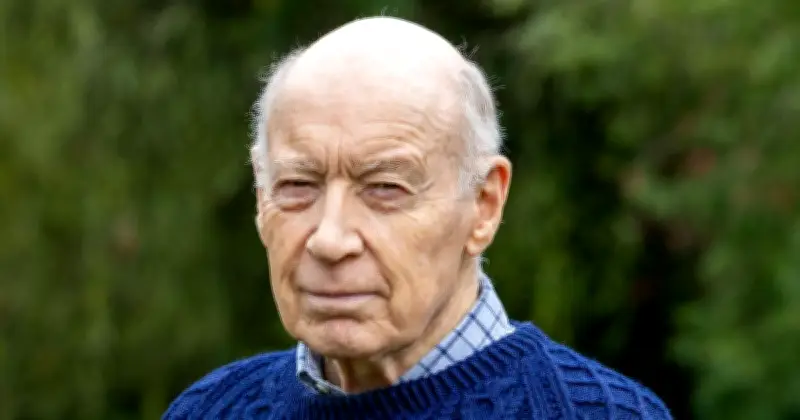
Northern Ireland and Falklands veteran Major General Dair Farrar-Hockley said: "We feel badly let down by the process so far, but we are prepared to continue to negotiate."
"The 300,000 British military personnel who served during Operation Banner were prepared to lay down their lives for our country, the United Kingdom; now we find ourselves being used as pawns for political reasons in negotiations with the Republic of Ireland. The law, as currently drafted, is slanted against us."
The bill seeks to address the unresolved legacy of decades-long violent conflict known as the Troubles, in which 3,500 were killed and tens of thousands wounded.
What the Bill Proposes
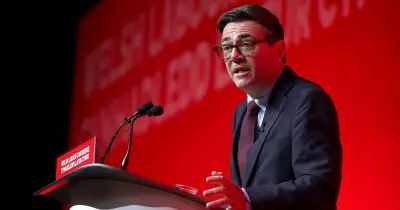
Northern Ireland Secretary Sir Chris Bryant tabled 156 amendments to legislation that will repeal and replace the Northern Ireland Troubles (Legacy and Reconciliation) Act 2023, after the previous conditional immunity scheme was ruled incompatible with the European Convention on Human Rights, which is incorporated into UK law by the Human Rights Act 1998.
It offered immunity from prosecution to suspects who cooperated with an information recovery body, but Labour's plan involves a legacy commission to investigate Troubles-related killings, a separate information recovery body, and a dedicated legacy unit within the Irish police.
Veterans groups representing those who served and who still live in fear of a knock at the door have now mounted a covert mission and are frantically lobbying peers in an attempt to convince them of what is at stake.
Lords Debate Seen as Final Opportunity
It would remove the possibility of any immunity from prosecution, which veterans insist they have never asked for.
The Bill is due in the House of Lords on December 2 - a date seen as the final opportunity to derail a 'lawfare' process which would have far-reaching consequences outside the province.
Maj Gen Farrar-Hockley, who turns 80 on the day of its second reading, was awarded the Military Cross for gallantry in action during the Falklands. He has led negotiations with the Government on behalf of the Parachute Regimental Association, an apolitical group which recognises that where compelling new evidence exists, certified by a Supreme Court judge, then justice must take its course.
But he and others are convinced the Government is determined to water down protections so repeat investigations can continue to take place, despite soldiers being found not guilty, ensuring the process remains the punishment.
He said: "Those who will appear at inquests will be largely those from the Royal Ulster Constabulary and British armed forces. It is very easy for Sinn Féin and others to say 'look who is in court - we are the victims'. I am sorry, but it is grossly untrue.
"We are bemused that a Bill that was originally set up to achieve reconciliation is being used to wind back the clock. For the record, only one veteran has been found guilty of a crime associated with The Troubles this century.
"In the Lords there is a great deal of experience, and we feel objectivity is much more likely."
Concerns Over Irish Government Influence
Veterans' groups claim one of the most complex and far-reaching pieces of law in recent years was bundled through the Commons.
Maj Gen Farrar-Hockley remains hopeful peers will devote more time and scrutiny, saying negotiation is about finding "a space on the bridge" where both sides can stand.
But he claims veterans have been told some of their red lines cannot be accepted because the Republic of Ireland will not like them.
He said: "So metaphorically speaking, parts of the bridge have already got the Irish flag on them, and they are no-go areas for negotiation.
"To us that sounds less like a negotiation and much more of a capitulation.
"We are hoping for an objective hearing and serious debate. We need some common sense if this is really about reconciliation.
"All veterans - of whatever cloth - have ever wanted from the beginning is closure.
"We will continue to make our case for a fair and equitable outcome for all sides rather than an adversarial outcome which will happen if coroners and civil cases operate outside the legacy commission."
The Troubles was a period of conflict which lasted for 30 years and cost the lives of more than 3,500 people.
Operation Banner - the longest continuous deployment in British military history - ran from August 14, 1969, to July 31, 2007. Around 21,000 British troops were deployed in Northern Ireland at its peak during the 1970s. Some 1,441 serving British military personnel died during the operation - 722 of them killed in paramilitary attacks.
The Bill was backed by 330 MPs, with 178 voting against following two days of debate over the details of amendments.
Veterans are also concerned the UK Government will go ahead with legislation despite not knowing what the Irish Government will enact. It is understood the Irish Government will object to some elements of the Troubles Bill protecting former British Army soldiers.
A parliamentary source said: "Before the Government rushes ahead with flawed legislation, it should secure cast-iron guarantees that the Irish Government is honouring their commitments.
"It is not reasonable to expect legislation which is meant to be in lockstep with the Irish to be waved through, when we do not know what the Irish are going to want to change and are way behind in the legislative process to where we are."
Among those expected to speak in the upper chamber will be General The Lord Dannatt, former Chief of the General Staff, who served during Operation Banner. He was awarded the Military Cross in recognition of exemplary gallantry when the platoon he was commanding came under fire in East Belfast on February 7, 1972.
He is expected to question the realistic likelihood of finding genuinely "new and compelling evidence" more than 50 years later, and efforts should focus on an information and truth-recovery process rather than criminal trials for ageing veterans.
Sir Chris said: "This bill is about completing the unfinished business of the Good Friday Agreement, getting answers for the many families, including veterans' families, who lost a loved one. I am confident this legislation will be a significant step towards a more reconciled society."