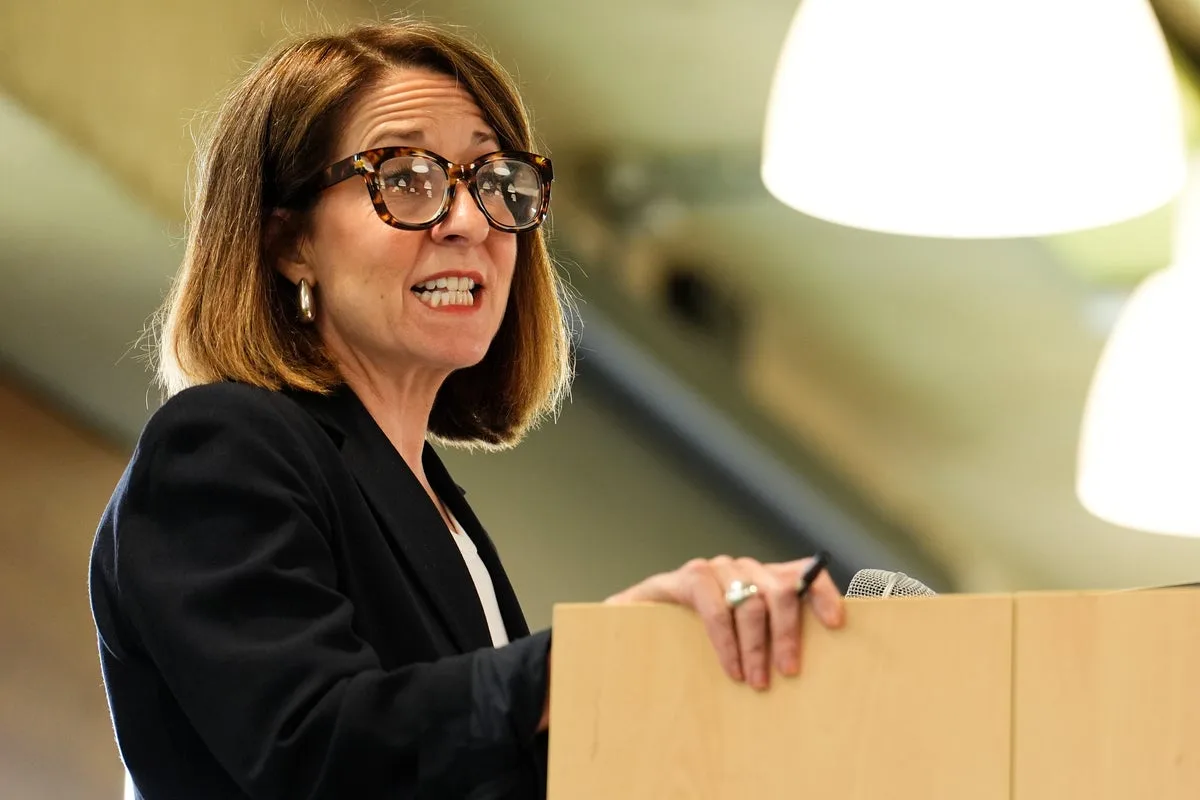
Work and Pensions Secretary Liz Kendall has launched a new pension commission and announced a review of the state pension age, warning that Britain faces a 'tsunami of pensioner poverty' without major reform. The review could lead to an increase in the age at which people can claim the state pension, currently 66 and due to rise to 67 in 2028 and 68 by 2046.
Research by Age UK indicates that people retiring in 2050 could receive £800 less per year than current pensioners, while 2 million pensioners are already in poverty, a figure expected to rise. The government routinely reviews the state pension age every six years, and Denmark recently became the first country to raise it to 70 for those retiring by 2040.
The Institute for Fiscal Studies (IFS) and the National Institute of Economic and Social Research (NIESR) have warned that accelerating the rise is not inevitable but likely. IFS deputy director Jonathan Cribb noted that previous reviews recommended bringing forward increases, adding that a pathway to raising it to 69 might emerge. NIESR's Stephen Millard said such a move would aid long-term fiscal sustainability but not short-term problems.
Kendall's announcement came after she failed to secure parliamentary support for £5bn annual cuts to the welfare bill, mostly from disability payments. She highlighted that by the 2070s, the number of pensioners is expected to rise by over 50%, while the working age population will grow by just over 10%, making it imperative to boost savings.
The commission will provide recommendations by 2027 to improve retirement income but will not examine the triple lock, which guarantees state pension rises by the highest of wage growth, 2.5%, or inflation. The triple lock costs £31bn a year. Kendall expressed concern that young people struggling with housing costs face severe challenges in saving for retirement, with almost half of the working age population not saving at all.