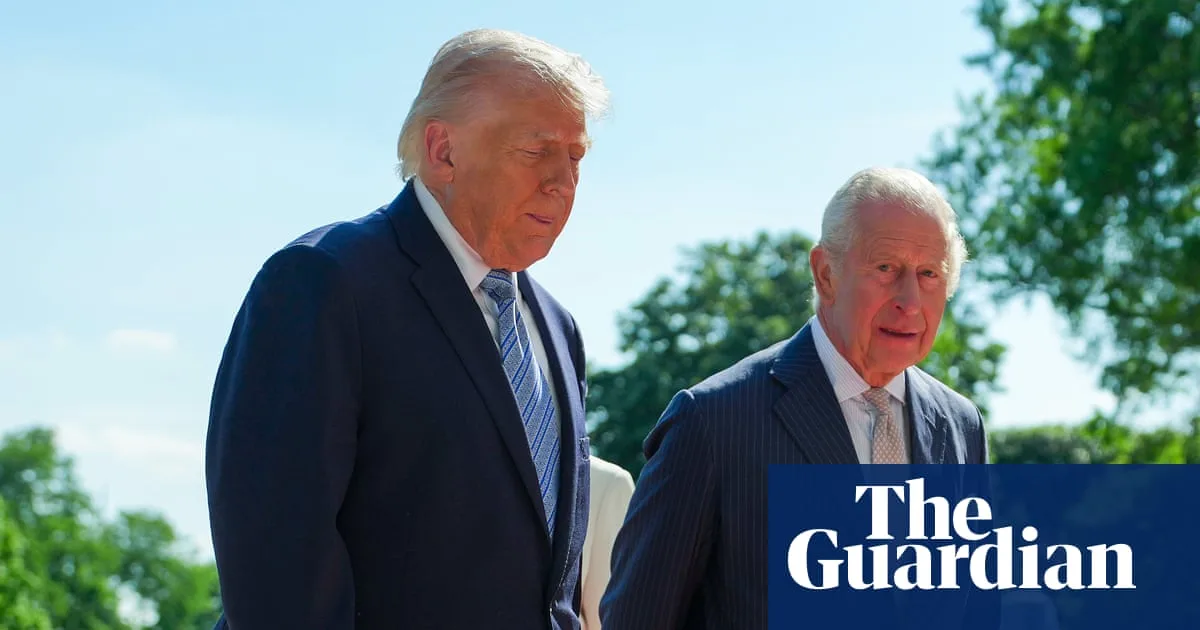
King Charles III's Washington Visit: A History Lesson for Trump and America
King Charles's Washington Visit: History Lesson for Trump

King Charles III's recent visit to Washington was more than a diplomatic gesture; it was a subtle, much-needed history lesson for the United States. At a state banquet in the White House, Charles quipped to Donald Trump about the 18th-century Anglo-French contest, reminding him that without Britain, Americans might be speaking French. This lighthearted jab underscored a deeper message: the importance of historical perspective in navigating present challenges.

A Calming Presence Amidst Turmoil

Charles addressed a fractured Congress, offering a balm of calm and perspective. He spoke of unity as essential for success and emphasized that America's actions matter globally. His words resonated with Democrats and Republicans alike, who rose to applaud his conviction that the US will rediscover its principles and act as a moral force for good. The king's references to Magna Carta and the Bill of Rights reminded Americans of their foundational ties to British legal traditions, highlighting checks on executive power and civil liberties.

Remembering Shared History

Charles recalled his mother's friendships with every president since Eisenhower, underscoring the deep ties between the two nations. He noted that NATO allies rallied around the US after 9/11 and urged reciprocity, especially in supporting Ukraine. His reminiscences served to refresh collective memory: no country can go it alone, and the US remains rooted in Britain and Europe.

Wide Pickt banner — collaborative shopping lists app for Telegram, phone mockup with grocery list

Will Trump Heed the Message?

The king's visit aimed to ease US-UK frictions, but its broader goal was to show Americans how to save themselves. However, Trump quickly exploited their private conversations to justify his Iran policies. The Iran conflict is an acid test: if Trump adopts Charles's calm approach, examining history—from the 1953 coup to decades of hostility—he might choose de-escalation, negotiations, and a diplomatic resolution. Such a move could put the US back on the right side of history.

Charles's visit was a reaffirmation of the special relationship, but its lasting impact depends on whether Americans take history's lessons to heart. As Simon Tisdall notes, the king went to Washington to save Britain's bacon, but he also showed the US how to save itself.

Pickt after-article banner — collaborative shopping lists app with family illustration




