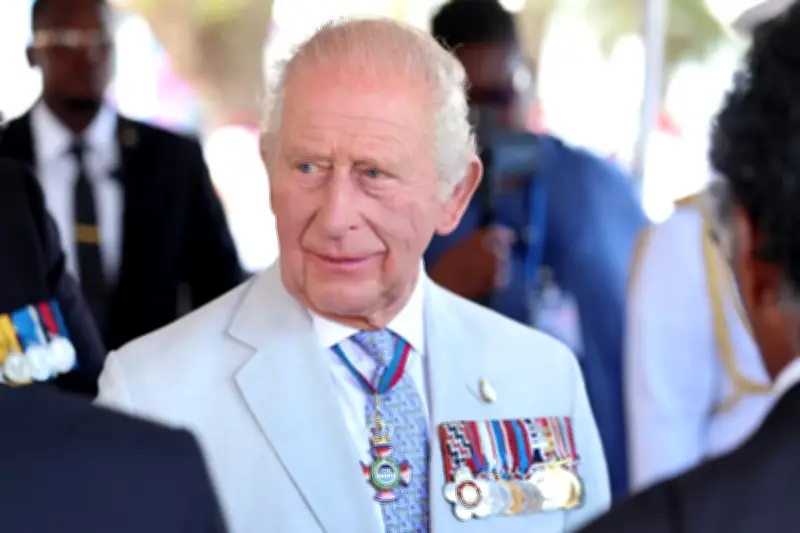
The King has arrived in Antigua and Barbuda for a gathering of Commonwealth leaders against the backdrop of Prime Minister Andy Burnham's offer to discuss a British apology for slavery.
Charles will preside over the Commonwealth Heads of Government Meeting (CHOGM) in his role as head of the "family of nations" after travelling from a state visit to Guyana. He will give the opening address to assembled presidents, prime ministers and other national representatives of the 56 member states on Tuesday.
Government position shifts on slavery legacy
His speech is likely to reflect the change in the Government's position on the legacy of slavery. Before the trip, it was understood ministers had not advised the King to offer an apology or reparations, in keeping with established policy. But the prospect of a formal expression of regret is now closer given the Prime Minister's comments in The Guardian on Friday.
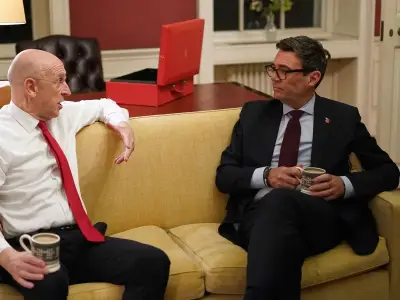
Mr Burnham wrote: "We are offering a structured dialogue with those affected by the transatlantic slave trade. Listening to calls for a formal apology on behalf of the British state will form an important part of this process and I am open to them."
The Prime Minister expressed his "sorrow and regret for the pain and suffering of so many millions" but ruled out considering financial reparations. He wrote: "Some have called for financial reparations for the slave trade. I do not believe that is the right answer. I do not think that British people today can be held liable for historical wrongs, however heinous, that happened in a different age under different laws and in which they played no personal part."
King acknowledges Caribbean history
Caribbean nations made renewed calls for Britain to apologise for its role in selling enslaved people for profit, and for reparations, in the run-up to the King's tour of the Caribbean. Before departing Guyana on Friday, the King visited Independence Park in the capital city of Georgetown, where 33 people involved in the Demerara Rebellion of 1823 were hanged.
At the park, Charles was joined by Guyana's culture minister Steven Jacobs to acknowledge the country's history of slavery and resistance. Charles began his nine-day trip last Tuesday by acknowledging the "great suffering of the past" in a speech at a youth rally in the Bahamas.
Ahead of the visit, Guyana's President Mohamed Irfaan Ali said Charles had recognised slavery as the darkest days in human history, but an apology would be "the next step".
Wider context and next steps
In 2023 Charles described how he was on a personal journey of discovery and was continuing to "deepen my own understanding of slavery's enduring impact", in a speech at the opening of a Commonwealth summit hosted by Rwanda. The United Nations General Assembly overwhelmingly backed a resolution declaring the transatlantic slave trade "the gravest crime against humanity" with the UK and EU member states among 52 countries who abstained during the vote in March.
Barbados Prime Minister Mia Mottley, whose administration ditched Queen Elizabeth II, led a group of Caribbean leaders who launched a new slavery reparations manifesto during a reparations conference held in Ghana in June. Saturday will be a rest day for the King who has completed a busy programme of events in the Bahamas and Guyana and is still receiving treatment for an undisclosed form of cancer.