
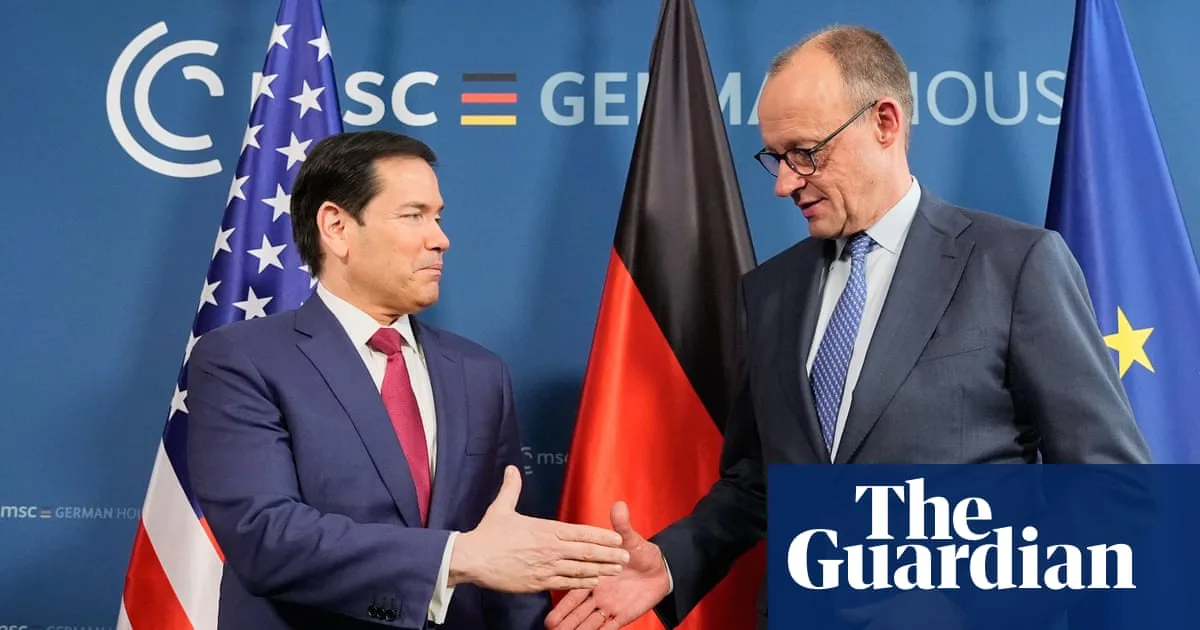
If JD Vance’s thuggish speech to last year’s Munich Security Conference marked the moment when a transatlantic breakup started, this weekend’s conference in Bavaria saw the debate over divorce terms get under way. The dominant mood was a growing European steeliness, with talk of a stronger, independent Europe amid bitter disagreement on Ukraine.
Marco Rubio, the US secretary of state, softened the Trumpian tone with references to German beer and the Beatles, but his speech was a stern warning that if Europe wanted to continue on its path of civilisational decline, America would not be interested. He criticised mass migration, weak defences, and the outsourcing of sovereignty to international institutions, wrapping himself in the ideology of rightwing populists despite not lauding them directly.
Yet the European mood was not reassured. An iron has entered the European soul, egged on by many Democrats attending. Talk of a stronger independent pillar of Nato was heard repeatedly, and Keir Starmer pledged greater integration on defence, declaring the Brexit era over. German chancellor Friedrich Merz said the era of US hegemony was ending and that Germany may diverge from the US, signalling preparations for a smaller American footprint.
The dispute over Ukraine and Trump’s leniency towards Vladimir Putin drove the wedge deeper. Hillary Clinton accused Trump of trying to profit off Ukrainian misery, calling it a historic error. Ukrainian president Volodymyr Zelenskyy asked why Ukraine, not Russia, was being asked to make concessions, and Polish foreign minister Radosław Sikorski noted that while the US leads negotiations due to its military assistance, Europe is now paying the price for its absence at the table.




