House Approves 10-Day Spy Powers Extension After Chaotic Late-Night Revolt
The U.S. House of Representatives early Friday approved a short-term renewal until April 30 of a controversial surveillance program used by American intelligence agencies, following a dramatic post-midnight vote that saw Republicans revolt against President Donald Trump's push for a longer extension.
Late-Night Chaos and Failed Votes
GOP leaders rushed lawmakers back into session late Thursday with a series of back-to-back votes that collapsed in dramatic failure, before they quickly pushed ahead with the stopgap measure as they race to keep the surveillance program running past Monday's expiration date. First, they unveiled a new plan that would have extended the program for five years with revisions designed to address privacy concerns. Then they attempted to salvage a shorter 18-month renewal that Trump had demanded and Speaker Mike Johnson had previously backed.
Approximately 20 Republicans joined most Democrats in blocking the advance of both longer-term proposals, creating a legislative standoff that stretched into the early morning hours. Shortly after 2 a.m., lawmakers quickly agreed to the 10-day extension, which was approved on a voice vote without a formal roll call. The measure now proceeds to the Senate, which is convening for a rare Friday session as Congress races to keep the surveillance program operational.

Democrats Blast "Amateur Hour" Proceedings
Democrats blasted the middle-of-the-night voting as amateur hour, with Representative Jim McGovern of Massachusetts declaring during a fiery floor debate, "Are you kidding me? Who the hell is running this place?" The chaotic proceedings highlighted deep divisions within both parties over the proper balance between national security needs and civil liberties protections.
Speaker Mike Johnson acknowledged the challenges after the late-night action, stating, "We were very close tonight." However, Democratic Representative Ro Khanna of California celebrated the defeat of longer extensions, saying, "We just defeated Johnson's efforts to sneak through a 5-year FISA authorization tonight. Now, they will have to fight in daylight."
Section 702 at the Center of Controversy
At the center of the standoff that has stretched throughout the week is Section 702 of the Foreign Intelligence Surveillance Act, which permits the CIA, National Security Agency, FBI and other agencies to collect and analyze vast amounts of overseas communications without obtaining warrants. In doing so, they can incidentally sweep up communications involving Americans who interact with foreign targets.
U.S. officials maintain that this authority is critical to disrupting terrorist plots, cyber intrusions and foreign espionage operations. However, opponents point to past misuses, including FBI officials repeatedly violating their own standards when searching intelligence related to the January 6, 2021 attack on the Capitol and racial justice protests in 2020, according to a 2024 court order.
White House Lobbying and Republican Divisions
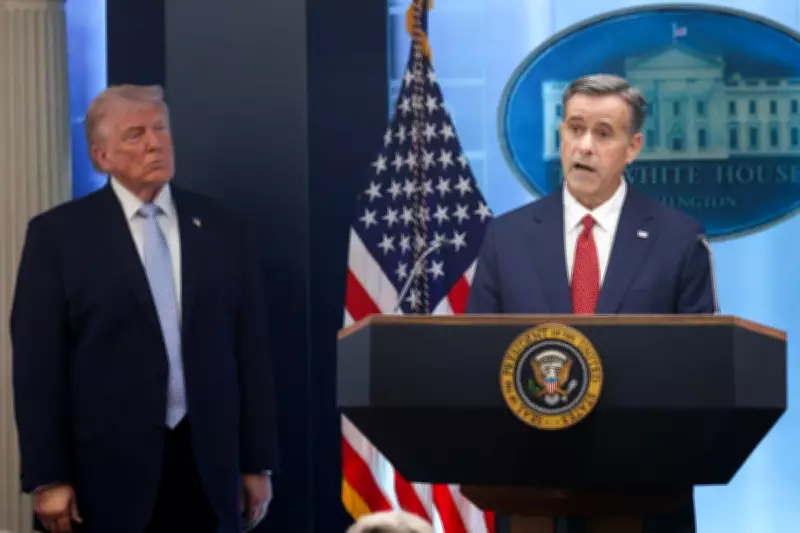
President Trump and his allies had lobbied aggressively all week for a clean renewal of the program without changes. A group of Republicans traveled to the White House on Tuesday, and on Wednesday CIA Director John Ratcliffe spoke directly with GOP lawmakers. House Majority Leader Steve Scalise revealed Thursday that there had "been negotiations late into the night with the White House and some of our members."
Trump wrote on Truth Social this week, "I am asking Republicans to UNIFY, and vote together on the test vote to bring a clean Bill to the floor. We need to stick together." However, the Republican revolt demonstrated significant fractures within the party over surveillance policy.
Privacy Revisions Fail to Win Over Skeptics
Shortly before midnight, GOP leaders announced a new proposal for a five-year extension with revisions designed to win over skeptics of the surveillance program who have demanded greater oversight to protect Americans' privacy. Among the changes were new provisions to ensure that only FBI attorneys can authorize queries on U.S. persons, and to require the Office of the Director of National Intelligence to review such cases, according to Representative Austin Scott of Georgia during the debate.

However, the final 14-page amendment did not go far enough for some holdouts in either party. With Johnson controlling a slim majority, he has little room for dissent. As Republicans fell short on both longer-term efforts, a handful of Democrats stepped in to try to help them advance the extensions, but most Democrats remained opposed to any long-term renewal without substantial reforms.
The surveillance program fight represents a fundamental debate over privacy and security that has teetered all week as lawmakers weigh civil liberties concerns against intelligence officials' warnings about national security risks. The 10-day extension provides only temporary relief as Congress continues to grapple with these competing priorities in the coming days.