Hegseth's Pentagon Prayer Echoes Pulp Fiction, Not Ezekiel
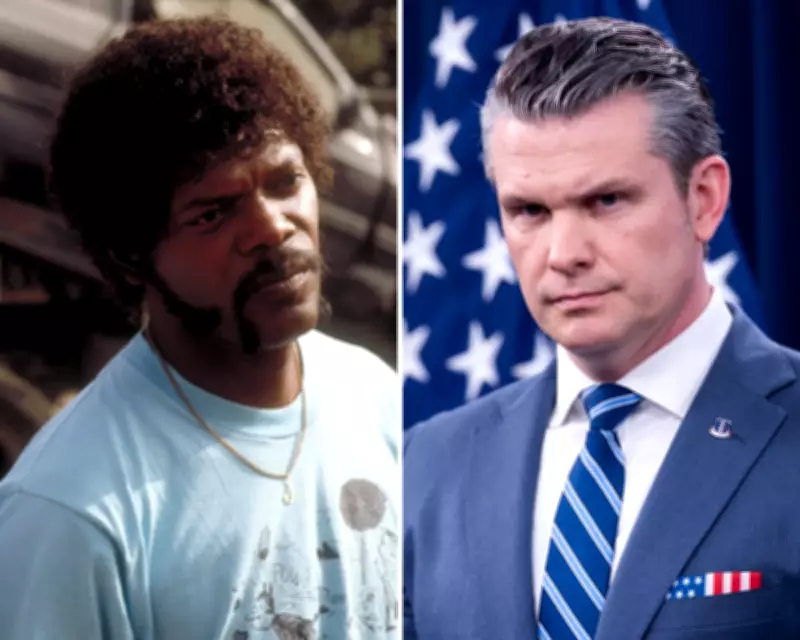
Defense Secretary Pete Hegseth has stirred controversy by quoting a nonexistent Bible verse during a Pentagon prayer session, with wording that closely mirrors Samuel L. Jackson's iconic dialogue from the 1994 film Pulp Fiction. The incident occurred at a worship service aimed at blessing the Iran war effort, where Hegseth presented a prayer he claimed was based on Ezekiel 25:17 from the Old Testament.
Analysis: A Tarantino Script Masquerading as Scripture
In a bizarre twist that underscores the surreal nature of Donald Trump's second term, Hegseth's prayer bore little resemblance to the actual Bible passage. Instead, it appeared to be a bastardized version of Jackson's speech from Pulp Fiction, where his character, Jules Winnfield, delivers a fiery monologue before an execution. Hegseth acknowledged only the loose biblical inspiration, omitting any reference to Quentin Tarantino's Oscar-winning script or Jackson's performance.
The original Ezekiel verse reads: "And I will execute great vengeance upon them with furious rebukes; and they shall know that I am the Lord, when I shall lay my vengeance upon them." In contrast, Hegseth's adaptation expanded significantly, echoing the film's longer, more dramatic language. He stated, "The path of the downed aviator is beset on all sides by the iniquities of the selfish and the tyranny of evil men. Blessed is he who, in the name of comradery and duty, shepherd the lost through the valley of darkness, for he is truly his brother's keeper and the finder of lost children."

Pentagon Response and Media Backlash
Sean Parnell, the Pentagon press secretary, later acknowledged on social media that the prayer was "obviously inspired by dialogue in Pulp Fiction", though Hegseth did not mention this at the event. Parnell defended the secretary, asserting that claims of misquoting Ezekiel were "fake news". However, Newsweek highlighted that the Bible passage condemns ancient enemies like the Philistines, not modern military contexts.
Adding to the scrutiny, Hegseth faced articles of impeachment from Democratic lawmakers this week, with this incident fueling further criticism. At a press briefing on the Iran war, he likened the media to Pharisees from the New Testament, accusing them of having "hardened hearts" and impugning the administration's claims of victory in the conflict. Hegseth has repeatedly condemned press skepticism, suggesting some outlets are not aligned with national interests.
Broader Implications and Cultural References
This episode reflects broader tensions within the Trump administration, where Christian nationalist rhetoric often collides with pop culture influences. Hegseth, a former Fox News host, has leveraged his media skills to rally support for the Iran war, but this misstep highlights the risks of blending Hollywood fiction with religious symbolism in official settings. The prayer was intended for combat search-and-rescue crews, yet its violent overtones from Pulp Fiction raised questions about appropriateness.
As the story circulates, it underscores the ongoing challenges in U.S. politics, where authenticity and accuracy are frequently debated. Hegseth's actions may resonate with his base but risk alienating others who view the conflation of movie quotes and scripture as undermining serious policy discussions.